


Fibre Guide · Silk and Down
Silk Duvet vs Down Duvet: Which Is Better for You?
When colder weather arrives, a warm and comfortable bed matters more. The right duvet can help you sleep better through the season. Silk and down duvets are two popular premium choices. Each has its own benefits and suits different sleep needs. This guide compares their warmth, breathability, weight, price and longevity. It will help you decide which duvet is right for you.
Quick answer: When comparing a silk duvet vs a down duvet, down offers more warmth with less weight, so it suits cold, unheated bedrooms. Silk is heavier but more breathable and better at managing moisture, making it a strong choice for heated rooms, changing temperatures, and people who sleep hot. Silk also feels smooth and close to the body, while down feels lighter and loftier. Compare warmth, breathability, weight, care, and budget before choosing.
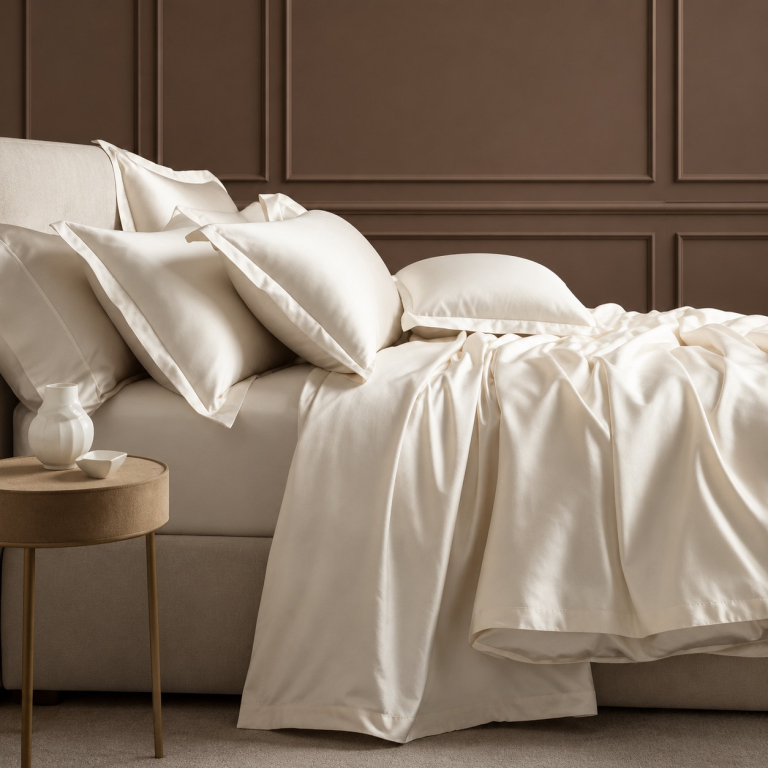
Silk and Down Duvet Materials
01. Silk duvet
A silk duvet is filled with natural silk fiber, usually mulberry silk or tussah silk.
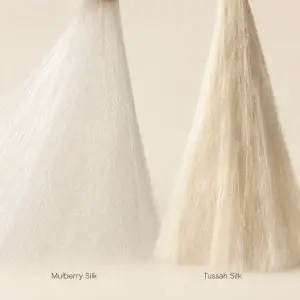
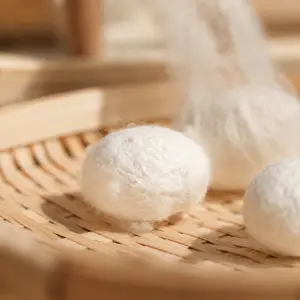
Mulberry silk comes from Bombyx mori, a domesticated silkworm that feeds only on mulberry leaves. Their fibres are white, long and smooth. The filling is also less likely to clump or form thin spots over time.
Tussah silk comes from wild silkworms. Its fibres are often shorter and thicker, with a natural greyish yellow or brown colour. White tussah silk products are often bleached. It feels drier or rougher than mulberry silk.
02. Down duvet
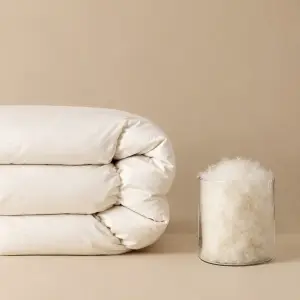
A down duvet is filled mainly with down in the chest and belly of geese or ducks. Unlike common feathers, it can form light and fluffy clusters. So many small pockets of air are trapped here.
Down is very fine and can escape through loosely woven fabric easily. This is why down duvets often have tightly woven covers made from high thread count cotton or polyester.

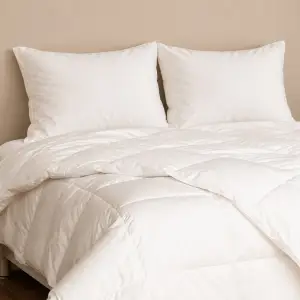
Which Is Warmer, a Silk or Down Duvet
| Fibre | Average thermal conductivity W/(m·K) |
|---|---|
| Duck down assembly | 0.024* |
| Goose down | 0.025 |
| Silk fibre | 0.042 |
| Wool fibre | 0.054 |
| Cotton fibre | 0.058 |
|
Lower values mean that heat passes through the material more slowly. Duvets with lower values can provide warmth without relying on heavy weight. |
|
Sources: 2023 Thermal Performance Test Report on Natural Fibres, China Textile Academy;
OpenStax College Physics 2e, Table 14.3;
Yu et al., Study on the Microstructure Characteristics, Compression, and Thermal Insulation Properties of Duck Down.
01. Silk Duvets
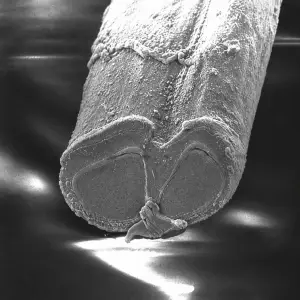
Silk has lower thermal resistance than down. But it still provides better warmth than other fillings. The moisture in silk fibroin chains decreases, and the chains contract in cold conditions. The tiny pores close, helping to lock in heat. We introduce the principle in greater detail here.
Recommended bedroom temperature for a silk duvet: 17 to 23°C. It’s well suited to heated rooms, bedrooms with changing temperatures, and people who tend to sweat at night.
02. Down Duvets
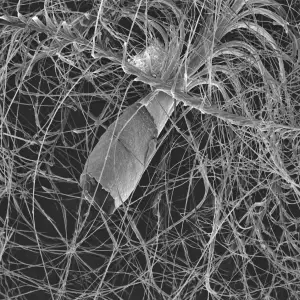
A down cluster has a three dimensional structure. This helps down duvets trap still air and create an insulating layer. Under the same filling weight, down provides stronger warmth than silk.
Another study found that a goose down duvet provided the best sleep quality and thermal comfort at 11°C. In cold homes without heating, especially when the room is below 15°C, a down duvet may be the better choice.
Is Silk More Breathable Than Down
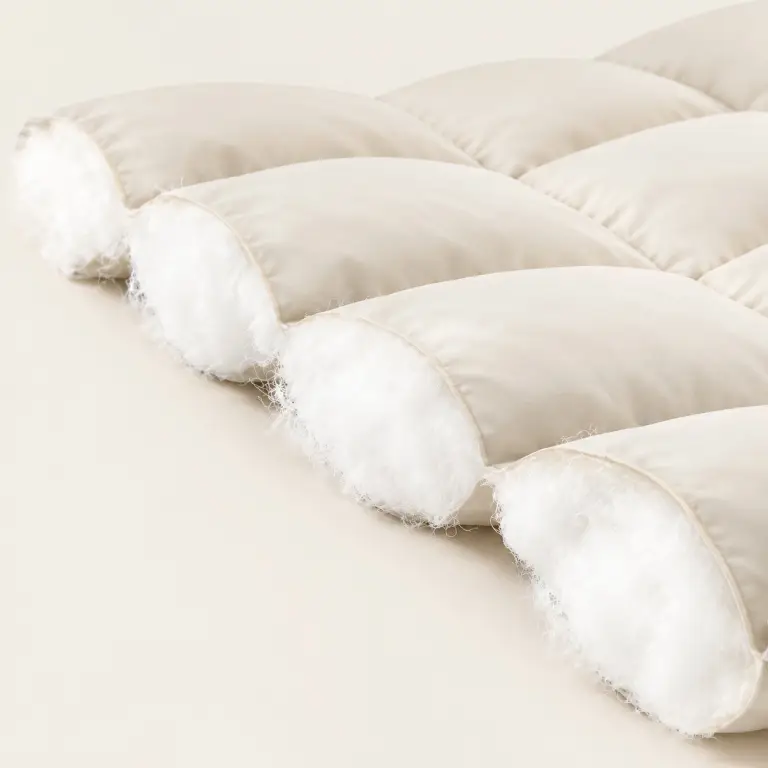
In the tested samples, the silk duvet recorded an air permeability value of 90.68, compared with 16.38 for the down duvet. It feels drier and less stuffy during sleep.
Silk fibers can absorb and release moisture. They help reduce heat and humidity inside the bed.
To prevent feathers from escaping, down duvets often use tightly woven downproof covers. This can reduce airflow.
Why Is a Silk Duvet Heavier Than Down
Silk duvets are usually heavier per square metre than down duvets because they retain warmth in different ways.
| Duvet filling | Total weight | Unit weight |
|---|---|---|
| 80% white duck down duvet | 1,240 g | 0.0367 |
| 100% long mulberry silk duvet | 1,410 g | 0.0480 |
01. Silk Duvets
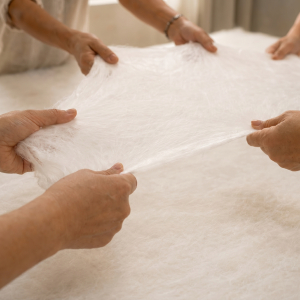
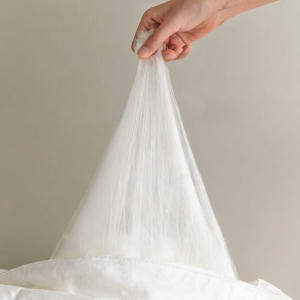
Silk is made of long, thin fibers layered together to create the filling. This structure feels soft and close to the body, but it can’t expand as much as down. To achieve enough warmth, a silk duvet normally needs a greater amount of filling across the same area.
02. Down duvets
Down forms three-dimensional clusters. Each cluster holds a large volume of still air, forming an effective insulator. Down can provide strong warmth with less filling weight.
Sleep Comfort of Three Duvets
Score (0 to 5)
Sleep calmness
Ease of falling asleep
Ease of waking
Refreshed after waking
Sleep satisfaction
View the scores
| Silk duvet | Down duvet | Wool duvet | |
|---|---|---|---|
| Sleep calmness | 3.7 | 3.6 | 3.4 |
| Ease of falling asleep | 4.0 | 3.2 | 3.5 |
| Ease of waking | 2.0 | 2.9 | 3.6 |
| Refreshed after waking | 3.4 | 3.5 | 3.6 |
| Sleep satisfaction | 3.8 | 3.4 | 3.6 |
In the test about sleep comfort of different duvets, silk duvets deliver the strongest overall subjective sleep experience.
Silk received the highest scores for sleep calmness, ease of falling asleep, and sleep satisfaction. It also had the lowest score for ease of waking, which is positive because a lower score means participants were less likely to wake up easily during the night.
Down duvets showed balanced results across all five indicators. Their scores were generally moderate, without the clear strengths or weaknesses seen in silk and wool.
Wool duvets perform best for feeling refreshed after waking. However, they also had the highest ease of waking score, suggesting that participants may have been more likely to wake during sleep.
Price and Lifespan
01. Silk duvets
The price of mulberry silk duvets is stable. A 100% mulberry silk duvet with certified Grade 6A silk can last for more than 15 years with proper care. Poor storage can cause silk to oxidise and turn yellow, especially after long exposure to strong sunlight or heat. Keep the duvet away from direct sunlight and heat sources, and air it regularly in a dry, ventilated place to help extend its lifespan. For more care advice, read Sensoire’s care guide.
02. Down duvets
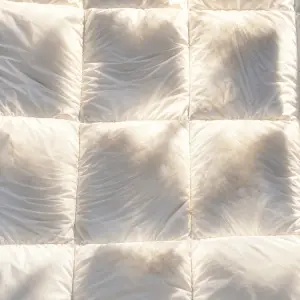
Down duvets have a wider price range, depending on the quality of the filling. Premium options, especially goose down duvets, usually cost more. Over time, the down may shift or clump, reducing its loft and warmth. To maintain performance, keep the duvet dry, air it regularly, and avoid compressing it under heavy items during storage.
How to Choose Between a Silk and Down Duvet
Choose by bedroom temperature
01 Cold winters and bedrooms below 15°C
A down duvet is usually the warmer choice for cold rooms without heating.
02 Mild, damp winters
A mulberry silk duvet feels light and helps manage moisture. It suits sleepers who dislike a damp or stuffy bed.
03 Heated bedrooms between 17 and 23°C
A lighter mulberry silk duvet is enough.
Choose by your sleep needs
01 Cold at night
Choose a warmer down duvet or a heavier mulberry silk duvet. Down usually provides more warmth with less weight.
02 Hot or sweat at night
A mulberry silk duvet is a good choice. Silk absorbs moisture and releases it over time. This helps the bed feel less clammy.
03 Sensitive skin
A 100% mulberry silk duvet has a smooth, gentle feel against the skin. It is safer for sensitive skin because of its protein component. However, anyone with a known silk allergy should avoid it.
FAQs About Silk Duvets vs Down Duvets
Is a silk duvet better than down?
Silk is better for sleepers who value breathability, moisture control, and a smooth, close fitting feel. Down is better for cold bedrooms because it provides more warmth with less weight. The right choice depends on your room temperature and sleep preferences.
Are silk duvets warm?
Yes. Silk can retain heat, although it usually has lower thermal resistance than down at the same filling weight. A silk duvet is particularly suitable for heated bedrooms between 17 and 23°C and for people who dislike feeling stuffy at night.
Are silk duvets worth it?
A silk duvet can be worth it for hot sleepers, people with sensitive skin, and anyone who prefers a breathable duvet with a smooth feel. Down may offer better value if maximum warmth with minimum weight is your main priority.
How long do silk duvets last?
A high quality 100% mulberry silk duvet made with Grade 6A silk can last for more than 15 years with proper care. Keep it away from strong sunlight and heat, air it regularly, and avoid prolonged compression during storage.
How do you clean a silk duvet?
Always follow the care label provided by the manufacturer. For routine care, keep the duvet dry, air it in a shaded and well ventilated place, and avoid strong sunlight or high heat. For detailed cleaning instructions, read Sensoire’s care guide.
From the Collection
Grade 6A Fill · Silk Shell
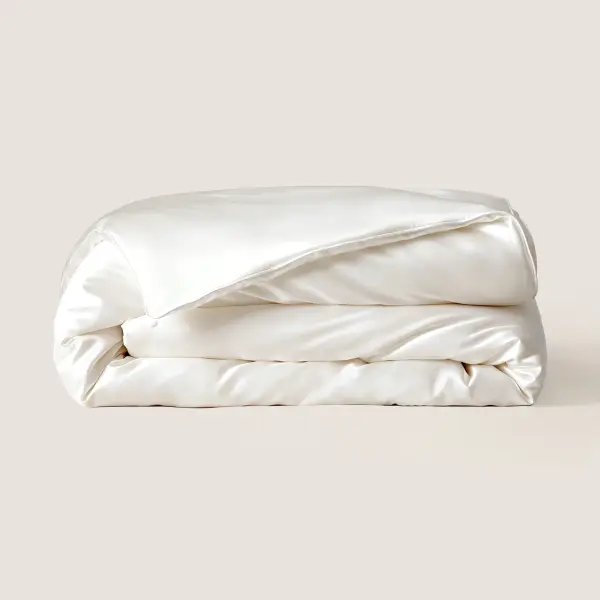
Grade 6A Mulberry Silk Duvet, Pure Silk Shell
Grade 6A mulberry silk fill inside a pure silk shell.

Grade 6A Fill · Cotton Sateen
Mulberry Silk Duvet with White Piping
A 100% cotton sateen shell finished with white piping.
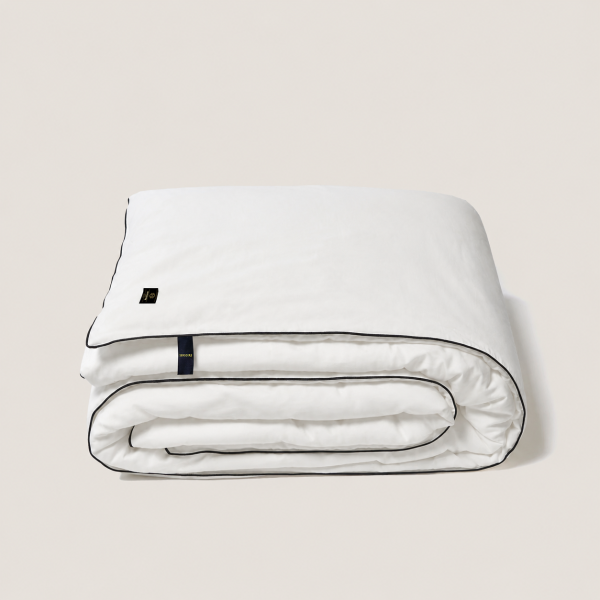
Grade 6A Fill · Cotton Sateen
Silk Filled Duvet with Black Piping
A 100% cotton sateen shell finished with black piping.

Long-Strand Fill · Box-Quilted
Box-Quilted Mulberry Silk Filled Duvet
Box quilting holds the long-strand mulberry silk fill in place.