


Fibre Science · Hot Sleepers
Are Mulberry Silk Duvets Good for Hot Sleepers?
Feel hot and sticky in bed? Do you keep turning and struggle to fall asleep? A mulberry silk duvet can help create a more comfortable sleep environment. This guide explains how it can help your bed feel dry, light, and comfortable.
Quick Answer: Mulberry silk can absorb water vapour and release it as the air becomes drier. Its fine fibre structure also supports airflow and moisture movement. In a duvet, it can help reduce a damp, stuffy feeling for hot sleepers. Silk weave, fabric weight and bedding layers also matters for a cool sleep.
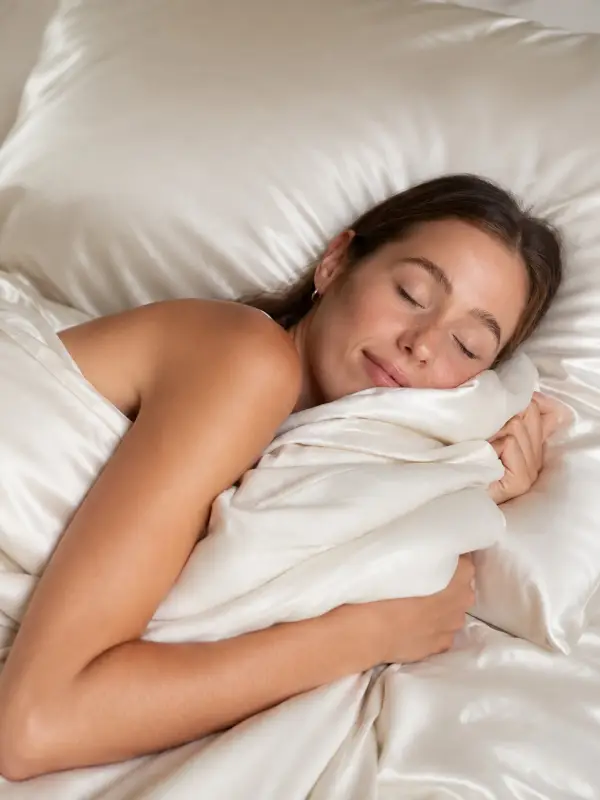
How Mulberry Silk Regulates Temperature
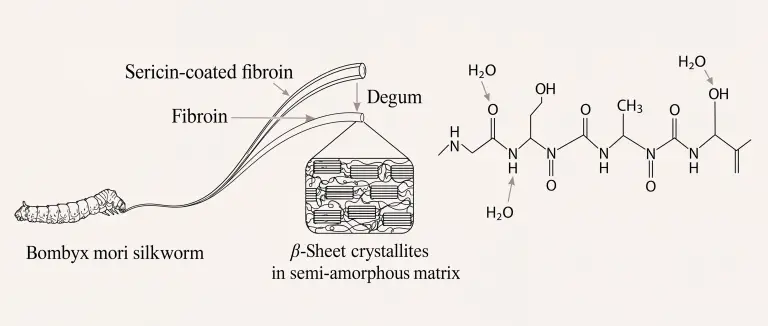
Fibroin and Sericin in Mulberry Silk
Mulberry silk is a natural, sustainable fiber with the clear core and outer layer. Fibroin protein forms the core and makes up about three quarters of the fiber. Sericin forms the outer layer.
The fibroin protein contains water loving groups that can bind with water molecules. This gives silk good moisture absorption. It can absorb sweat from the skin and help create a dry, comfortable sleep environment. Much of the sericin is removed during degumming, which makes the silk bedding softer.
Fibroin and sericin contain 17 to 18 amino acids, about 97% pure protein. They are similar to the proteins found in human skin and collagen. Mulberry silk has a good compatibility with the skin, which makes you feel smooth and gentle.
How Silk Fibre Structure Moves Heat and Moisture
Silk is featured with multiple layers of tiny structures. Small spaces between the fibers allow water vapor and air to move through. That’s the reason why a mulberry silk duvet can help moisture move through the filling. The air between the fibers can also help reduce sudden changes in temperature.
Moisture Regain in Mulberry Silk
Moisture regain is the percentage of moisture in a fibre compared with its dry weight. Simply speaking, it shows how well a material can absorb moisture from the air. If moisture regain is too low, fibres will become brittle and more likely to build up static. If too high, the material would be damp, heavy and less stable. Mulberry silk absorbs water vapour and release it when the air becomes drier.
Silk Moisture Regain Compared with Other Fibres
| Category | Fibre | Regain (%) | Dry tenacity (gf/den) | Wet tenacity (gf/den) | Breaking elongation (%) |
|---|---|---|---|---|---|
| Natural fibres | Cotton | 7.0 | 3.0 to 5.0 | 3.3 to 6.0 | 3.0 to 10.0 |
| Linen | 8.75 | 5.5 to 6.5 | 6.0 to 7.8 | 2.5 to 3.0 | |
| Silk | 11.0 | 2.4 to 5.1 | 2.0 to 4.3 | 10 to 25 | |
| Wool | 13.6 | 1.0 to 1.7 | 0.7 to 1.5 | 20 to 40 | |
| Regenerated fibres | Rayon or viscose | 11.0 | 1.0 to 3.0 | 0.5 to 1.5 | 20 to 25 |
| Synthetic fibres | Acrylic | 2.5 | 2.2 to 2.4 | 1.8 to 2.0 | 20 to 50 |
| Nylon | 4.5 | 2.3 to 5.0 | 1.8 to 4.0 | 19 to 40 | |
| Polyester | 0.4 | 2.5 to 9.0 | 2.5 to 9.0 | 10 to 60 |
Fibre property data adapted from CottonWorks’ Textile Fibers booklet. Values are for general reference and may vary by fibre type and test conditions.
Breathability and Moisture Vapour Transmission of Mulberry Silk
To figure out a fabric’s breathability and moisture vapour transmission rate, you need to know how heat and moisture move between the fabric and the skin. There is a small air space between the skin and the fabric. Our body releases heat, water vapour, and sweat during sleep. If they can’t escape in time, the bedding may feel hot, damp, and sticky.
Breathability describes how easily air passes through a fabric. Moisture vapour transmission measures the fabric’s ability to release water vapour. Moisture regain is only the first step. Once moisture is absorbed by the fibres, it still needs to move through the fabric and gradually evaporate. These performances are affected by fibre structure, yarn, weave, thickness, and surrounding conditions.
Silk vs Cotton
We have mentioned the small spaces between mulberry silk structure. Research shows, at comparable low surface densities, silk showed higher air permeability and moisture permeability than cotton.
| Fabric | Breathability | Moisture vapour transmission |
|---|---|---|
| Silk | 496.10 mm/s | 337.86 g/(m²·h) |
| Cotton | 170.59 mm/s | 294.88 g/(m²·h) |
Different Silk Weaves
| Silk weave | Average breathability |
|---|---|
| Satin | 90.38 mL/(m²·s) |
| Twill | 76.19 mL/(m²·s) |
| Plain weave | 69.23 mL/(m²·s) |
In the same thickness, silk satin had the highest breathability, followed by twill and plain weave.
Data source
[1]Wang, L., Fu, Y., and Jiang, W. 2019. Analysis on Thermal and Moisture Comfortability of Silk and Cotton Fabrics. Science of Sericulture, 45(1), 88 to 93.
[2]Fang, L. 2008. Study on the Air and Moisture Permeability of Silk and Polyester Fabrics. Silk Monthly, (1), 9 to 11.
Final Check for Hot Sleepers
- Silk filling: Look for 100% long strand mulberry silk with Grade 6A.
- Fill weight: Choose a lighter fill for summer or a warm bedroom. A heavier fill may suit cooler seasons. Check the actual fill weight instead of relying only on labels such as “summer” or “all season.”
- Momme: Momme measures the weight of silk fabric. It usually applies to the duvet shell rather than the silk filling. A lighter momme feels softer and less heavy. Higher momme creates a denser fabric. But higher momme doesn’t always mean better for hot sleepers.
- Weave: Weave affects airflow, texture, shine, and weight. Charmeuse weave can be a good choice for hot sleepers.
- Shell material: Choose a breathable shell that allows heat and moisture to move away from the body. The product page should clearly state the shell’s fibre composition.
- Construction: Look for secure stitching to prevent it from moving or forming lumps.
- Size: Check the exact measurements instead of relying only on names such as Queen or King.
- Care: Always follow the recommended care tips for a longer use.
FAQs About Silk Duvets for Hot Sleepers
Are Mulberry Silk Duvets Good for Hot Sleepers?
They can be a suitable choice for hot sleepers. Silk can absorb water vapour and release it when the surrounding air becomes drier. Its fibre structure also supports air and moisture movement.
How Does a Mulberry Silk Duvet Regulate Temperature?
Silk doesn’t actively cool the bed. It helps manage moisture and airflow around the body. This can reduce the damp and stuffy feeling that often makes a bed feel hotter.
Does a Silk Duvet Make You Sweat?
A silk duvet won’t cause or stop sweating on its own. However, a duvet that is too heavy can still feel warm. Choose a suitable fill weight, a breathable outer fabric, and bedding that matches the season.
What Should Hot Sleepers Look for in a Duvet?
Check the filling material, fill weight, outer fabric, construction, and care instructions. A breathable shell and an appropriate amount of silk filling are especially important.
Can a Silk Duvet Help with Menopause Night Sweats?
A silk duvet cannot prevent hot flashes or night sweats. However, silk's moisture-handling properties may help the bedding feel less damp and stuffy. Choose a suitable fill weight and combine it with breathable bedding and a comfortable room temperature.
From the Collection

Silk Shell · Grade 6A Fill

Cotton Shell · White Piping
Grade 6A Mulberry Silk Duvet with 100% Cotton Sateen Shell and White piping

Cotton Shell · Black Piping
Grade 6A Silk Filled Duvet with 100% Cotton Sateen Shell and Black piping

Cotton Shell · Box-Quilted