


Fibre Guide · Hemp and Linen
Hemp vs Linen Sheets: Softness, Feel and How to Wash Them
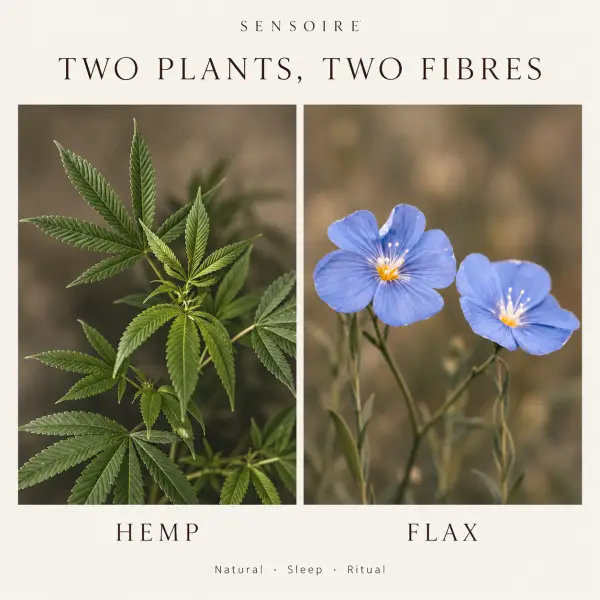
Hemp vs linen is a question about two plants. Hemp fibre comes from the stalks of industrial hemp, linen from the stalks of flax, and both can be woven into breathable, hard-wearing sheets. Which one feels softer has less to do with the fibre name than with the yarn, the weave and the finishing the cloth has been through.
Quick answer
Neither fibre is softer by default. A washed, softened hemp sheet can feel gentler than a crisp linen one, and the reverse is just as possible. Both relax with use and regular washing. For care, the label comes first: a cool, gentle wash with a mild liquid detergent, no bleach, then line drying or a low to medium tumble that stops before the cloth is bone dry.
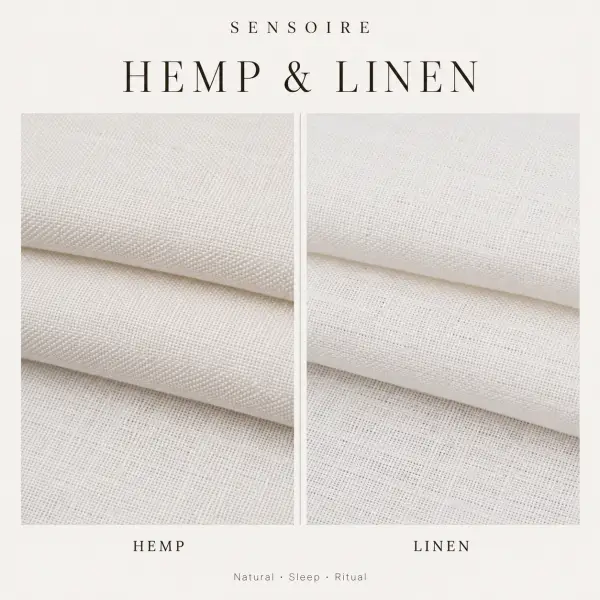
A good sheet lets you turn over, stretch out and fall asleep without thinking about it. Rather than crowning one fibre, it helps to know what kind of touch you enjoy, and how much care you are happy to give.
Hemp vs Linen: Where Each Fibre Comes From
Hemp textiles are spun from the bast fibre of industrial hemp, a tall crop grown for its stalk. Linen is the cloth woven from flax. The two plants are different, yet the fibre comes from the same part of each: the long strands that run just beneath the outer skin of the stem. Textile researchers group them together as bast fibres for exactly that reason.
Shop listings blur the line. “Hemp linen” usually means hemp fabric with a linen-like look, and phrases such as “linen feel” or “natural linen style” say nothing about what a cloth is made of. The fibre name and its percentage on the label are what count. Pure hemp, a hemp and cotton blend, a linen blend and pure linen each feel different, and each can come with different care instructions.
Colour, lustre and creasing help you choose a look. They cannot identify the fibre. Bleaching, dyeing, yarn and finishing all change the surface, and two pale cloths that look almost identical may come from different plants.
| Hemp | Linen | What to check | |
|---|---|---|---|
| Source | Industrial hemp, bast fibre from the stalk | Flax, bast fibre from the stalk | The fibre name and percentage on the label |
| Softness when new | Can feel soft, can feel crisp | Can feel fine, can feel coarse | Cloths of a similar use and finish, compared by hand |
| After use | Relaxes with use and washing | Relaxes with use and washing | No fixed number of washes |
| Creasing | Creases naturally | Creases naturally | Whether you like a relaxed, rumpled bed |
| Breathability | Shaped by yarn, weave and weight | Shaped by yarn, weave and weight | The finished cloth, not the fibre name or a “cooling” label |
| Care | Follow the care label | Follow the care label | Washing, bleach, drying and ironing, each on its own |
Are Hemp Sheets Soft?
They can be, though softness means two different things. One is drape: how easily the cloth bends and falls over the edge of the mattress. The other is surface: whether it feels smooth on skin or leaves a faint prickle. In a sheet you lie on all night, both matter.
Two hemp sheets can feel worlds apart. A heavy cloth that was never softened and a sheet that was washed during finishing share a fibre and little else. Fibre preparation, the yarn, the weave, the blend and the final finish all shape the hand of the cloth. That is why “hemp is softer than linen”, and the opposite claim, both leave out the part that decides the answer.
When researchers compared hemp and linen blends in a 2022 study, fibre content and industrial washing were treated as separate variables. The fabrics were denim, so the results rank nothing in bedding. The lesson carries over all the same: talk about softness without talking about processing, and the answer comes out too simple.
Do Hemp and Linen Sheets Get Softer With Washing?
Yes. Both relax with regular use and sensible washing, and how far they go depends on where the cloth started, how it is woven and how it is cared for.
A sheet softened during finishing can feel gentle from the first night. A heavy, crisp cloth will soften too, but a handful of washes will not turn it into a different fabric. No rule such as “soft after three washes” holds for every product, and hot washes or long, hot drying cycles are no shortcut. They are more likely to shrink the cloth than to soften it.
Worried About Scratchiness? What to Look For
Ask whether a swatch is available and whether the cloth has been washed, softened or pre-shrunk. If you can, rest the fabric against the inside of your forearm and feel the surface, rather than pinching it for thickness. Natural slubs are part of the character. A persistent itch is not something you need to get used to.
Blends are another route, as long as you know the second fibre and the share of each. “All natural” on its own tells you little about how a sheet will feel.
If you would like to try hemp against your face before dressing the whole bed, a single hemp pillowcase is the simplest place to begin.
Hemp or Linen: Which Is Better for Sleep?
Start from the part of the night that matters most to you.
01 Soft From the First Night
Look for cloth that has already been washed or softened, and touch a sample where you can. At this stage the individual product tells you more than the words hemp or linen.
02 You Enjoy Texture
If you like a bed with visible weave and a little body, both fibres suit you. Watch how the sheet falls when it is spread out, then crumple a corner and let go to see whether you like the creases it keeps.
03 You Sleep Warm
Look at the whole bed: sheet weight, how open the weave is, your duvet and the room itself. Researchers who tested six experimental fabrics found that weave and weft yarn both changed air permeability, moisture handling and heat transfer. The hemp-weft cloths in that work still used linen warp yarn, so the result cannot be stretched to “pure hemp sheets sleep cooler than linen”.
04 You Want Easy Care
Compare the care label with your washing machine and your drying space before you buy. If your household relies on a tumble dryer, make sure the label allows one.
How to Wash Hemp Sheets
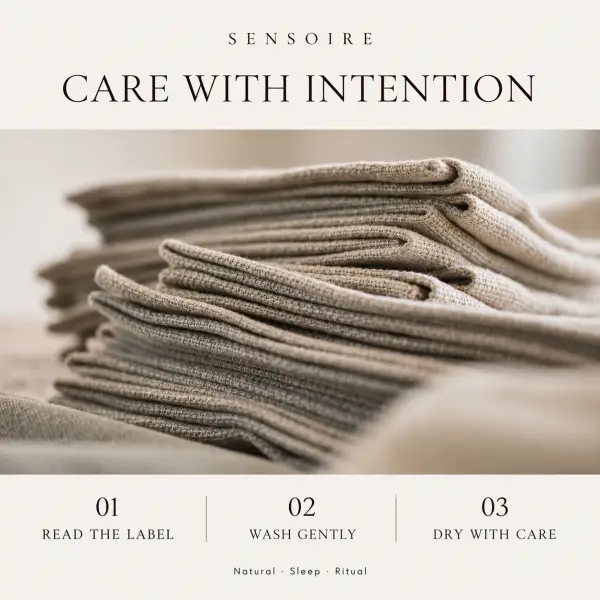
These steps are for hemp sheets, duvet covers and pillowcases whose label allows home washing. Blends, trims, coatings or special constructions can change the instructions, and a filled duvet needs care of its own.
-
Read the Label, Then Choose the Temperature
Check whether the item can be washed at home or in a machine. The number in the wash-tub symbol is the highest temperature allowed, and a line beneath the tub asks for a gentler cycle: temperature and agitation are two separate signals. Each symbol is explained by GINETEX, the international association for care labelling.
For washable hemp bedding without special stains, cold water and a short, gentle cycle are the usual choice. The care notes for Sensoire hemp bedding follow that line, with a mild liquid detergent dissolved in the water before it reaches the cloth.
No label? Ask the brand first. “Hemp is tough” is no reason to reach for a hot, vigorous wash.
-
Wash Colours Apart and Leave Room in the Drum
Wash light and dark colours separately, which means Natural and White go in different loads, and keep hemp away from hooks or zips that could catch the weave. Load the drum loosely, following your machine’s guidance for the cycle, so large pieces can move. If a stain needs attention first, use a method the label allows and test it somewhere discreet.
Choose a mild detergent suited to the fabric and dose it for the load and your water hardness. A double dose does not clean better. Skip long soaks, and treat fabric softener as optional rather than something every hemp or linen sheet needs.
-
Check Bleach and Dry Cleaning Separately
A washable label does not mean bleach is allowed. The bleach symbol is its own instruction, and a white sheet is no exception. Sensoire hemp bedding should not be bleached or dry cleaned; other products need checking one by one.
-
Dry Gently, on the Line or at Low Heat
Take the sheets out as soon as the cycle ends, shake them out and straighten the edges. Line drying works well; keep them out of long, strong sun. If the label allows a tumble dryer, use a low or medium setting and stop before the cloth is bone dry, since too much heat in the dryer can shrink it.
Make sure everything is completely dry before it goes into the cupboard. Iron while slightly damp if you like a smooth finish and the label permits it. If you prefer a relaxed look, leave the creases where they are.
Washing Linen: Same Principles, Its Own Label
Linen starts from the label too. Care advice from the Alliance for European Flax-Linen & Hemp is to choose temperature and cycle by the care label, with a warning that drying at too high a temperature can shrink linen.
For everyday washing, pick a gentle cycle and a suitable detergent, then shake the linen out and smooth it while it is still damp. For Sensoire linen that means 30°C, line drying where you can, and a low, short tumble only as a fallback. When ironing, go by the iron symbol on the label rather than the cotton and linen setting on the iron.
Neither hemp nor linen can promise zero shrinkage. Whether a pre-shrunk finish is enough depends on the product, and for a fitted sheet the mattress depth matters as much as its length and width. Checking the size before you buy is safer than trying to stretch a sheet after washing. Temperatures, stains and drying are covered step by step in our guide on how to wash linen sheets without shrinking them.
Hemp vs Linen: Common Questions
Is hemp the same as linen?
No. Linen is made from flax, and hemp fabric from the hemp plant. Both are bast fibres and look alike once woven, which is why hemp cloth is sometimes sold as “hemp linen”. The fibre content on the label tells you which one you are buying.
Is washed hemp the same as pure hemp?
No. “Washed” describes a finishing process, while “pure hemp” describes what the fibre is, so check the two separately. A washed or pre-shrunk finish also does not mean the cloth can never shrink, whatever the wash.
Does hemp shrink in the wash?
It can, as linen and cotton can. A cool wash, no long soaks and no over-drying keep shrinkage small. Sensoire hemp bedding is cut slightly generous to allow for it.
My sheets feel stiff after washing. Should I add more fabric softener?
First look back at the last wash: too much detergent, too little rinsing, or a change in how the sheets were dried. If you suspect detergent residue, run an extra rinse within what the label allows and feel the cloth again. Adding softener, bleach or a homemade soak straight away rarely helps. If the stiffness stays, tell the brand which cycle and detergent you used.
Does hemp wrinkle less than linen?
No ranking holds for every finished sheet. Both crease, and the weave, the blend and the finish change how much. Whether you enjoy a naturally rumpled bed is worth deciding before you buy.
Should I buy a full set for my first hemp or linen bedding?
You can start with a swatch or a single pillowcase, wash it by the label and see how it feels afterwards, then decide on sheets or a duvet cover. Your face, arms and body can respond differently to the same cloth, so let your own comfort decide.
Choosing Between Hemp and Linen
Sensoire looks at materials from the sleeper’s side: how the cloth feels against skin, whether you can turn over freely, and whether you still want to use it every night once it has been through the wash.
In the end, hemp vs linen is a choice of texture and routine rather than a contest. If the natural weave of hemp appeals, start with the hemp duvet cover set; if you prefer the relaxed fall of linen, browse the linen bedding collection. Weighing fibre, feel and care together is what makes the choice your own.
From the Collection
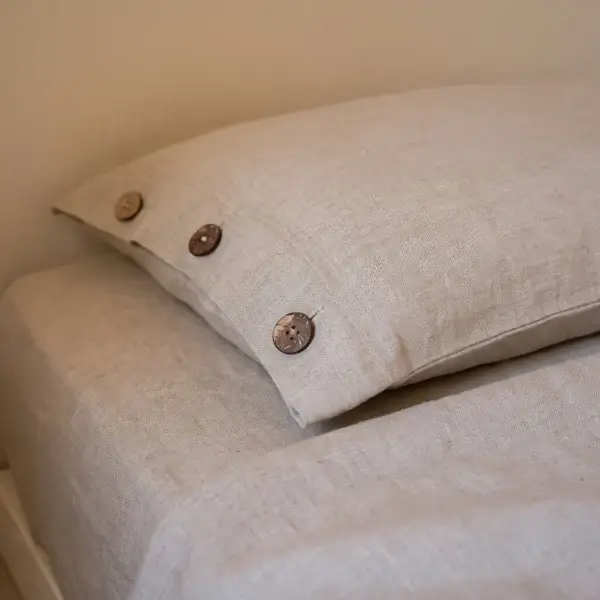
100% Hemp · Two Closures
Coconut button or envelope closure, sold single or as a pair.
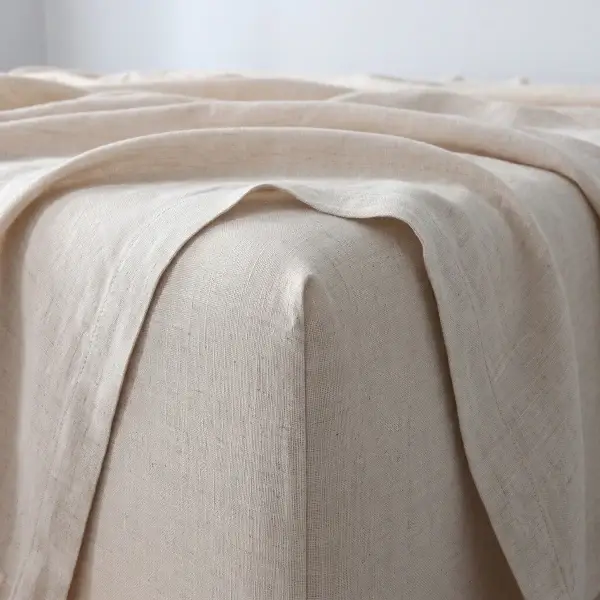
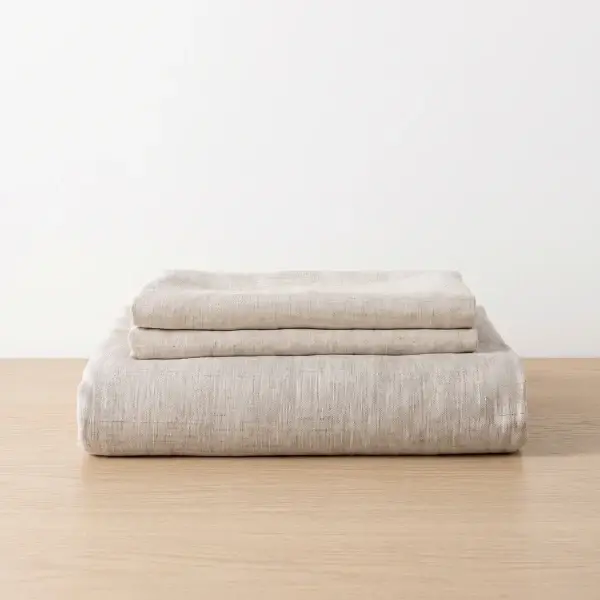
100% Hemp · Coconut Buttons
One duvet cover and two pillowcases in OEKO-TEX certified hemp.

100% Linen · Masters of FLAX FIBRE™
One duvet cover and two pillowcases in washed European flax.