


Fibre Guide
Sustainable Bedding: An Honest Guide
What makes bedding truly sustainable, how different fibres compare, and why the most responsible choice is often the one you keep the longest.
Quick answer: Sustainable bedding uses natural, renewable and biodegradable fibres. It’s produced under fair working conditions and durable enough to stay on your bed for years instead of ending up in landfill. Material matters, but so do the hands that make it and the decades it is designed to last.
The phrase gets used loosely, so this guide explains what sustainable bedding means, compares the environmental impact of common fibres, and explores the difference between traditional silk and Peace Silk. Finally, a checklist for choosing sustainable bedding is provided for.
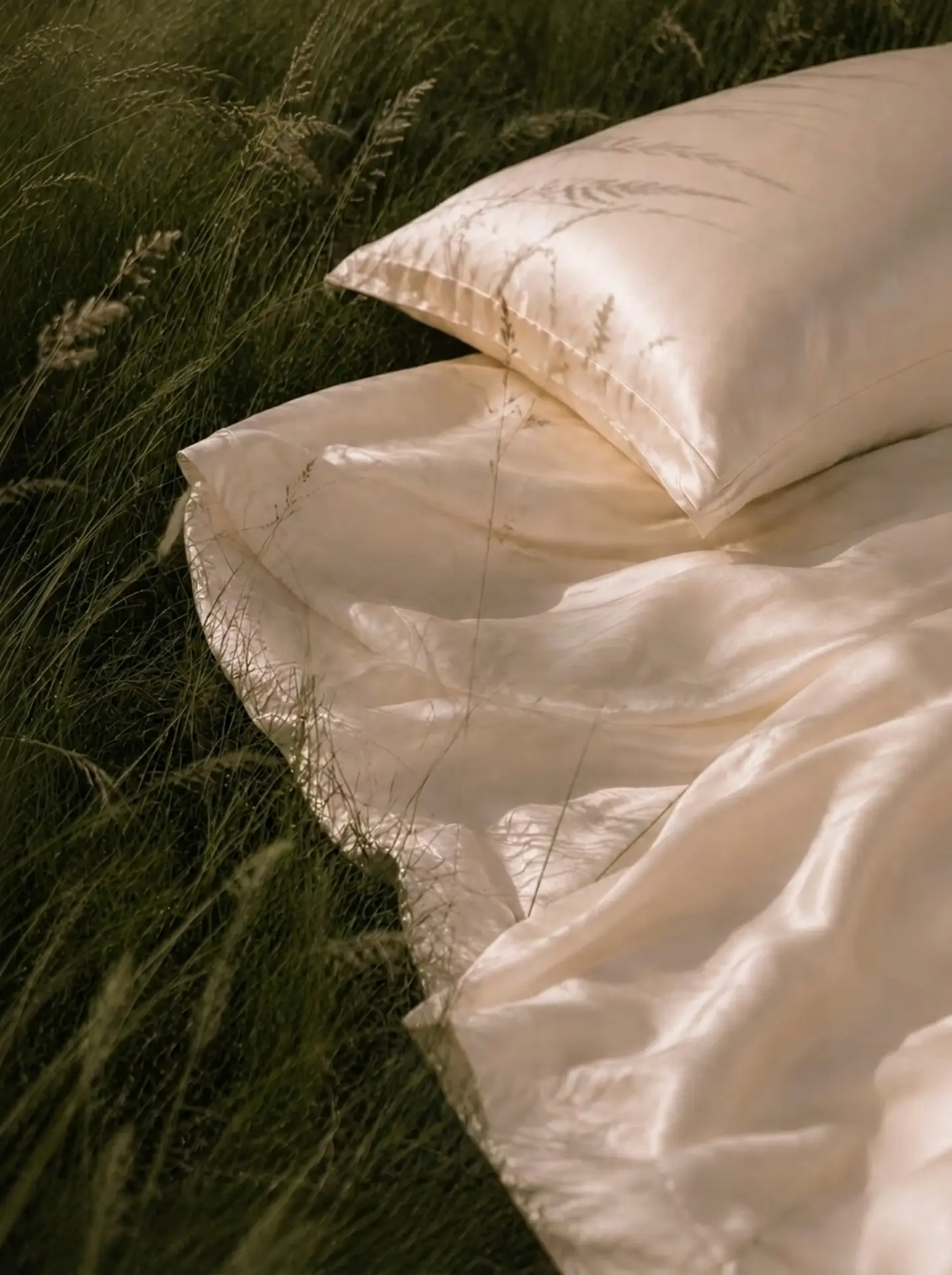
What is sustainable bedding?
Sustainable bedding is made with lower environmental impact in mind. This can include using fewer resources and less energy, reducing harmful chemicals, supporting safer working conditions, and designing products that last longer or can be reused or recycled.
Several certifications can help shoppers understand these claims.
The Global Organic Textile Standard, or GOTS, covers organic fibre content and the textile supply chain. Products labelled “made with organic materials” must contain at least 70% certified organic fibres. Products labelled “organic” must contain at least 95%. GOTS also sets environmental and social requirements for processing and manufacturing.
OEKO-TEX® STANDARD 100 focuses on product safety. It tests textiles and their components for more than 1,000 harmful substances. This includes substances such as formaldehyde, heavy metals, and certain dyes. It can apply from yarn to finished products, but it does not assess organic farming practices or labour conditions.
The EU Ecolabel looks at environmental impact across a product’s life cycle. Its criteria cover raw materials, production, use, and disposal.
How different fibres affect the environment
The environmental impact of a fibre can’t be determined by its name alone. It depends on how it is grown or made, how it is processed, how long it stays in use, and what happens at the end of its life.
Natural fibres
| Fibre | Source | Process | Lifespan | End of life |
|---|---|---|---|---|
| Mulberry silk | Mulberry farms, silkworms | Cocoon sort, heat treatment, reel, dye, finish | Long, durable | Potentially biodegradable |
| Wool | Pasture, sheep | Scour, card, yarn spin, weave or knit | Long, durable | Potentially biodegradable, recyclable |
| Linen | Flax crop | Flax treatment, fibre separation, yarn spin, weave | Long, made to last | Potentially biodegradable |
| Cotton | Cotton crop | Seed removal, yarn spin, dye, finish | Medium to long | Potentially biodegradable |
Regenerated fibers
| Fibre | Source | Process | Lifespan | End of life |
|---|---|---|---|---|
| Bamboo lyocell | Bamboo pulp | Pulp to fibre, solvent recovery | Medium | Potentially biodegradable |
| Viscose | Wood pulp, bamboo pulp | Pulp to fibre, CS₂ chemical process | Medium | Potentially biodegradable |
| Modal | Wood pulp, often beech | Modified viscose process | Medium | Potentially biodegradable |
Synthetic fibers
| Fibre | Source | Process | Lifespan | End of life |
|---|---|---|---|---|
| Polyester | Petrochemical feedstock | Plastic fibre, heat | Long, durable | Persistent, microplastic risk |
| Nylon | Petrochemical feedstock | Plastic fibre, heat | Long, strong | Persistent, microplastic risk |
| Acrylic | Petrochemical feedstock | Synthetic fibre, solvent process | Medium | Persistent, microplastic risk |
| Spandex | Petrochemical feedstock | Elastic fibre, chemical process | Short to medium, elastic | Hard to recycle, microplastic risk |
Traditional Mulberry Silk and Peace Silk
The difference is when the cocoon is harvested. Traditional mulberry silk is heat treated before the moth emerges, which keeps the filament long and unbroken; Peace Silk is collected after the moth has broken out, so its fibres are shorter and cannot be reeled into fine silk fabric.
Traditional mulberry silk
A silkworm cocoon is made from a continuous silk filament. To preserve this long, unbroken fibre, traditional silk production uses heat treatment before the moth emerges from the cocoon. Once the moth breaks through the cocoon, the filament is cut into shorter fibres and can no longer be reeled into the smooth, lustrous raw silk used for fine silk fabric.
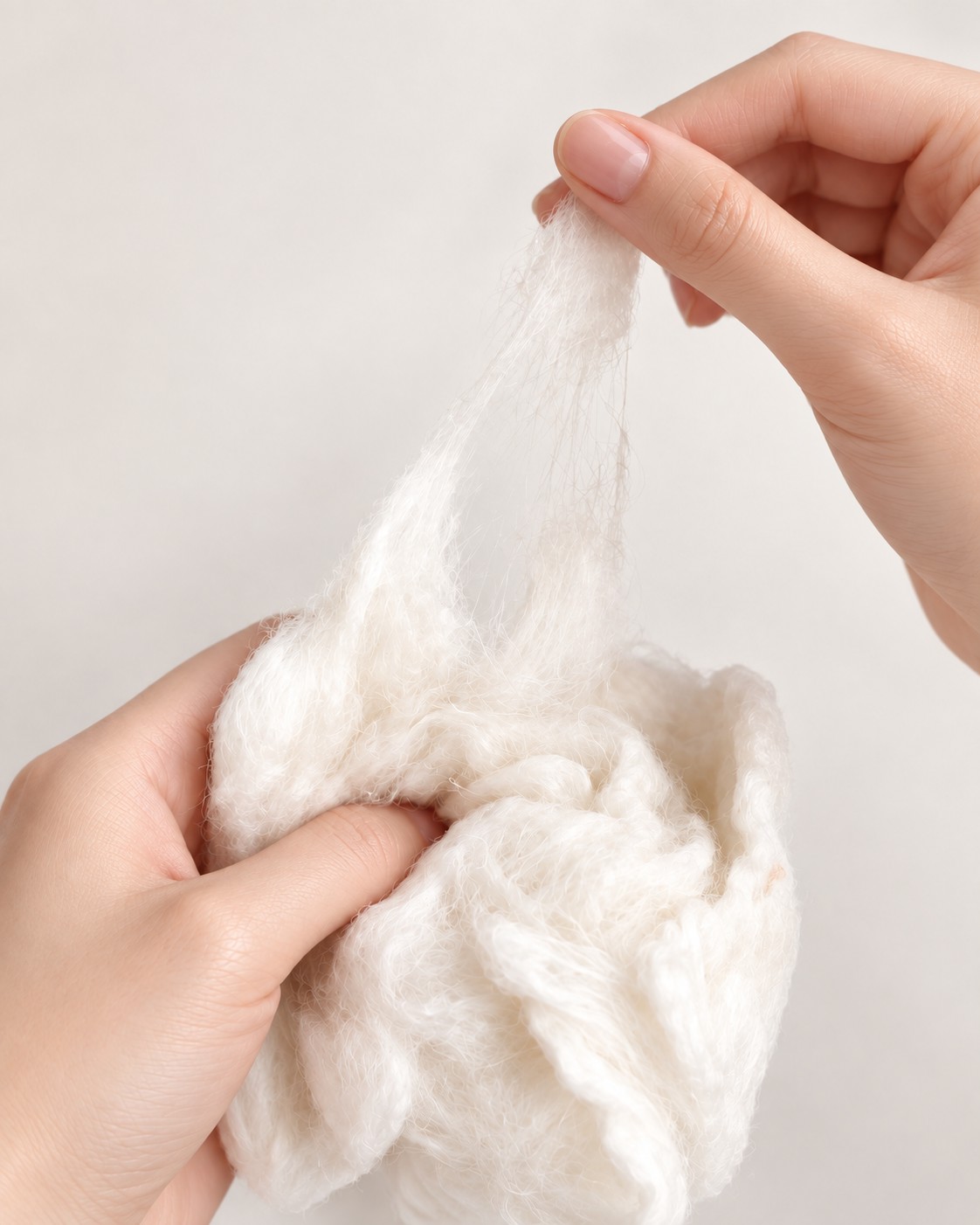
Traditional mulberry silk follows two different material routes. For silk fabric, intact cocoons allow long filaments to be reeled, spun and woven. For silk filled duvets, treated cocoons are selected, opened, stretched and dried into silk floss.

What happens to the pupae
Pupae separated during silk processing are collected for further use as food protein, animal food ingredients, pupal oil and protein materials. This supports fuller use of the cocoon after silk extraction. It is a practical approach to reduce material waste during the whole production process.
For where the industry is heading next, from fibroin research to traceable supply chains, read our view on the future of silk.
What is Peace Silk?
Peace Silk, also known as Ahimsa Silk, is collected after the moth has emerged and broken through the cocoon.
This approach responds to one animal welfare concern. Moths won’t be heat treated inside the intact cocoons. But once the cocoon is broken, its continuous filament is no longer available for conventional long filament reeling. The result is shorter fibre with different lustre, smoothness, durability and end use. It can’t be a direct substitute for the traditional mulberry long filament silk.
Why Peace Silk is not a complete answer
Peace Silk describes a different cocoon harvest approach. It’s not a complete sustainability certification. It can’t prove lower emissions, lower water use, safer chemistry, fair labour conditions by its own name. More importantly, domesticated silkworms are unable to survive on their own. They can’t see or evade predators and usually die shortly after emerging from their cocoons. Therefore, while peace silk sounds more ethical, it won’t significantly change the silkworms’ fate even with a waste of high quality filaments.
A note on Sensoire use
Sensoire uses traditional mulberry silk. We don’t use Peace Silk or Ahimsa Silk in our current collection. We can explain the material honestly. Traditional mulberry silk provides the continuous long filament required for smooth, lustrous fabric and silk filling. Peace Silk is shorter and not applicable in high quality silk bedding. Furthermore, this has not resulted in any significant changes for the silkworms.
Sustainable bedding checklist
| What to check | What to look for | Red flag |
|---|---|---|
| Material | Natural fibres such as silk, linen, cotton and wool. Clear fibre composition and material information. | Polyester and microfibre with no recycled content or end of life information. |
| Longevity | Strong construction and simple care. A well made silk duvet can last 15 to 20 years. | Bedding replaced every two or three years. |
| People and traceability | Fair working conditions and clear information about makers, materials and production. | No information about where or by whom the product was made. |
| Certification | Independent certification, such as OEKO TEX Standard 100 for harmful substances. | Vague claims such as “eco friendly” with no proof. |
Where Sensoire Stands
Silk, the anchor
Cut from Grade 6A mulberry silk and certified to OEKO-TEX Standard 100. Renewable, fully biodegradable, naturally temperature-regulating and gentle against skin, and built to last 15 to 20 years with simple care. Longevity is its quiet argument: the piece you keep for two decades is the sustainable one.

Linen, the companion
Spun from European flax, a crop that grows with little irrigation and few inputs. Biodegradable, breathable and very durable, with a relaxed, textured hand that suits sheets and covers, and that softens year after year rather than wearing out. Certified to OEKO-TEX Standard 100.

Bamboo, the companion
Made as closed-loop bamboo lyocell, the responsible end of bamboo, where solvents are recovered rather than released. We read the label so you do not have to: no cheap viscose, only the process worth choosing. Light, cool and smooth against the skin. Certified to OEKO-TEX Standard 100.
“Every piece is created with respect for nature and for the hands that make it.”
That respect takes three concrete forms: biodegradable natural materials, thoughtful craftsmanship, and fair pay for our makers. As Sensoire grows, our natural-fibre collection now spans mulberry silk, European linen and bamboo lyocell, and we keep choosing materials by a single measure: how well they help you rest, and how lightly they sit on the world.
Sensoire Shelf
Complete The Sustainable Bed
A few long-lived natural-fibre pieces, chosen around one principle: keep what you love for longer, care for it gently, and let natural fibres do the work.
Bedding Set
L’Heure de Soie Silk Bedding Set in Blanc Ivoire
A clean white silk bedding set for a quiet, breathable sleep surface and a softer nightly ritual.
View product
Silk Duvet
Pure Silk Duvet
A silk-filled duvet for natural temperature comfort, designed to be used under a washable cover and aired between seasons.
View product
Duvet Cover Set
100% Linen Duvet Cover Set
Washed European flax, a duvet cover and two pillowcases that soften with every wash.
View product
Pillowcases
Bamboo Lyocell Pillowcases
Closed-loop bamboo lyocell, cool, smooth and OEKO-TEX certified, a gentle way into natural fibre.
View productThe Most Sustainable Habit: Care
Whatever bedding you own, making it last is the greenest thing you can do with it. Wash silk cool and gently, following our guide to wash silk pillowcases. Keep duvets under a washable cover and air them instead of washing, as explained in our silk duvet care guide. Repair small snags early, and skip the tumble dryer entirely: air drying is kinder to fibres and to energy bills alike.
Sustainable Bedding, Answered
1.Is silk bedding sustainable?+
Yes, by the measures that matter most: silk is a renewable, fully biodegradable protein fibre, it is washed cool at 30°C or below, and it is exceptionally long-lived. A silk-filled duvet cared for properly lasts 15 to 20 years, which spares several replacement cycles of cheaper bedding.
2.What is the most sustainable bedding material?+
There is no single winner. Silk and linen lead on durability and biodegradability, organic cotton improves on conventional cotton, and closed-loop bamboo lyocell can be a responsible choice. The materials to avoid are polyester and microfibre, which shed microplastics and never biodegrade.
3.Is silk biodegradable?+
Yes. Silk is a natural protein fibre, like wool or hair, and breaks down fully at the end of its life. Polyester bedding, by contrast, is a plastic and can persist for hundreds of years.
4.Does sustainable bedding cost more?+
Usually upfront, rarely over time. Quality natural bedding costs more on day one but lasts many times longer. Spread over 15 to 20 years of nightly use, a silk duvet often works out cheaper per year than repeatedly replaced synthetic alternatives.
5.What certification should sustainable bedding have?+
Look for independent certifications rather than marketing language. OEKO-TEX Standard 100 confirms a textile has been tested for harmful substances, which matters for bedding that touches the skin for hours each night. Treat vague labels like eco-friendly with nothing behind them as marketing, not proof.
6.What is the difference between Peace Silk and traditional mulberry silk?+
Traditional mulberry silk comes from intact cocoons. This preserves the long, continuous filament used for smooth and lustrous silk. Peace Silk comes from cocoons after the moth has emerged. The broken cocoon produces shorter fibre with different smoothness, durability and end use.