


SENSOIRE JOURNAL · MATERIALS & SLEEP
Mulberry Silk vs Wild Silk: How to Choose Your Silk Duvet
Quick answer: both are real silk. Mulberry silk comes from the domesticated silkworm Bombyx mori and is the finer-fibre choice; tussah, the best-known wild silk, comes from Antheraea moths, whose cocoons show thicker fibres. For a duvet, we recommend a documented 100% long-strand mulberry silk filling.
For a duvet that settles softly around you, our choice is 100% long-strand mulberry silk filling. In the mulberry silk vs wild silk decision, we recommend choosing a clearly specified mulberry fill, then matching the outer shell and filling weight to the way you sleep. Those details tell you more than the word “silk” alone.
Wild silk is real silk. Our preference for mulberry is a choice about the duvet we want to make and sleep beneath: fine fibres, carefully arranged layers and a supple feel. Here is how to recognise that combination when you shop.

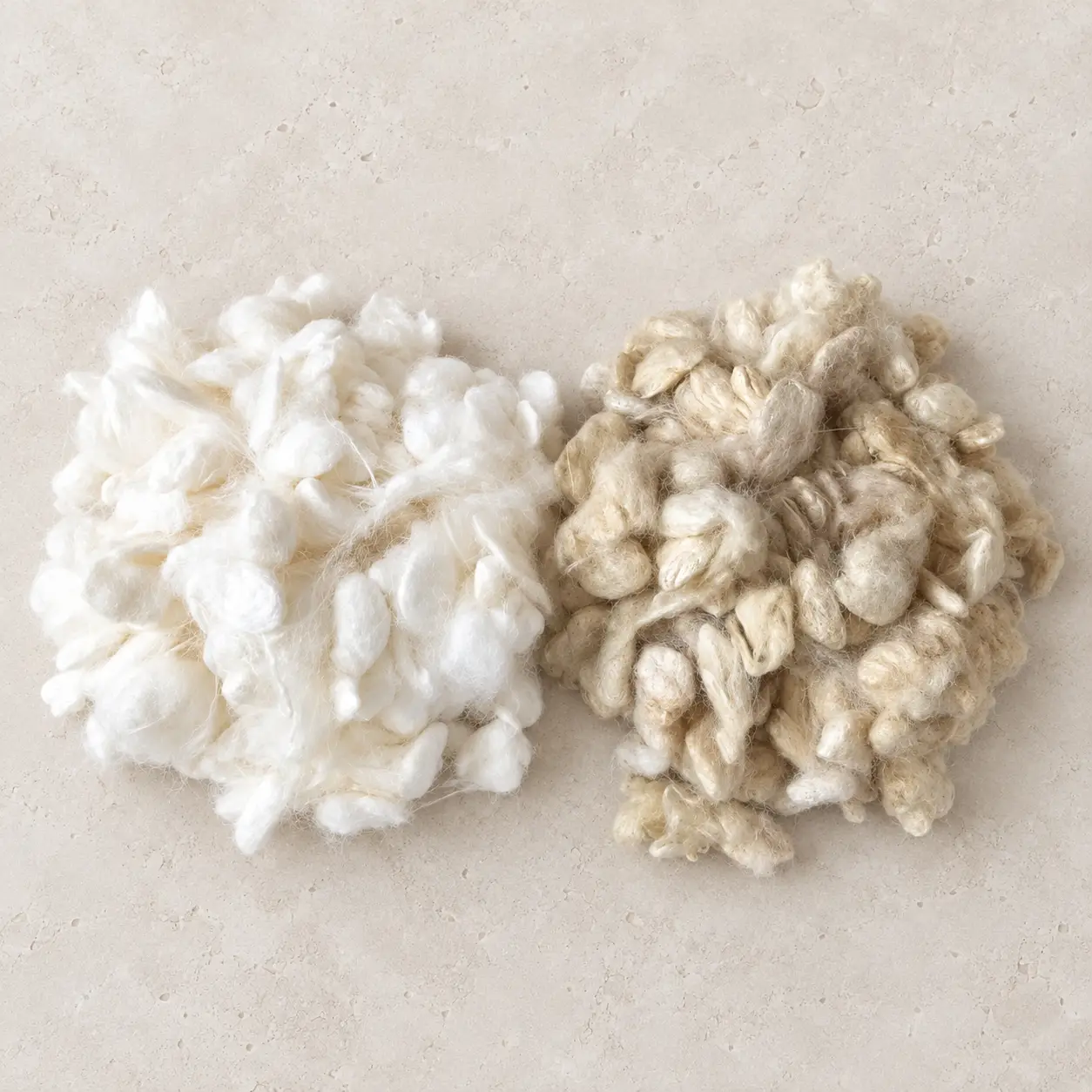
Start with the filling, then the shell
A silk duvet has an inner filling and an outer shell. The removable duvet cover is a third layer, chosen separately. It is easy to confuse them when a product title simply says “pure silk”.
For the filling, look for an explicit description such as “100% mulberry silk”, together with information about strand length and how the layers are held in place. For the shell, read the fabric composition separately. A cotton shell can enclose pure mulberry silk filling; a silk shell does not, by itself, tell you what is inside.
That distinction also changes how you judge softness. When a duvet is inside its cover, the cover is the fabric against your skin. The filling contributes to the way the whole duvet bends and settles. Running a hand over the outside cannot confirm the species of silk within it.
Before comparing two products, write down their filling, shell, dimensions and filling weight. A more expensive duvet may contain more silk, have a different shell or simply be a different size. Compare equivalent specifications before deciding what the price means.
Mulberry silk vs wild silk: what actually differs?
Mulberry silk is associated with the domesticated silkworm Bombyx mori. Tussah, also written tussar, refers to silks from Antheraea moths; Chinese tussah is associated with Antheraea pernyi. “Wild silk” is a broader description, so it is worth asking which silk a seller means.
These are real biological differences, not two marketing grades of the same fibre. Researchers have developed methods to distinguish B. mori and A. pernyi silk using their proteins. The species-identification study in Scientific Reports is a useful reminder that appearance and a familiar product name are different kinds of evidence.
There is a basis for describing mulberry as a finer-fibre choice. A comparative study of 14 silk sample types observed thicker fibres in Antheraea cocoons. However, it also found considerable variation in mechanical behaviour and discussed the influence of processing and environmental conditions. A raw-fibre experiment cannot tell you how every finished duvet will feel or how many years it will last.
For Sensoire, the recommendation remains mulberry. We favour a duvet specified around fine, long-strand filling and carefully laid layers. We would not choose an unspecified silk fill simply because the packaging looks refined.
| What to compare | Mulberry silk | Wild silk or tussah | What we would choose |
|---|---|---|---|
| Fibre identity | Look for an explicit mulberry description | Ask for the particular silk, rather than relying on “wild” | Clearly identified mulberry filling |
| Filling construction | Check that long-strand fill and layering are specified | Check the actual strand and construction details | Documented long-strand, layered mulberry fill |
| Outer shell | Can be cotton or silk, depending on the duvet | Also depends on the individual product | A shell chosen separately from the filling |
| Warmth | Depends on the finished duvet and filling amount | Requires the same product-level checks | A suitable weight for your bedroom |
| Care | Follow the exact product instructions | Do not infer washability from the silk name | A duvet whose care routine fits your home |
Why long-strand filling belongs on your checklist
The number of metres in a cocoon is often used to sell silk. The FAO silk reeling manual describes a total cocoon-filament length of 600 to 1,500 metres, depending on the silkworm variety, in its discussion of Bombyx mori.
This is a measurement of the thread in a cocoon. It is not a promise that every fibre inside a finished duvet has that length, nor a measure of the duvet’s lifespan. Reeling a thread for textile manufacture and preparing layers of filling are different operations.
When buying, ask a more practical question: how has this particular filling been prepared? We recommend long-strand mulberry silk with a clear description of how it is opened, layered and secured inside the shell. The term should be part of a complete specification, rather than a solitary claim beside a photograph.
If the duvet has an inspection opening, use it gently as intended. It can help you see the filling and its arrangement. It is not a home laboratory test of silk species. Avoid pulling fibres out or damaging the shell to try to prove a claim that the supplier should document.
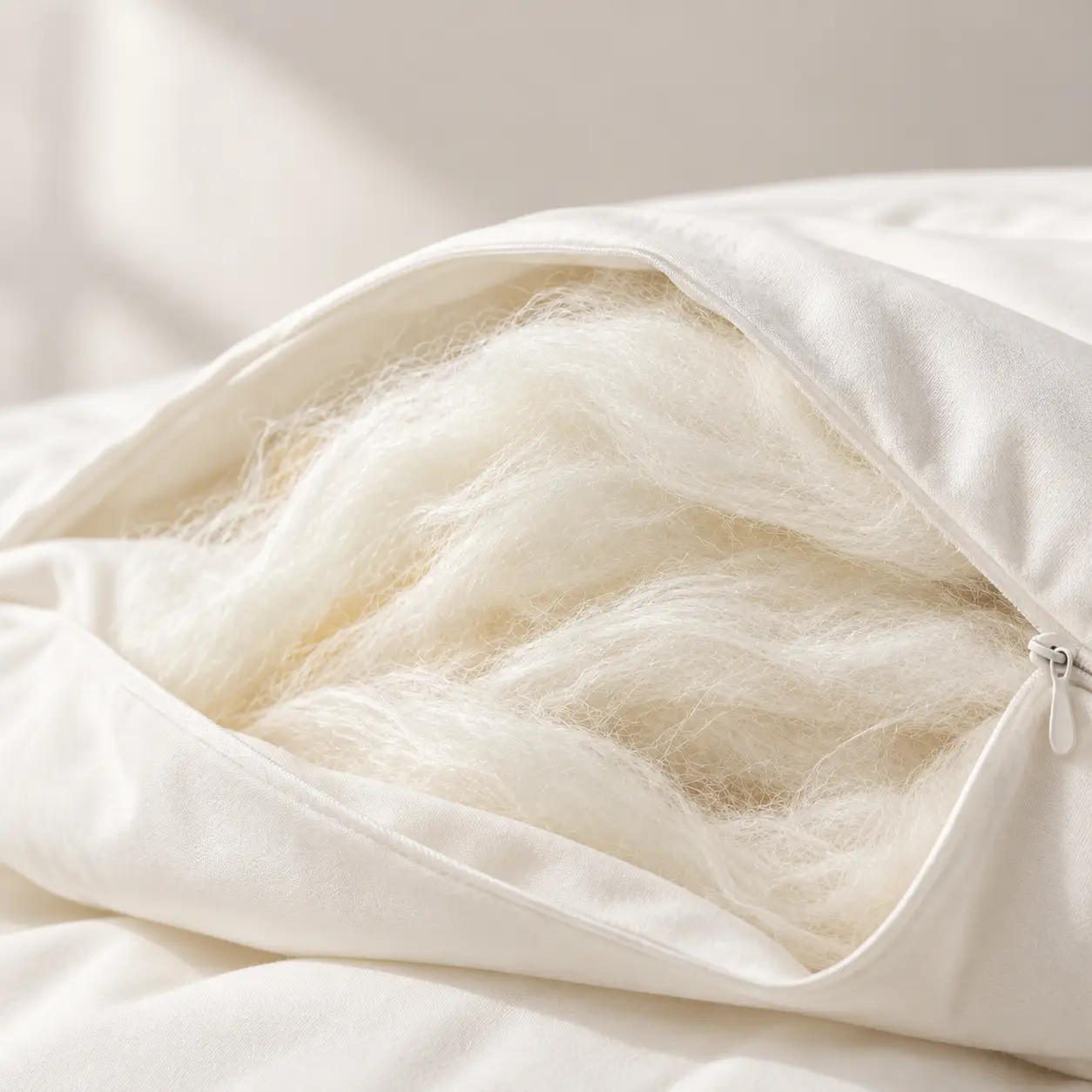
Choose the warmth you need, not the largest number
Once the filling is settled, choose the amount of it. Our recommendation for mulberry does not mean choosing the heaviest duvet available. A warm bedroom and a person who easily overheats call for a different starting point from a cold bedroom and someone who feels chilly at night.
Filling weight expressed in g/m² describes the mass of filling per square metre. It allows a more useful comparison across sizes than total kilograms alone. It is not the same measurement as a tog rating, and there is no universal conversion that applies to every duvet construction.
For a concrete example, the Sensoire mulberry silk duvet with a cotton sateen shell lists these options:
| Option | Listed filling weight | Place in this range |
|---|---|---|
| Summer | 180 g/m² | Lightest single duvet |
| Mid Season | 320 g/m² | Between the summer and winter options |
| Winter | 500 g/m² | Highest filling weight in a single duvet |
| 4 Seasons | 180 + 320 g/m² | Two duvets that combine to 500 g/m² |
These are Sensoire product specifications, not universal thresholds for all silk bedding. Use your existing duvet as a reference: do you regularly throw it off, or reach for another blanket? Then consider the room, your nightwear and the cover you use. Keep those details in mind when choosing within a range.
Read past colour and reassuring labels
A pale filling can look beautiful, but whiteness is not a certificate. The FAO manual describes natural variation in cocoon colour and explains that colour can change during processing. A photograph cannot establish whether a particular finished filling has been bleached, or prove that another has never been treated.
Similarly, “100% silk” does not tell you everything you need to know. It does not name mulberry, explain strand length or identify the shell. Ask which component the percentage describes. Our preferred purchase has “100% mulberry silk filling” stated clearly, with separate information for its casing.
Be cautious with exact-looking comparisons that leave out their method. A single fibre-diameter number may refer to a different part of the silk structure or a differently processed sample. A claimed lifespan may have no stated care conditions. A discount tells you little if the two duvets contain different amounts of filling.
Spend your attention on information you can use: composition, construction, dimensions, filling weight and care. If these details are missing, ask for them before buying.
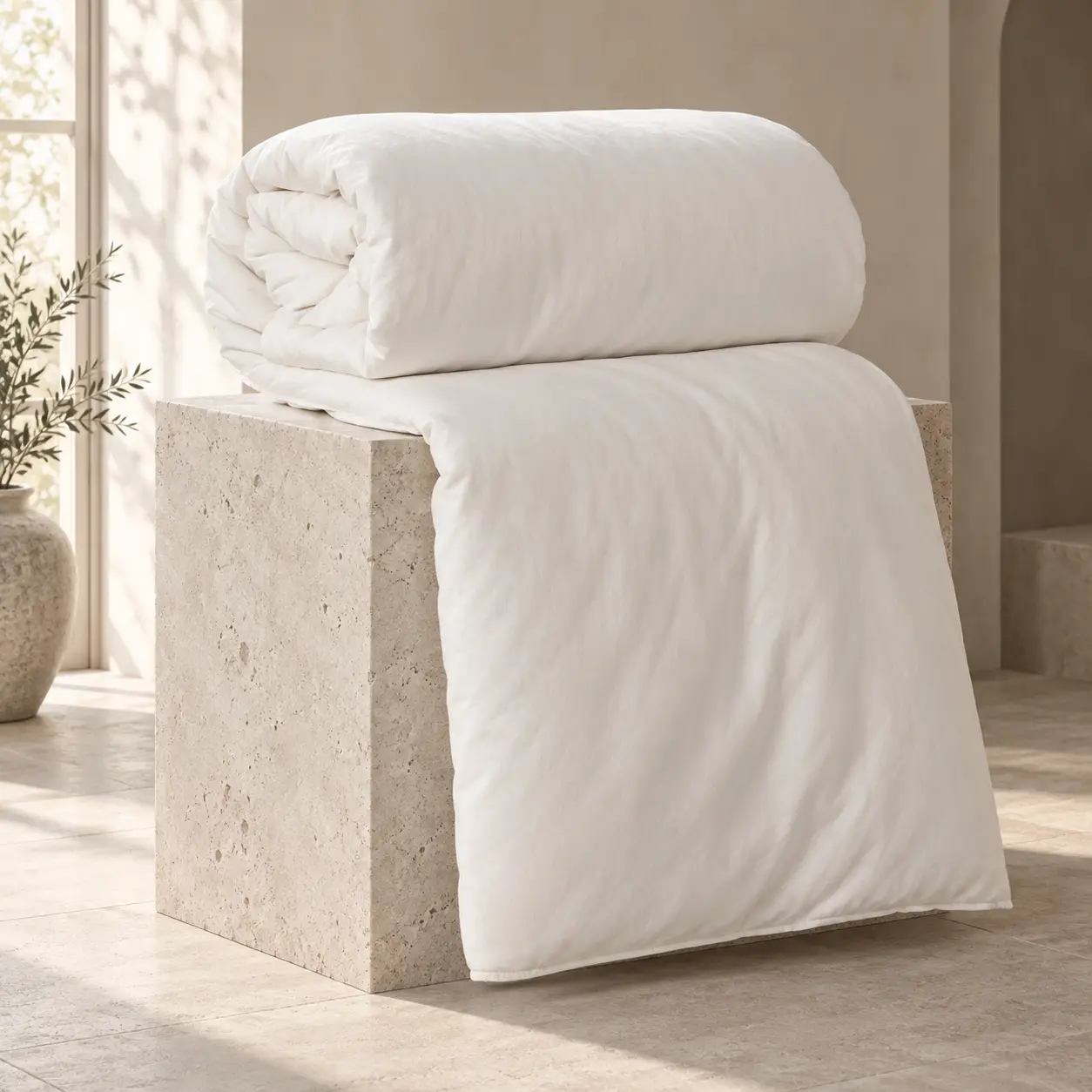
Our choice for a considered bed
We recommend 100% long-strand mulberry silk filling. After that, choose the shell for the bed you want to make.
Sensoire offers a mulberry silk duvet with a cotton sateen shell and white piping and a mulberry silk duvet with a pure silk shell. These are two ways to finish the outside of a mulberry-filled duvet. Read their individual specifications, then select the dimensions and warmth option you need.
If you are working within a budget, our preference is to keep the clearly specified mulberry filling and compare shell options first. Choose your required warmth rather than adding filling for its own sake. That gives each part of the purchase a purpose.
Sensoire is a sleep brand. For this part of the bed, our material choice is mulberry silk, with the final duvet selected around your room and routine. Explore the silk duvet collection.
Questions before you choose
Is wild silk genuine silk?
Yes. Wild silk is not another name for polyester, and tussah is genuine silk. The useful distinction is the type of silk and the way the duvet is made. Our recommendation is to choose a documented 100% long-strand mulberry filling for this purchase.
Does “100% silk” mean “100% mulberry silk”?
The wording alone does not establish that. Ask the seller to name the silk used in the filling and to describe the shell separately. A clear specification should let you compare both components without guessing from the product photograph or title.
Can I wash a mulberry silk duvet?
Follow the instructions for the exact duvet. The Sensoire models linked here specify that the duvet must not be machine washed or tumble dried; protect it with a washable cover. If regular machine washing of the insert is essential for your household, these particular models do not fit that requirement.
Which mulberry silk duvet should a warm sleeper choose?
Start by comparing the lighter options in the range and checking the room and cover you sleep in. Mulberry silk is our filling recommendation, but fibre identity alone cannot guarantee that a duvet will feel cool enough. Choosing an appropriate filling amount is part of the decision.
Editorial sources
The technical context comes from the FAO cocoon and filament manual, Malay et al.’s comparison of silk properties, and Gu et al.’s silk-species identification research. Product specifications were checked against the linked Sensoire pages on 27 September 2026. The recommendation is Sensoire’s editorial choice; these studies are not comparative tests of finished Sensoire duvets.