


LINEN CARE
How to wash linen sheets without shrinking them
How to wash linen sheets without shrinking them is mostly a matter of keeping the process simple. Read the sewn-in care label first, wash with a measured amount of mild detergent, give the bedding room to move, and choose the gentlest suitable cycle. Cold or lukewarm water is a sensible default when the label allows it. To reduce shrinkage and deep creases, avoid aggressive spinning and high heat, reshape the bedding while damp, then air-dry or tumble-dry on the permitted setting. Remove it before it becomes hot and bone-dry. Natural creases, small yarn slubs and a little early lint can all be normal. Persistent shedding, thinning fabric or attached fibre balls deserve a closer look.
The short version: a low-stress linen routine
If you want the whole guide in one minute, start here:
- Check the care label before the first wash.
- Separate pale and deep colours, and keep rough hardware out of the load.
- Close duvet-cover buttons or zips and turn covers inside out.
- Leave enough space for sheets to lift and move inside the drum.
- Use a modest dose of mild detergent.
- Choose the lowest suitable temperature and a gentle cycle permitted by the label.
- Unload promptly, shake the pieces open and smooth the seams.
- Air-dry in moving shade, or tumble-dry only when the label allows it.
- Remove linen while slightly damp and let it finish drying on the bed or a rack.
- Leave suspected slubs alone. Photograph an unusual surface change before trying to remove it.
The care label remains the final authority. Two products can both say "100% linen" and still need different treatment because colour, weave, finishing, thread, elastic and fastenings affect what the finished item can tolerate.
Linen will crease, and that is not a laundry emergency
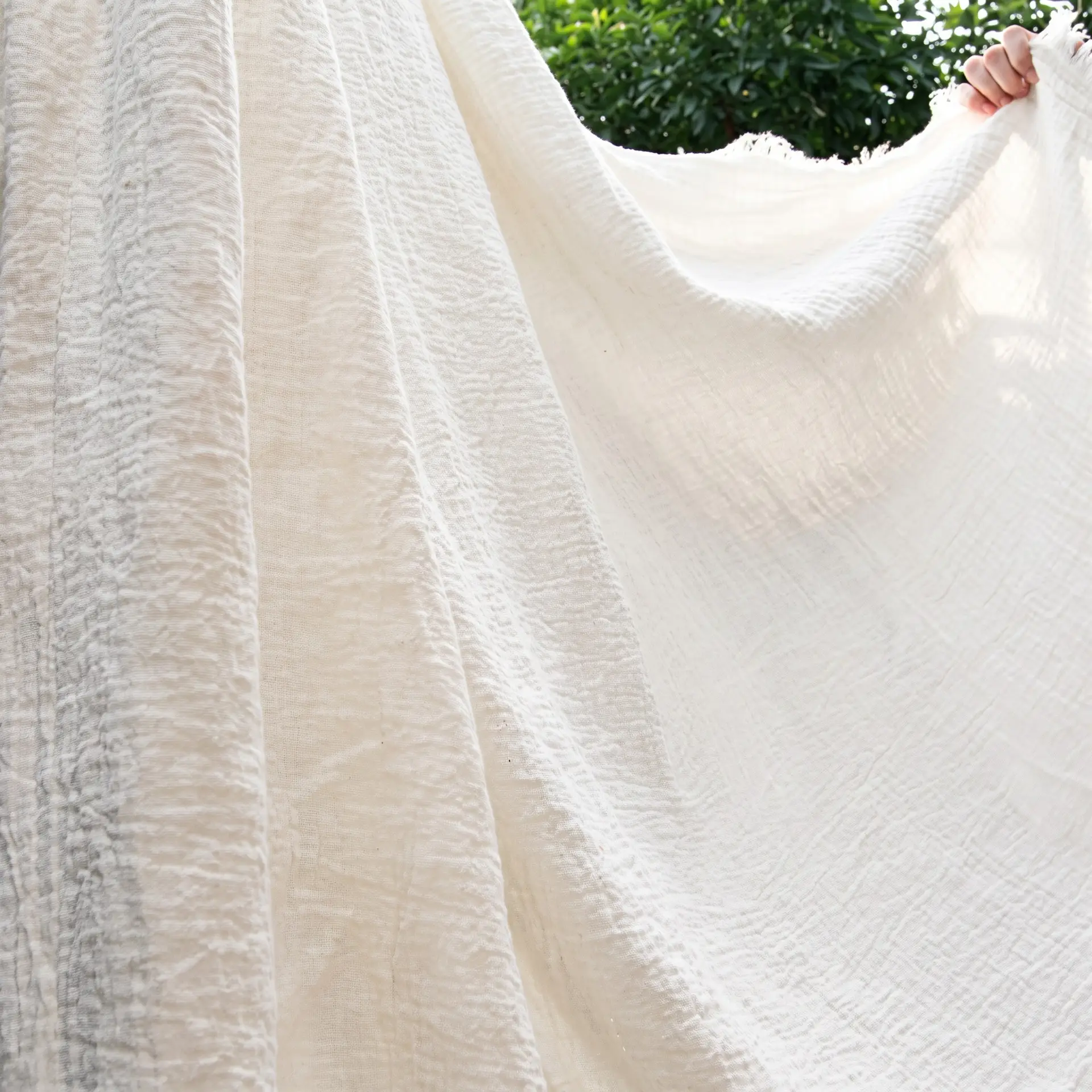
Linen has a looser visual rhythm than a crisp cotton percale or a wrinkle-resistant synthetic fabric. It bends, relaxes and records the way it has been washed, dried and slept in. That softly rumpled surface is one reason people choose it.
There is still a difference between an easy crease and a hard-set fold. The first gives linen its relaxed character. The second usually comes from crowding, strong spinning, leaving wet bedding in the washer, or drying a tangled bundle for too long.
Should you wash new linen sheets before using them?
For Sensoire linen bedding, we recommend a first wash before use when the care label permits domestic washing. It clears loose surface lint and dust from handling, and it starts the gradual relaxation of the fabric.
Before loading the machine, read the full row of symbols. The washing symbol is only one part of the instruction. Bleaching, drying and ironing permissions matter too.
Then prepare the bedding:
- Separate strong colours from whites and pale neutrals.
- Fasten buttons or zips so that a duvet cover does not swallow the rest of the load.
- Turn covers and pillowcases inside out to reduce rubbing on the visible face.
- Keep hooks, exposed zips, hook-and-loop tape and rough garments out of the wash.
- Check that your machine is large enough for the item when wet.
A king-size duvet cover may become a dense, twisting rope once wet. If it cannot move freely, wash fewer pieces or use a larger machine.
How to wash linen sheets properly
Sort for colour, weight and texture
Wash similar colours together until you know how the dye behaves. Large linen pieces are also happier with smooth, lightweight companions than with towels, denim or clothes covered in metal hardware.
Washing linen separately is useful for early washes, saturated colours and bulky loads. Later, compatible pieces can share a load if the care labels agree and the drum has space.
Leave room in the drum
Overloading is one of the easiest ways to create poor rinsing and deep creases. Sheets need to lift, fall and circulate through the wash water. When they are compressed, detergent can settle unevenly and folds are repeatedly pressed into the same places.

Measure a mild detergent
Choose a detergent suitable for the colour and the care label, then use the dose recommended for the load size, water hardness and soil level. More detergent is not more care. In a crowded machine, it may simply mean more residue to rinse away and bedding that feels stiffer when dry.
The bleach symbol matters even when the linen is white. An empty triangle allows chlorine or oxygen bleach. A triangle with two diagonal lines allows oxygen bleach only. A crossed triangle means no bleach. Follow the laundry product directions as well as the textile label, and test unfamiliar stain treatments on a discreet area.
Fabric softener is not required for linen to become comfortable. Linen often grows more flexible through appropriate washing and ordinary use, although there is no universal timetable. If you choose to use a laundry enhancer, both its directions and the bedding label must allow it.
Choose temperature by label, not folklore
There is no single correct answer to "what temperature to wash linen bedding?" The number in the wash tub is the maximum permitted temperature, not a target that every wash must reach. A line beneath the tub indicates reduced mechanical action.
For routine care, cold or lukewarm water is a conservative choice when the label permits it. Use a more intensive treatment only when the level of soiling calls for it and the product instructions allow it. Hotter water is not a clever substitute for treating one small stain.
The number is the maximum temperature, not a target.
The triangle governs bleach. Crossed out means none at all.
A circle in a square allows tumble drying. Dots set the heat.
The iron symbol sets the maximum ironing temperature.
Reduce twisting and aggressive spinning
A gentle or delicate cycle is often appropriate for routine linen care, subject to the label. Select a low or moderate spin rather than the strongest option. Heavy twisting can leave pronounced folds in large wet pieces and adds mechanical stress that a lightly soiled weekly load does not need.
The kindest routine is the least intensive one that still gets the bedding clean.
Unload as soon as the cycle ends
Do not leave wet sheets folded against the drum for an afternoon. Open each piece, give it a controlled shake, align the edges and smooth hems, seams and plackets with your hands.
This small habit does more for wrinkle reduction than most special products. It also helps air reach the whole surface during drying.
Do linen sheets shrink?
Linen can change dimension during washing and drying, especially when the fabric has not been stabilised or pre-washed. A universal shrinkage percentage is not useful for finished bedding. Yarn, weave, construction and finishing all affect the result.
You can still control much of the avoidable risk. Think about three pressures:
- Water allows the fabric to relax from tensions introduced during manufacturing.
- Strong agitation and spinning can compact or distort a large wet item.
- High heat and prolonged drying can increase dimensional change and set folds.
This is a care framework, not a shrinkage calculator. Avoid applying all three pressures aggressively at once.
To reduce the chance of avoidable shrinkage:
- follow the label from the first wash;
- use the mildest effective wash;
- avoid sudden experiments with high heat;
- reshape corners, hems and seams while damp;
- stop tumble drying before the linen becomes hot and completely dry;
- buy the correct size rather than counting on the fabric to stretch.
If a fitted sheet feels smaller after washing, let it finish drying, then fit the corners evenly. Check whether the elastic has tightened or twisted before assuming that the entire sheet has shrunk. If a new product no longer fits after label-compliant care, photograph the label, record the wash settings and contact the retailer. Another hot wash is unlikely to restore it.
How to dry linen sheets
Air-drying
Air-drying is the conservative option when the label allows it. Spread the weight across a line or rack, open folded hems and leave space between layers. Airflow matters more than intense heat.
For coloured linen, choose shade and avoid prolonged strong sunlight, which can fade colour over time.

Tumble drying
Can you put linen sheets in the dryer? Yes, but only when the care label permits tumble drying. The square with a circle gives the answer, and the dots inside it indicate the permitted heat level.
Where tumble drying is allowed, keep the load loose, use the lowest effective heat and check it earlier than you would check a load of thick towels. Remove the linen while it still holds a trace of moisture, shake it open and let it finish on the bed or a rack.
The dryer is useful, but it is not a spa treatment. Repeatedly restarting the cycle to chase the last hint of dampness can leave linen feeling temporarily harsh and gives creases more time to set.
If the label says not to tumble dry, use the authorised natural-drying method.
How to make linen sheets less wrinkled
You cannot make untreated linen behave exactly like a permanently pressed fabric, but you can prevent the worst creases.
Start in the washer. Use a roomy load, reduced spin and prompt unloading. Smooth the edges before drying and prevent the fabric from twisting into a rope. When tumble drying is permitted, remove the sheets slightly damp. A fitted sheet often relaxes further when placed on the mattress, while the weight of a duvet helps a cover settle as it finishes drying.
For a quick tidy, lightly mist clean linen with water and smooth it with your palms. Use a garment steamer if the care label permits steam, keeping it moving rather than soaking one place.
For a crisp finish, iron the linen while it is evenly damp or use the authorised steam setting. The iron symbol, not the fibre name alone, determines the permitted temperature. Take care around buttons, elastic, embroidery and decorative finishes.
You do not need to iron every square centimetre of a duvet cover. Press the pillowcases and visible top edge if you prefer a neater bed.
How to soften linen sheets safely
Time, appropriate washing and ordinary use usually do more than an elaborate softening routine. If linen feels stiff after a wash, let it dry fully before judging it. Then ask three practical questions:
- Was the machine crowded?
- Was too much detergent used?
- Was the bedding over-dried?
Correct those causes on the next wash before adding another product. Use the right detergent dose, allow a thorough rinse and remove the linen before it becomes hot and parched. Avoid unverified recipes that mix household chemicals.
New linen may feel crisp because of its yarn, weave or finishing. No guide can promise softness after a fixed number of washes.
Slubs, lint, fuzz and pilling are not the same thing
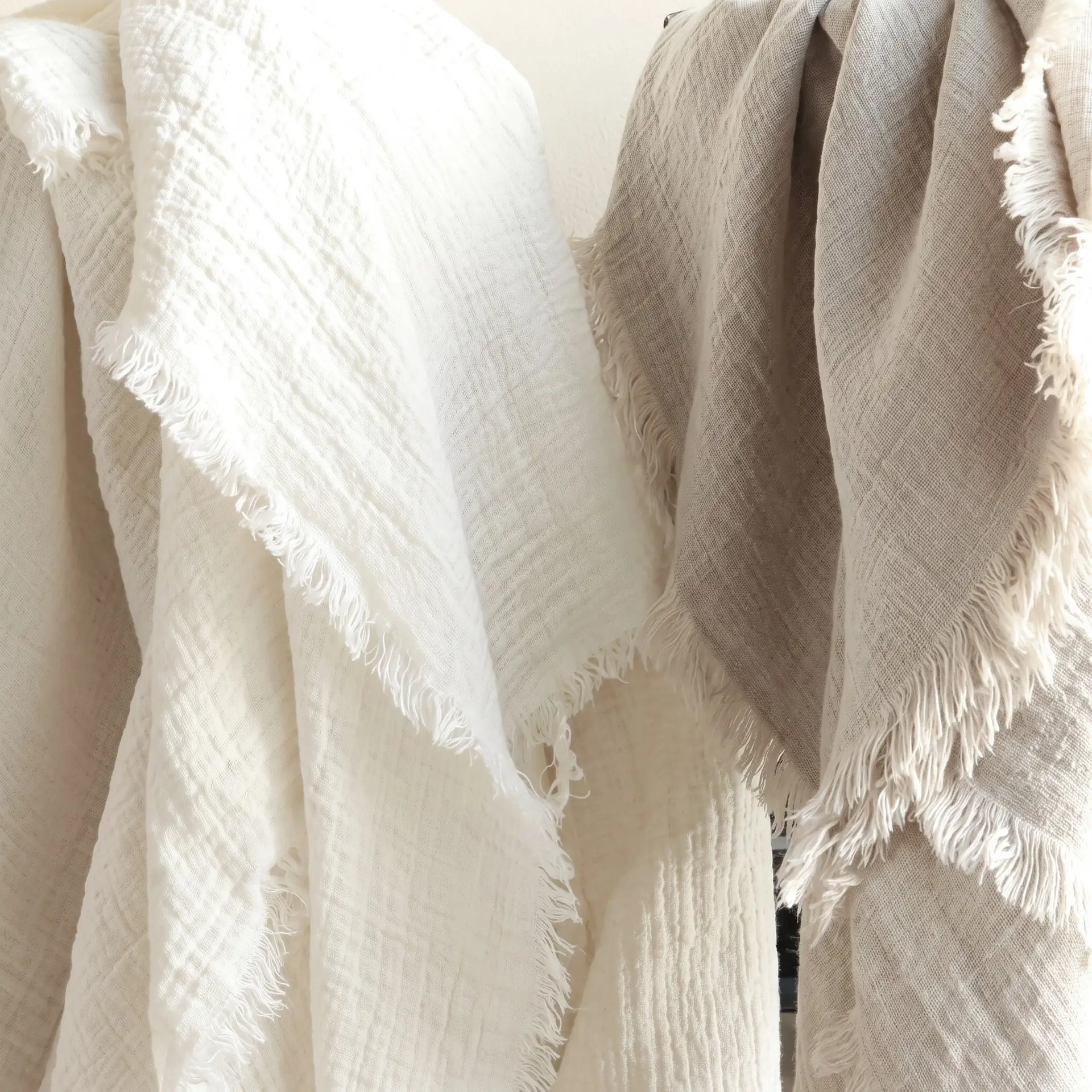
A small lump on linen is not a diagnosis. Look at how it sits in the fabric:
| What you see | Likely explanation | What to do |
|---|---|---|
| A thicker segment running within one yarn | Slub, an uneven section of yarn | Leave it alone and monitor it |
| Loose fibres in the washer, filter or on the surface | Lint or shedding | Reduce abrasion and watch whether it decreases |
| A soft halo of raised fibres without attached balls | Fuzzing | Separate rough items and review wash and dry settings |
| Small balls of entangled fibres attached to the surface | Pilling | Photograph the area and review friction and product quality |
A slub looks integrated into the weave. Pilling consists of entangled fibres held to the surface. Yarn, construction, finishing, laundering and use can all play a part, so linen cannot honestly be described as incapable of pilling.
If the bump is part of the yarn, scissors are not the answer. Cutting or pulling a structural irregularity can open the weave. Photograph anything uncertain in good light and contact the seller if it grows, forms a loose loop or is joined by thinning fabric.
How much shedding is normal?
Some linen releases loose surface lint during early use. The amount and duration vary, so a fixed three-wash deadline is not a reliable rule.
Pay attention to direction rather than a fixed count. Light lint that gradually decreases is different from heavy or increasing fibre loss. Thin patches, holes, opening seams or continuing clouds of lint warrant product-specific advice.
Troubleshooting linen bedding
The sheets feel stiff
Let them dry completely. If the stiffness remains, check detergent dose, drum space and rinsing. Correct those conditions at the next wash rather than adding more detergent or heat.
The bedding has deep creases
Re-dampen the folded area, smooth it and use label-permitted steam or ironing. Next time, reduce the load and spin, then unload immediately.
A duvet cover twists into a bundle
Close the fastening before washing, give the item more room and consider washing it separately. A machine that is too small for the wet item cannot create a gentle result, whatever the programme name says.
The fabric looks faded
Review the detergent, bleach symbol, water temperature and exposure to strong light. Wash deep colours separately and turn covers inside out. Do not attempt colour restoration with an untested dye or stain chemical.
Pills appear in one area
Look for repeated friction from feet, rough sleepwear, pets or contact with another textile. Gentler care may reduce further stress, but it cannot diagnose or reverse a construction issue. Record early, widespread or worsening pilling before attempting removal.
How often should you wash linen sheets?
For many households, weekly or every one to two weeks is a useful starting point. Adjust that rhythm for perspiration, illness, allergies, pets, climate and direct skin contact. Pillowcases and fitted sheets may need washing sooner than a duvet cover or throw.
Regular, moderate washing is often kinder than waiting for a load that needs stronger treatment.

Can linen bedding be washed often without damage?
Yes. Linen takes frequent washing well. Flax is a long, strong fibre, and washing is what relaxes a new linen sheet into its soft, lived-in hand. What wears linen out is rarely the number of washes; it is heat, friction and harsh chemistry. A weekly wash done gently does less harm than an occasional hot, crowded one.
| What wears linen out | What to do instead |
|---|---|
| Hot water | Wash at the temperature on the label. Sensoire linen is labelled 30°C on a gentle cycle, which is enough for a weekly change of sheets. |
| A packed drum | Fill the drum about half full so each piece can move freely and rinse clean. |
| Hard spinning | Keep the spin moderate. Fast spins twist large pieces and press in deep creases. |
| Bleach and harsh stain removers | Use a mild liquid detergent and treat marks with cool water before they set. Bleach is hard on plant fibres. |
| Over-drying | Line dry, or tumble dry on low and take the linen out while it is still slightly damp. |
Does washed linen hold up to everyday use? It does. The wash that softens linen before it reaches you costs some fibre, and how much depends on the method: a plain water wash, the one Sensoire uses, keeps more of the cloth than a stone or enzyme wash. Our linen is woven at 180 GSM from French flax and pre-shrunk in water, so most of its shrinkage has already happened before the first night.
The simplest way to make linen last is to own two sets and rotate them, so each one is washed half as often. Fitted sheets and pillowcases take the most wear, so they are the pieces worth keeping a spare of; the linen fitted sheet set comes with two matching pillowcases.
COMMON QUESTIONS
How to wash linen sheets: care FAQ
01What temperature should I use to wash linen bedding?
Use the maximum shown on the care label or a milder temperature suited to the soil level. Cold or lukewarm water is a conservative routine choice when permitted.
02Can linen sheets go in the dryer?
They can when the care label permits tumble drying. Use the authorised heat setting and remove the sheets while slightly damp.
03Do linen sheets shrink?
They can. Construction, finishing and care all affect the result. Limiting heat, aggressive action and over-drying reduces avoidable risk.
04How do I stop linen sheets from wrinkling?
You cannot remove linen's natural tendency to crease, but a roomy wash, gentler spin, prompt unloading, damp reshaping and label-permitted steam will reduce hard-set wrinkles.
05How do I soften linen sheets?
Wash and use them according to the label, measure detergent carefully, rinse well and avoid over-drying. Linen often becomes more flexible over time.
06Should I wash linen bedding separately?
It is sensible for early washes, strong colours and bulky pieces. Later, compatible smooth items may share a load if the labels and drum capacity allow it.
07Can I bleach white linen?
Only when the bleach symbol permits the relevant product. White colour alone does not make chlorine bleach safe.
08Can I use fabric softener on linen?
It is not necessary. If you use one, confirm that both the bedding label and the enhancer instructions allow it.
09Do linen sheets shed?
Some release surface lint, especially early on. Monitor whether it decreases. Increasing shedding, thinning or holes should be reported.
10Do linen sheets pill?
They can develop fuzz or pills. Pilling depends on yarn, construction, finishing, friction, laundering and use, not simply on the word "linen".
11Is a linen slub a defect?
Not necessarily. A slub is a thicker, uneven section within a yarn and can be part of the fabric's visible character. A loose loop, opening weave or growing damaged area needs separate assessment.
12Should I cut off a linen slub?
No. Cutting or pulling an uncertain yarn irregularity can damage the weave. Photograph it and ask the seller if it changes.
13How often should you wash linen sheets?
For many households, washing linen sheets weekly or every one to two weeks is a useful starting point. Adjust that rhythm for perspiration, illness, allergies, pets, climate and direct skin contact. Pillowcases and fitted sheets usually need washing sooner than a duvet cover or throw.
Find the linen layer that suits your bed
You do not need to replace every layer at once to find out whether you enjoy sleeping with linen.
 French Flax Linen
Linen Duvet Cover Set
Washed 180 GSM French flax with two matching pillowcases.
View the set French Flax Linen
Linen Fitted Sheet Set
The washed linen base layer, with two matching pillowcases.
View the set French Flax Linen
Linen Flat Sheet Set
A light washed linen top sheet with two matching pillowcases.
View the set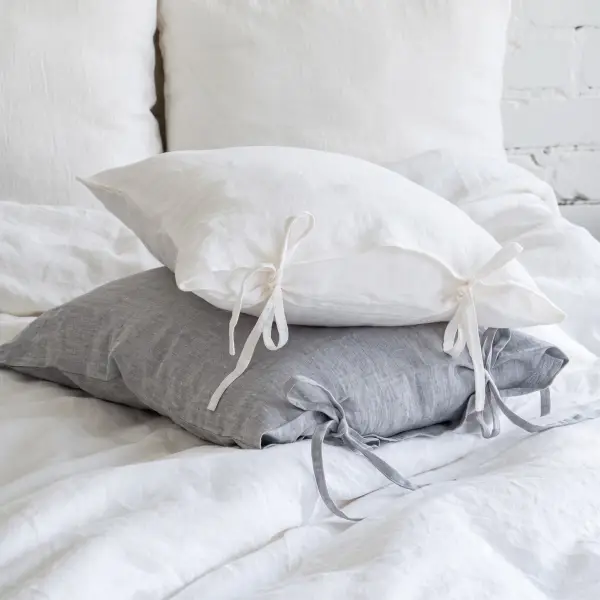 French Flax Linen
Linen Pillowcase, Tie Closure
A single pillowcase fastened with soft fabric ties, in five quiet colours.
View the pillowcaseYou can also browse the full Sensoire linen bedding collection. Check the composition, construction and care instructions on the individual product page before choosing. Our guide to choosing linen bedding covers GSM, blends and washed finishes.
Linen care is not a contest to see how gently you can avoid washing a sheet. It is a steady routine: clean it well, spare it unnecessary stress and learn which parts of its texture are meant to stay.
Editorial sources
Care-label interpretation and technical boundaries were checked against GINETEX care-labelling guidance, Alliance for European Flax-Linen & Hemp care advice, ASTM's pilling standard summary, University of Georgia Extension fibre guidance and George Washington University Textile Museum light-care guidance.
Further reading