


Sleep Science | Night Heat
Too Hot to Sleep? Why Hot Nights Disrupt Recovery
If you are too hot to sleep, the problem is not only discomfort. A bedroom that stays warm after dark works against the way your body cools itself into sleep, and it breaks up the recovery the night is supposed to deliver.
Cool the room and the body first. Bedding changes how a bed feels. It cannot make an unsafely hot room safe.

01
The Mechanism
Why Can You Not Sleep When It Is Hot?
You cannot sleep when it is hot because falling asleep depends on the body shedding heat, and a warm room slows that down. Core temperature normally drops in the evening; when the bedroom and the bedding hold heat, that drop is delayed, sleep comes later and the deeper stages are cut short, which is why hot nights leave you tired after a full night in bed.
Daytime heat is easy to see. Night heat is quieter, and it removes the hours in which both the body and the building would normally cool down.
As sleep approaches, blood vessels near the skin widen and carry heat from the core of the body out towards the hands, feet and face. Core temperature falls, and that fall is part of the signal to sleep. When the bedroom stays hot, the gap between skin and room narrows, and the heat has nowhere convenient to go.
This is the part most people feel without naming it. You are not simply uncomfortable. You are waiting for a temperature drop that the room will not allow.
Humidity Closes the Second Door
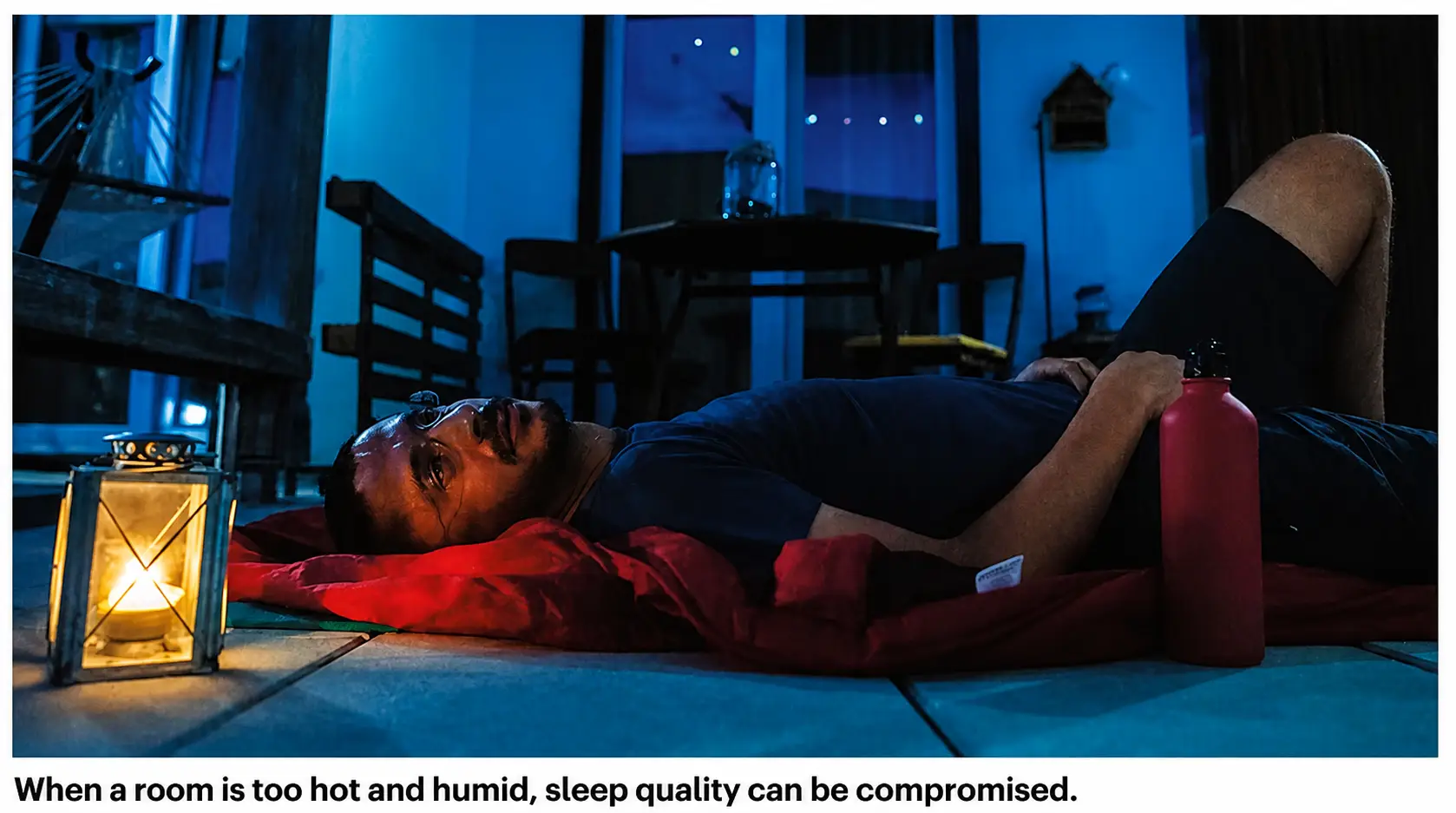
Sweat cools you only when it evaporates. In humid air it evaporates slowly, so you can sweat through a whole night and gain very little from it. What follows is familiar: a clammy sheet, a faster pulse, thirst, and the same waking at three in the morning.
Awake You Have Options, Asleep You Do Not
Awake, you can drink water, move to a cooler room, open a window once the outside air has dropped, or adjust a fan. Asleep, those choices are gone. That is why a warm bedroom affects both falling asleep and staying asleep, and why the small climate around the bed matters more at night than it does at any other hour.
02
The Hidden Cost
How Much Sleep Does Night Heat Cost?
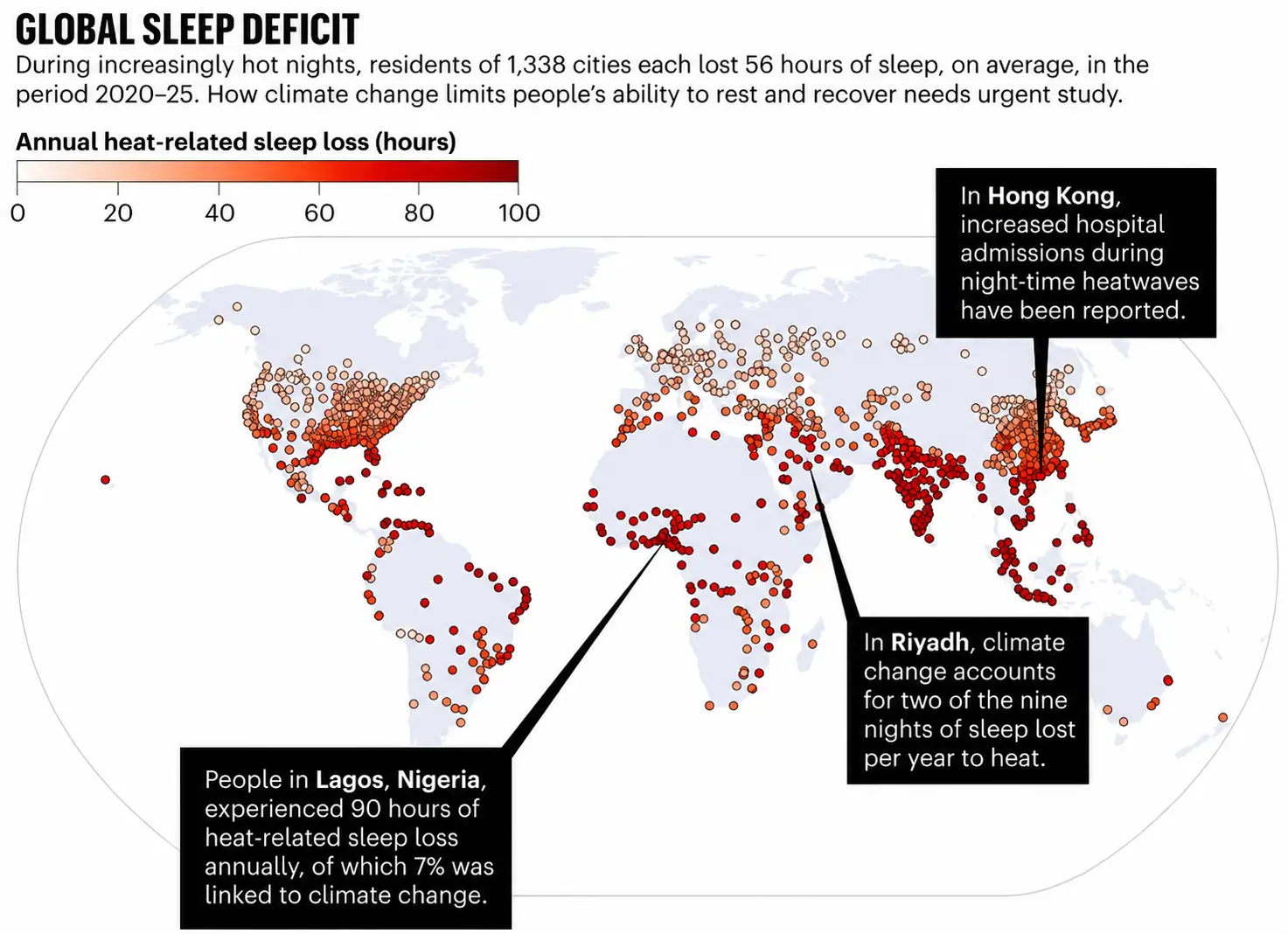
Night heat costs about 56 hours of sleep per person each year, based on data from more than 1,300 cities. The loss is not spread evenly: it grows with the temperature, so the hottest nights of the year cost the most, and they are the nights when the body most needs the cooling it cannot get.
A 2026 Comment article in Nature argues that night heat should be treated as a health risk in its own right, rather than as a footnote to daytime temperature.
The authors cite an analysis of more than 1,300 cities. Between 2020 and 2025, residents lost nearly 56 hours of sleep per person each year, on average, because of heat at night. Across 28 East Asian cities, intense night heatwaves were associated with a 3% increase in deaths from causes other than injury. In Hong Kong, long hot nights of around 30 °C for 12 hours were linked to a 3.1% rise in emergency hospital admissions, reaching 5.3% among older and poorer residents.
These are population level associations, not a forecast for one sleeper. They still explain why a hot night deserves attention. A single restless night leaves you tired. A run of hot nights interrupts the same recovery window again and again.
03
Your Own Room
How Hot Is Too Hot to Sleep?
There is no official figure that applies to every person and every climate. Sleep organisations commonly cite a cool bedroom in the region of 65 to 68 °F, roughly 18 to 20 °C, but humidity, age, health, clothing, mattress construction, bedding weight and simple acclimatisation all move that number.
A more useful answer: your bedroom is too hot when it stops cooling before you go to bed, and when you wake damp rather than rested.
The Forecast Does Not Describe Your Bedroom
Weather reports describe outdoor air. You sleep indoors, under fabric, on a mattress that holds heat. A top floor flat in London, a west facing apartment in Paris and a well insulated house in New York can all stay warm long after the outdoor temperature starts to fall. Window orientation, roof exposure, ventilation, building materials and indoor humidity all change the conditions around the bed.
This is why the Nature authors argue for measuring real bedroom exposure. An inexpensive temperature and humidity sensor will show when the room peaks and whether it actually cools before bedtime.
Check the bedroom, not the weather app.
04
Tonight
What to Do When It Is Too Hot to Sleep
Nothing here is exotic. The order is what makes it work: keep heat out of the room first, move air second, cool the body third, and only then think about what is on the bed.
Before Dark: Stop the Room Heating Up
Shade the Windows That Face the Sun
Close blinds, curtains or external shutters on sun facing windows during the hottest part of the day. Shading the glass is more effective than cooling the room later.
Keep the Hotter Air Outside
If the air outdoors is hotter than the air indoors, open windows bring heat in rather than letting it out. UK Health Security Agency guidance is to open windows when the air feels cooler outside than inside, which in a heatwave usually means at night.
Switch Off What Is Warming the Room
Turn off lights and electrical equipment that are not in use, and check that heating is genuinely off. In a small bedroom these sources add up over an afternoon.
After Dark: Move Air, Then Cool Yourself
Ventilate Once the Outside Air Has Dropped
Open windows at night when it is cooler outside and safe to do so. Air moving through two openings clears stored heat faster than one window alone. If a lower floor or a north facing room is cooler, sleep there.
Use a Fan Correctly
A fan moves air and helps sweat evaporate, but it does not lower the air temperature. UK guidance is to use electric fans when the air temperature is below 35 °C, and not to aim one directly at your body, because that can add to dehydration.
Cool the Body Gently
A cool or lukewarm shower before bed makes the skin more comfortable. Drink water through the day rather than waiting until you are very thirsty, and limit alcohol, which dehydrates and disturbs the second half of the night.
Take Weight Off the Bed
Remove throws, thick mattress protectors, heavy sleepwear and winter weight covers. Keep the lightest layer that still feels comfortable, since most people sleep worse with nothing over them at all. If you use a duvet through summer, the seasonal weight matters more than the fibre on the label: our Grade 6A mulberry silk duvet is offered in a summer weight as well as a winter one, and couples who disagree about temperature usually do better with separate covers than with one compromise.
Older adults, babies and young children, pregnant people, those with long term health conditions and people taking medicines that affect hydration or temperature regulation are more vulnerable in hot weather. Confusion, fainting, a very high body temperature, hot skin that is not sweating or rapidly worsening symptoms need urgent medical help. In the UK that means calling 999, and NHS 111 for advice. Full guidance is published by the UK Health Security Agency.
05
The Evidence
Does Cooling Bedding Actually Work?
Cooling bedding works on the layer next to your skin, not on the room. It can move moisture away, let air through and hold less warm air against you, which changes how hot you feel; it cannot lower the bedroom temperature. Cool the room first, then choose bedding for the sensation you want.
Bedding governs the small climate between skin and bed. It changes airflow, moisture movement, surface temperature, drape and how much warm air is held against the body. That is a real effect, and it is also a limited one.
A systematic review and meta analysis in the Journal of Thermal Biology examined bedding based cooling interventions and found the evidence limited. The included studies suggested some short term effect on body cooling, but the overall picture did not show clear improvement in how quickly people fell asleep, how efficiently they slept, which sleep stages they reached, or how long they slept in total. Certainty of evidence ranged from very low to low.
So the honest claim is comfort, not cure. The right bedding removes one source of friction on a warm night. It does not compensate for an unventilated room, an afternoon of sun on the glass, or a winter duvet used in July. If you want the longer version of that argument, we set it out in bedding for hot sleepers and night sweats.
06
Material Guide
Silk, Bamboo Lyocell or Linen on a Hot Night
There is no universal winner. The right material depends on what actually bothers you: trapped heat, dampness, texture, friction, or the weight of the layer over your body.
| Material | How it sleeps | Often suits | Consider before choosing |
|---|---|---|---|
| Mulberry silk | Smooth, light, softly cool on first contact | Sleepers who want a low friction surface and fluid drape | Construction and fill weight decide the result. Silk still insulates, so choose a light seasonal weight for a warm room. |
| Bamboo lyocell | Cool to first touch, smooth and fluid | Hot sleepers who dislike a textured sheet and often wake clammy | Check that the label says lyocell. Bamboo viscose and unnamed blends are not the same construction. |
| Washed linen | Airy, dry, relaxed, openly textured | Sleepers who want airflow and a surface that does not cling | It reads as more textured than silk or lyocell, and it softens with use and washing. |
Choose Silk for a Smooth, Low Friction Surface
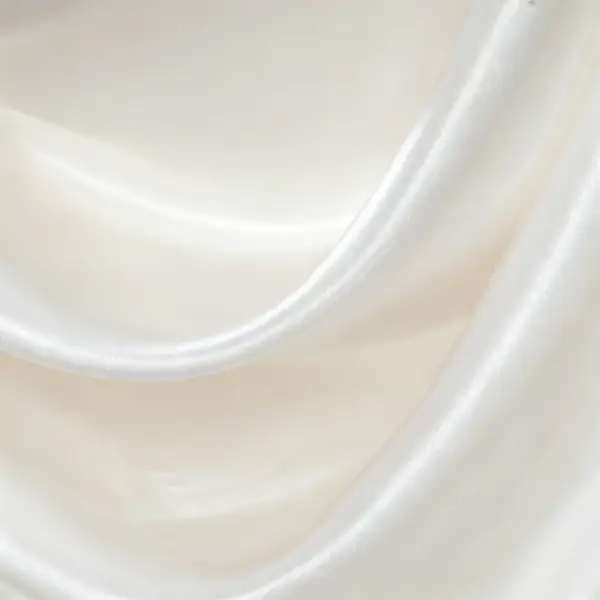
Mulberry silk is a protein fibre with a smooth hand and a close drape. As a pillowcase or a light bedding layer it can feel cool as you lie down, without the crispness of linen, which suits sleepers who care about softness and minimal drag against skin and hair.
Weight still decides the outcome. A heavy silk filled duvet is built to keep you warm. For summer, look at the lightest suitable fill rather than assuming that every silk product sleeps cool. We explain the mechanism in why silk bedding regulates temperature.

Choose Bamboo Lyocell for Coolness on First Touch
Bamboo lyocell is a regenerated cellulose fibre made from bamboo derived pulp through the lyocell process. It is not raw bamboo fibre, and it should not be filed automatically alongside bamboo viscose or unnamed rayon.
The fabric is usually smooth with a fluid drape, which appeals to sleepers who want a cooler first touch without linen texture. Weight, weave, finishing and laundering still shape the final feel, so the fibre name alone is not a buying decision. Our bamboo lyocell bedding states the fibre and the construction on every product page.
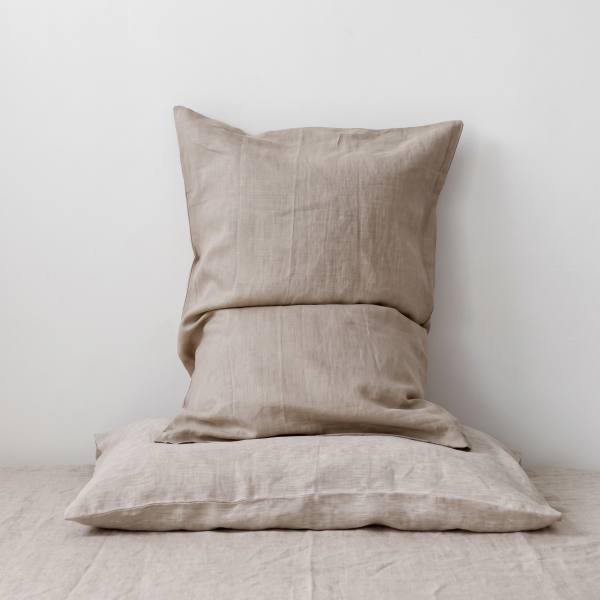
Choose Linen for Airflow and a Drier Surface
Linen is woven from flax, with a relaxed structure and an openly textured hand. It tends to sit away from the skin rather than moulding around it, which is why a linen bed feels less close and less clammy in warm weather.
New linen is crisper than silk or bamboo lyocell, and use relaxes it. Creasing and slight variation are part of the cloth. Our washed linen bedding is made to be lived in rather than pressed, and we compare all three fibres side by side in silk vs linen vs bamboo.
07
Common Questions
Too Hot to Sleep: Frequently Asked Questions
01What is the best bedroom temperature for sleep?
There is no single ideal figure for every person or climate. Sleep organisations commonly cite around 65 to 68 °F, roughly 18 to 20 °C, but humidity, age, health, clothing, mattress construction and bedding weight all shift thermal comfort. Aim for a room that feels comfortably cool and leaves you neither sweating nor shivering, and measure your own bedroom rather than the forecast.
02Why can I not sleep when it is hot?
Falling asleep depends on your core temperature dropping. Blood vessels near the skin widen and release heat, and the body cools. A hot room narrows the difference between skin and air, so that heat release slows. Humid air slows it further, because sweat cools you only as it evaporates.
03Should I keep the windows open all day in a heatwave?
Not necessarily. If the outdoor air is hotter than the room, open windows bring more heat in. Shade the glass and keep the hotter air out during the day, then ventilate when the temperature outside has fallen and it is safe to do so.
04Is a fan enough on a hot night?
A fan moves air and supports sweat evaporation, but it does not lower air temperature. UK guidance is to use electric fans when the air is below 35 °C and not to aim one directly at your body, since that can contribute to dehydration. Treat a fan as one part of the plan, after shading and ventilation.
05Are bamboo sheets the same as bamboo lyocell sheets?
No. Bedding sold with bamboo language can be made through different regenerated fibre processes, or blended with other fibres. Lyocell names a specific manufacturing route. Bamboo alone does not. Read the full fibre content label and the care instructions before comparing two products on price.
06Is silk or linen better for a hot sleeper?
Linen usually suits someone who wants airflow and a dry, textured surface. Silk suits someone who wants a smoother, lighter touch against skin and hair. In a very warm room, weave, fabric weight and duvet fill matter as much as the fibre itself.
07Can cooling sheets treat insomnia or night sweats?
No. They can make the bed more comfortable, but they do not treat insomnia, menopause symptoms, infection, medication side effects or any other cause of persistent night sweats. If sleep problems or sweating continue, worsen, or affect your daytime function, seek medical advice. For comfort alone, our night sweats edit gathers the lighter pieces in one place.
Sensoire Sleep
Four Pieces for Warmer Nights
Sensoire is a natural fibre sleep brand rather than a single material answer. Lower the heat load in the room first, then choose the sensation you want to change.
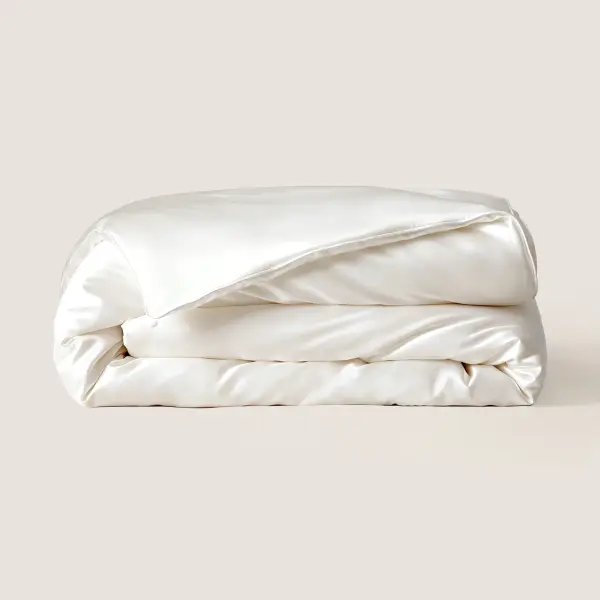 Summer weight
Grade 6A Mulberry Silk Duvet
Silk inside and out, for sleepers who want warmth without weight.
- Grade 6A long strand mulberry silk fill
- 100% pure mulberry silk shell
- Summer, mid season, four seasons and winter weights
Cool first touch
Bamboo Lyocell Fitted Sheet Set
The layer you lie directly on, which is where first touch is decided.
- Fitted sheet with two pillowcases
- Elastic all round, mattresses to 40 cm
- Lyocell process, stated on the product page
 Airflow
Linen Flat Sheet Set
In July it can be the only thing over you, which is the point.
- Washed 100% linen
- Flat sheet with two matching pillowcases
- Softens with every wash
 22 Momme | Grade 6A
Pure Silk Pillowcase, Oxford Flange
The smallest change to make, and the one closest to your face all night.
- 100% mulberry silk, 22 momme
- Grade 6A, charmeuse construction
- OEKO-TEX Standard 100