


Fibre Guide · Hair Bonnets
What Does a Silk Bonnet Do for Your Hair? Benefits, How to Wear One and How to Wash It
A silk bonnet puts a layer of smooth silk between your hair and the pillowcase, so your hair rubs and catches less while you turn over at night. It will not make your hair grow faster, and it will not repair damage that is already there.
In shortSo what does a silk bonnet do, day to day? Most people use a bonnet to wake up with fewer tangles, less frizz and a style that still looks like the one they went to bed with. That is what a bonnet is used for.
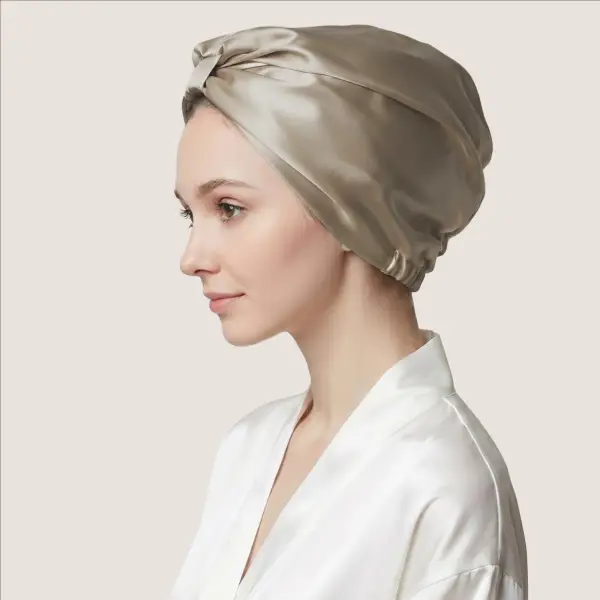
What Does a Bonnet Do for Your Hair?
Every time you turn over at night, the movement drags your hair across the pillowcase and across itself. A bonnet changes three things about that.
-
Less friction and pulling
The inside of the bonnet is smooth, and it moves with your head instead of staying put like a pillowcase. Hair slides against silk rather than catching on a rougher weave, so there is less rubbing at the ends and less tugging at the roots.
-
A style that holds until morning
Curls stay grouped instead of being pressed flat and pulled apart. Braids and twists keep their shape. A blow-dry lasts an extra day because the lengths were never crushed against cotton. Straight hair tends to look less puffy at the crown.
-
Less contact with the pillowcase
Your pillowcase collects face cream, oil and dust between washes. A bonnet keeps most of your hair away from it, and keeps your leave-in conditioner or hair oil on your hair rather than on the pillow.
Why not a cotton bonnet or scarf?
Cotton is absorbent and has a more textured surface. Against hair it grips rather than slides, and it soaks up some of the oil and leave-in you applied before bed. A cotton scarf still keeps hair contained, which is better than nothing, but the surface touching your hair is the part that counts. If you would rather sleep without anything on your head, a silk pillowcase for hair gives you part of the same benefit.
Why silk, specifically
In a 2018 fabric test published in the Journal of Silk, silk recorded the lowest dynamic friction coefficient and the highest air permeability of the four silk-like fabrics measured. Lower friction means hair slides more easily. Higher air permeability means a silk bonnet feels less closed in on a warm night.
Silk and polyester, measured
| Test result | Silk | Polyester |
|---|---|---|
| Dynamic friction coefficient | 0.1321 | 0.1632 |
| Air permeability / mm·s⁻¹ | 1,625 | 1,017 |
The full table, with viscose and cuprammonium as well, sits in our silk bonnet vs satin bonnet comparison.
Every Sensoire bonnet is cut from 19 momme 100% mulberry silk, listed with OEKO-TEX Standard 100. For a first bonnet, the Essential Mulberry Silk Hair Bonnet is the simple everyday shape, with a turban-style front.
What a Silk Bonnet Cannot Do
A bonnet works on the eight hours you spend asleep. It does not reach inside the hair shaft.
- It cannot mend split ends or undo bleach damage. Trimming and gentle care handle that.
- It does not hydrate hair. It helps keep the products you applied on your hair, which is a different thing.
- It does not treat scalp conditions, shedding or hair growth. If you notice heavy shedding or an itchy, flaking scalp, see a GP or a trichologist.
- It cannot make up for a bad fit. A cap that presses on the hairline or slides off at 3 a.m. creates its own friction.
Who Notices the Difference
Almost any hair type can wear a bonnet. Some people see the change after one night; others barely notice it.
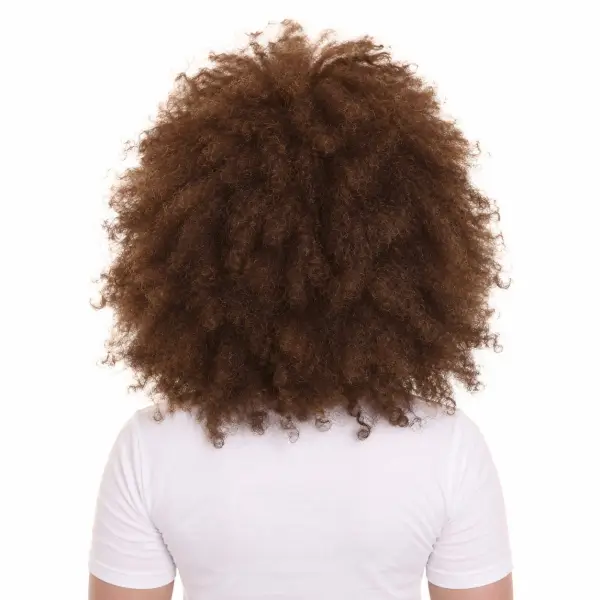
A silk bonnet for curly and coily hair
Curly and coily hair has the most to lose overnight. Curls that are pressed flat and rubbed for eight hours separate into frizz, and a wash-day set can be gone by the second morning. A roomy bonnet keeps the curl pattern grouped. Pile curls loosely on top of your head first (the pineapple) so the lengths are not crushed.
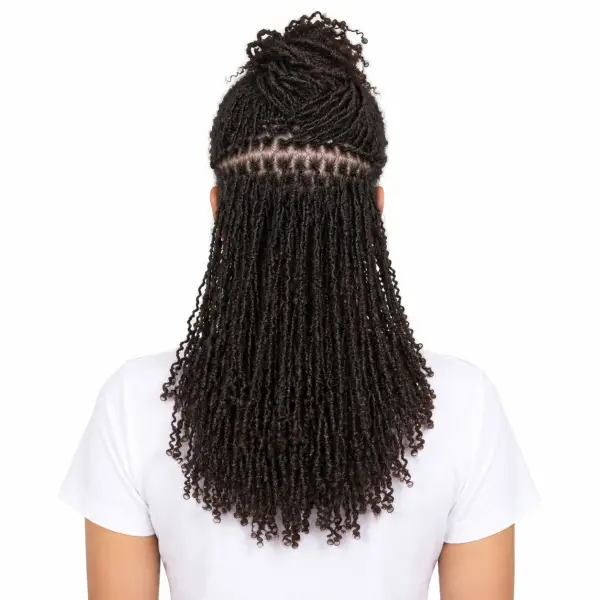
Braids, twists and locs
Protective styles last weeks, so what happens to them each night adds up. A bonnet keeps the edges and the parting neater and stops loose fibres from fuzzing up along the length. Locs and long braids need a deep or extra-long cut so nothing is folded tight inside.
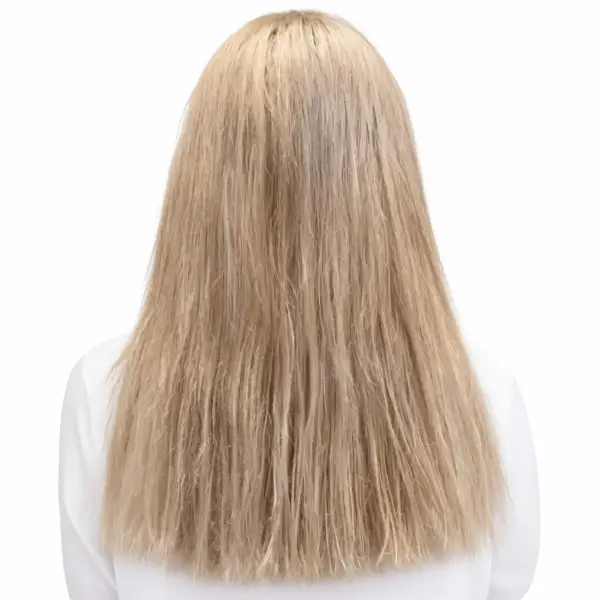
Bleached, coloured or chemically treated hair
Lightened hair has a rougher outer layer and catches more easily. Less rubbing at night means less extra wear on hair that is already fragile.
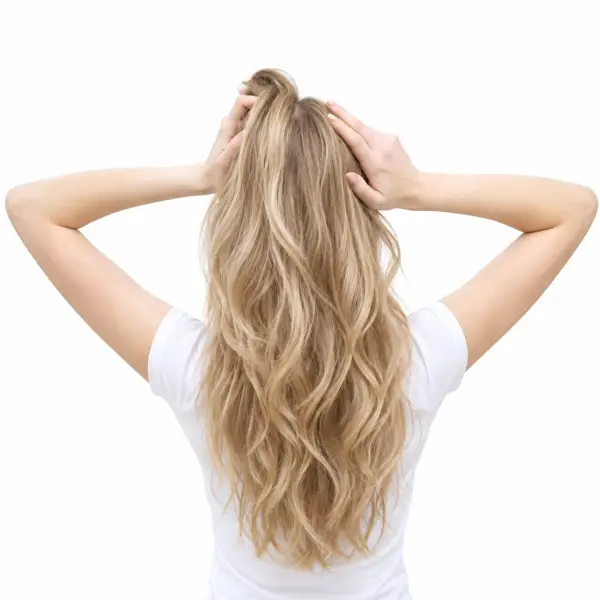
Long hair
Long lengths wrap around themselves and knot at the nape. Gathering them into a bonnet keeps them off the pillow and out from under your shoulders.
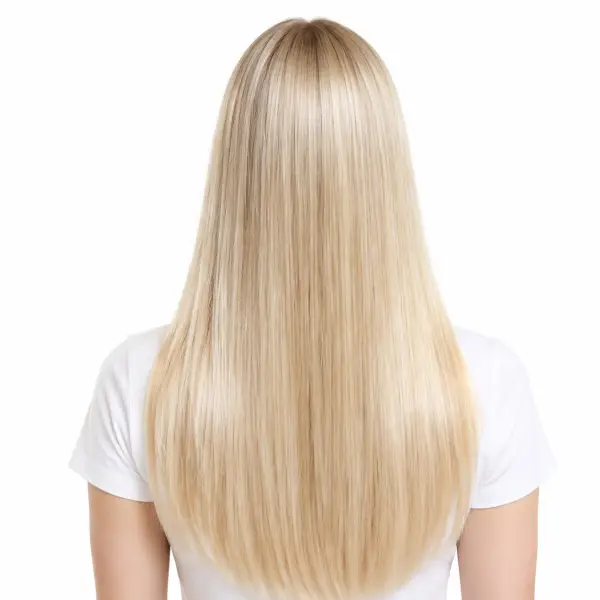
Straight or fine hair
The difference is smaller. You may notice less static and smoother lengths, and a blow-dry that lasts longer. Fine hair needs a closer fit, since a bonnet that is too big will slip off.
For locs, braids and very thick hair, the Mulberry Silk Bonnet for Long Hair is cut longer, with a soft elastic edge.
Can You Put Wet Hair in a Silk Bonnet?
Soaking wetNo
Slightly dampYes
Wet hair stretches more easily than dry hair. Packed into a closed bonnet, it also stays wet for most of the night, because almost no air reaches it. You wake up with a damp scalp, flattened roots and a bonnet that has been sitting in water against your head for eight hours.
Damp is different. Many curl routines finish with hair that is about 80% dry, so the curl sets as it dries. That is the level our heatless curler set asks for too.
The squeeze test
Squeeze a section of hair in your palm. If water comes out, keep drying. If it only feels cool, it is fine to go into the bonnet.
- Wash your hair earlier in the evening when you can, so it has time to air dry.
- Use a diffuser or a cool setting to take off the last of the water.
- Let leave-in conditioner and oils sink in for 20 to 30 minutes before you cover them.
How to Wear a Silk Bonnet
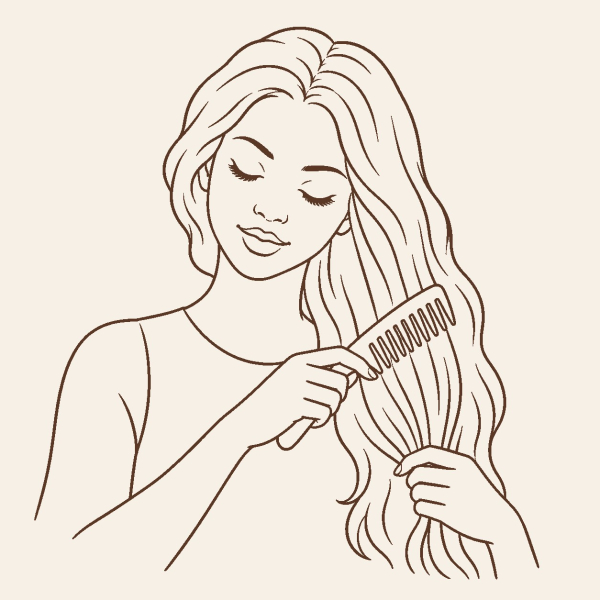
1. Gather your hair loosely
Bring your hair up to the crown. Curls go into a loose pineapple, long straight hair into a low, loose twist, braids simply gathered. Nothing should be tied tight.
2. Fit it to the closure you have
Bonnets close in three main ways, and each sits a little differently.
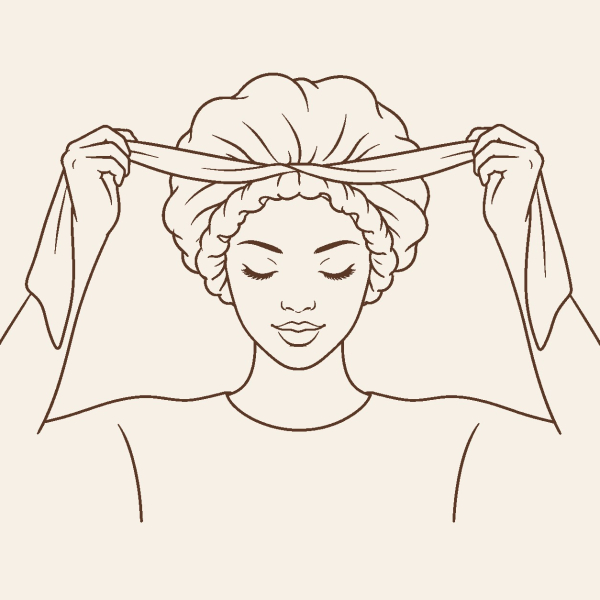
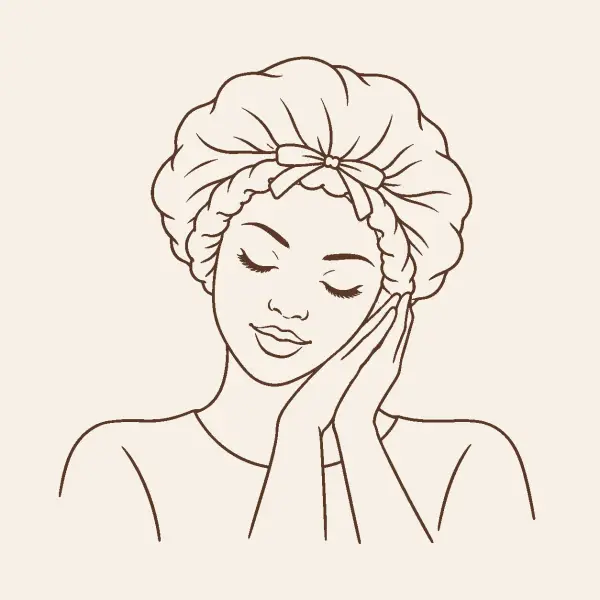
Ribbon tie
Wrap the ribbons round to the nape, cross them, and tie at the front or side. A side bow keeps the knot off the pillow. The Ribbon-Tie Mulberry Silk Bonnet for Sleeping closes this way, as does the Dual-Tone Mulberry Silk Sleep Bonnet with Long Ribbons. Both let you set the fit to your hair volume.
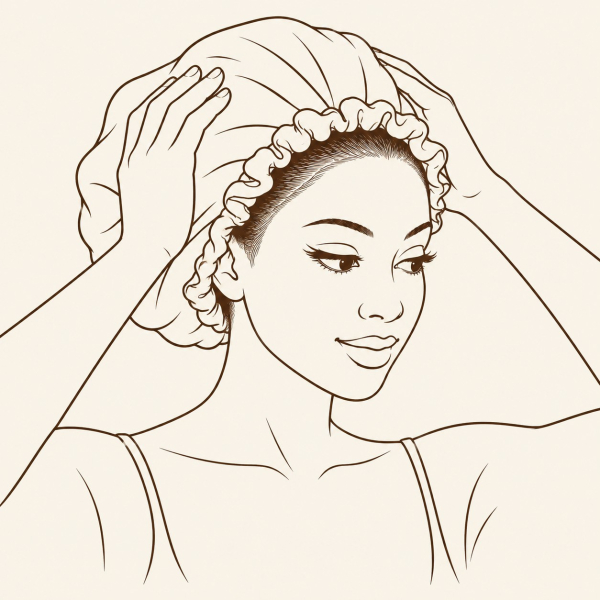
Soft elastic or ruffle edge
Set the edge about a finger's width behind your hairline, then ease the cap back over the crown. Do not pull down on the elastic. The Premium Silk Sleep Bonnet with Ruffle Edge is a single light layer, a good choice for warm nights.
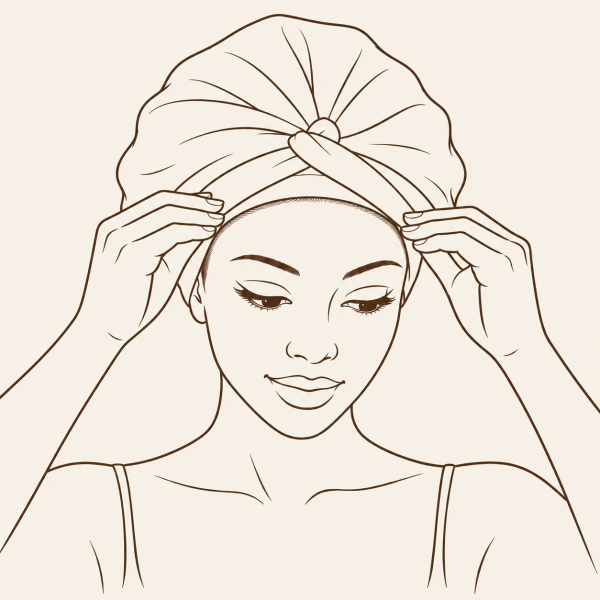
Cross front
Lay one front panel over the other at the forehead; the overlap holds the bonnet in place. Set it back a finger's width from the hairline.
3. Check the fit
The bonnet should stay on without pulling at your edges. Secure, not tight. If it leaves a mark on your forehead or flattens your hair, loosen it or move to a roomier style. If it slips off overnight, it is usually too large for your hair volume or sitting too far back.
Summer and winter
On hot nights a single-layer silk bonnet feels lightest. In colder months, or if you like more coverage, a double-layer bonnet holds its shape better and gives two smooth surfaces. Either way, silk lets heat and moisture through more easily than polyester satin, so the scalp stays more comfortable.
How to Wash a Silk Bonnet
A bonnet you wear every night needs washing about once a week, and sooner if you use oils, leave-ins or styling cream. The inner layer is where that build-up collects.
- Check the care label first. Sensoire bonnets are labelled hand wash, cold water.
- Fill a basin with cool water, at or below 30°C, and dissolve a small amount of pH-neutral detergent made for silk. Skip bleach, fabric softener and biological powders.
- Turn the bonnet inside out. On a double-layer bonnet this puts the side that touches your hair in the water first.
- Swish it gently for two or three minutes. Press the fabric between your hands rather than scrubbing it.
- Rinse in clean cool water until there is no more foam.
- Do not wring. Lay the bonnet on a clean towel, roll the towel up, and press to take out the water.
- Line dry or lay flat in the shade, away from radiators and direct sun. Hang elastic-edge bonnets by the crown, not by the band. Lay ribbons out straight so they dry without kinks.
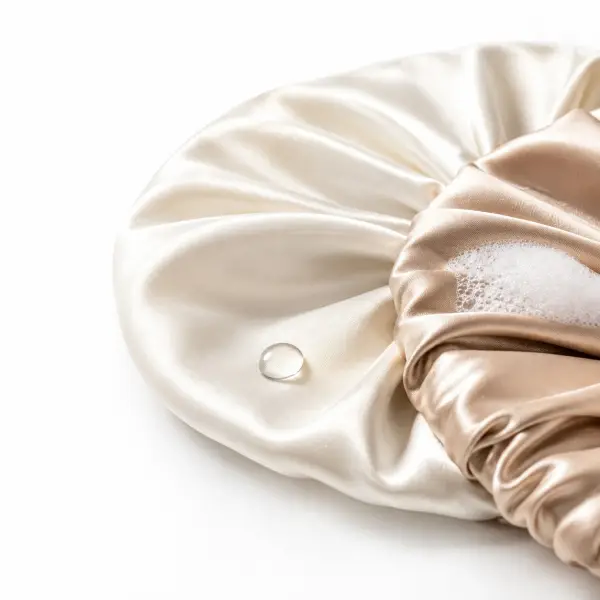
If the label on a bonnet you own allows machine washing, use a mesh bag, a cold delicate cycle and a low spin. Our general guide to washing silk bedding and accessories covers water hardness, detergents and storage in more detail.
Silk inside and out: the Double-Layer Mulberry Silk Bonnet for Healthy Hair is smooth on the side against your hair and on the side against the pillow.
Silk vs Satin Bonnet
Silka fibre
Satina weave
Satin is a weave, not a fibre. A satin bonnet is usually polyester woven to look glossy, while a silk bonnet is made from the silkworm's protein fibre, often in a satin weave too. Both give a smoother surface than cotton.
The differences show up in breathability, feel and price. Polyester satin costs less and tolerates the washing machine. Silk breathes better and feels softer against the scalp, and it needs gentler care. We compare the two fibre by fibre, with test results and a guide by hair type, in silk bonnet vs satin bonnet: which is better for hair.
For a gift, the Mulberry Silk Bonnet Gift Set pairs a tie-fit bonnet with a matching eye mask and scrunchie in one box.
What Does a Silk Bonnet Do? Common Questions
Is a bonnet bad for your hair?
Not when it fits. Problems come from a bonnet that is too tight, with an elastic that presses on the hairline every night, or from putting soaking wet hair inside. Choose an adjustable tie or a soft edge, and let your hair dry first.
What are the benefits of a silk bonnet?
Less friction against the pillow, fewer tangles and less frizz in the morning, styles that last longer between wash days, and hair products that stay on your hair rather than your pillowcase. Silk adds a breathable, soft surface against the scalp.
Should you wear a bonnet every night?
If you want the benefits every morning, yes. Nightly wear is fine as long as the bonnet is washed about once a week and does not press on your hairline.
Can a silk pillowcase replace a bonnet?
Partly. A silk pillowcase gives your hair and your face a smoother surface, but your hair still moves around freely and can knot underneath you. A bonnet holds the hair in place. Many people with curly or long hair use both.
Why does my bonnet fall off at night?
Usually it is too big for your hair volume, or it sits too far back on the crown. A ribbon tie lets you tighten the fit gently. Fine or short hair does better in a regular-size bonnet than an oversized one.
From the Collection
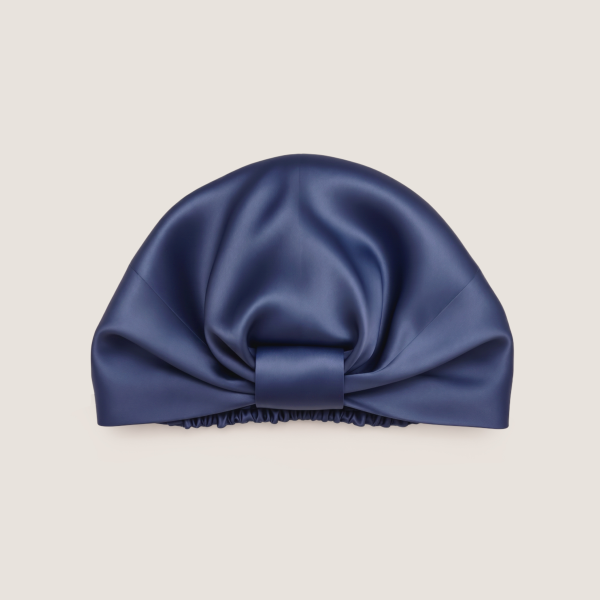
19 Momme · Turban Front
Essential Mulberry Silk Hair Bonnet
The simple everyday bonnet, smooth 100% silk with a turban-style front.
- 100% mulberry silk, 19 momme
- Turban-style front
- OEKO-TEX Standard 100
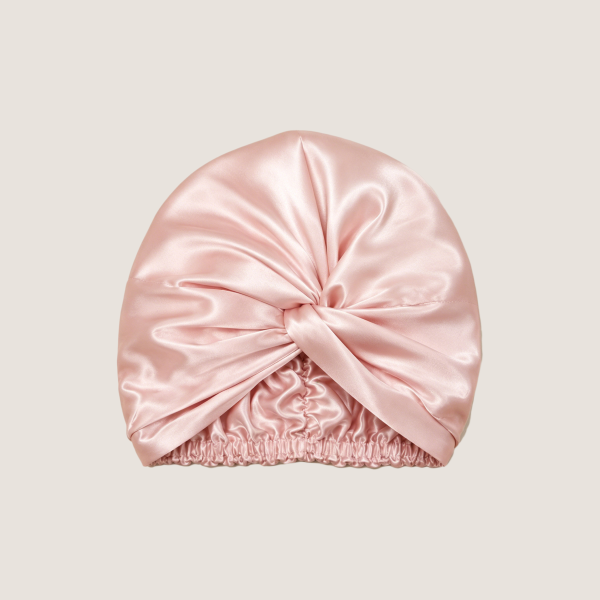
19 Momme · Double Layer
Double-Layer Mulberry Silk Bonnet for Healthy Hair
Silk inside and out, with a cross turban front.
- 100% mulberry silk, 19 momme
- Double layer, cross front
- OEKO-TEX Standard 100
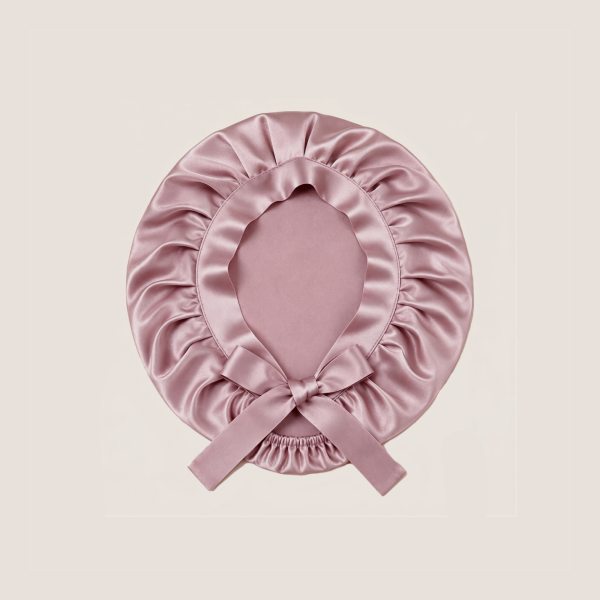
19 Momme · Ribbon Tie
Ribbon-Tie Mulberry Silk Bonnet for Sleeping
An adjustable ribbon tie for a secure fit that does not pull.
- 100% mulberry silk, 19 momme
- Adjustable ribbon tie
- OEKO-TEX Standard 100
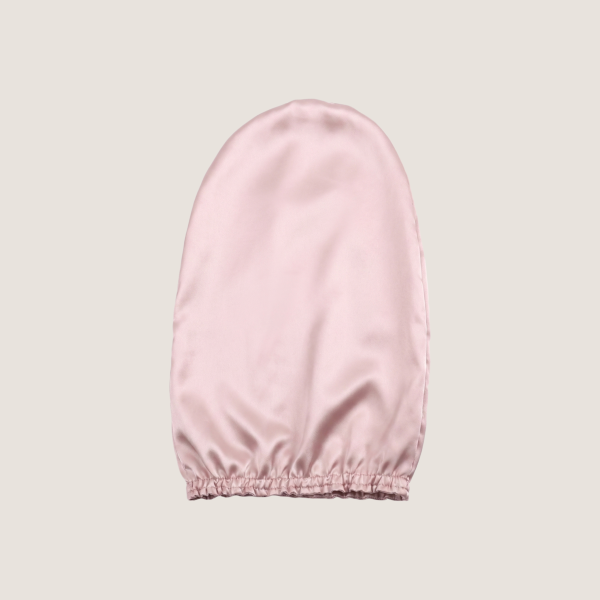
19 Momme · Long Fit
Mulberry Silk Bonnet for Long Hair
Cut longer for braids, locs, curls and thick lengths.
- 100% mulberry silk, 19 momme
- Long cut, soft elastic edge
- OEKO-TEX Standard 100