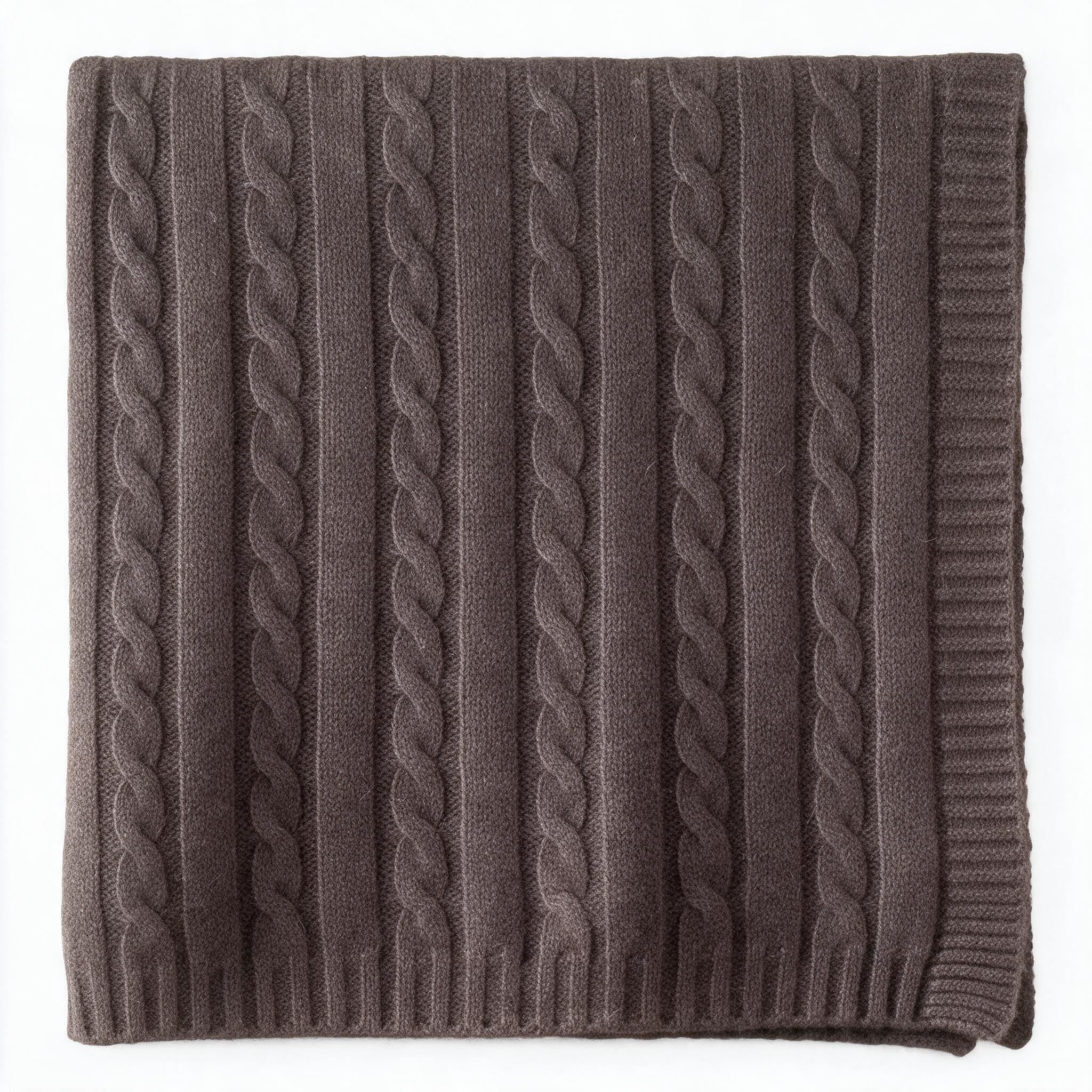

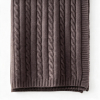

Kasjmier plaid met kabelpatroon · 90 × 180 cm

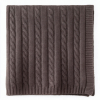
Een kabelgebreide plaid van 100% kasjmier uit Binnen-Mongolië, 90 × 180 cm. Vierdraads garen, gebreid tot diepe kabels met reliëf: zacht, licht en op een rustige manier warm. In Havermout, Chocolade of Middengrijs.

€ 399

- +
Veilig afrekenen Apple Pay GBetalen PayPal Visa Mastercard American Express Klarna

Gratis verzending bij bestellingen boven €89

  • Geld-terug-garantie zonder risico.
  • Eenvoudige retourzendingen en ondersteuning
  • Veilige betalingen
01Details +−

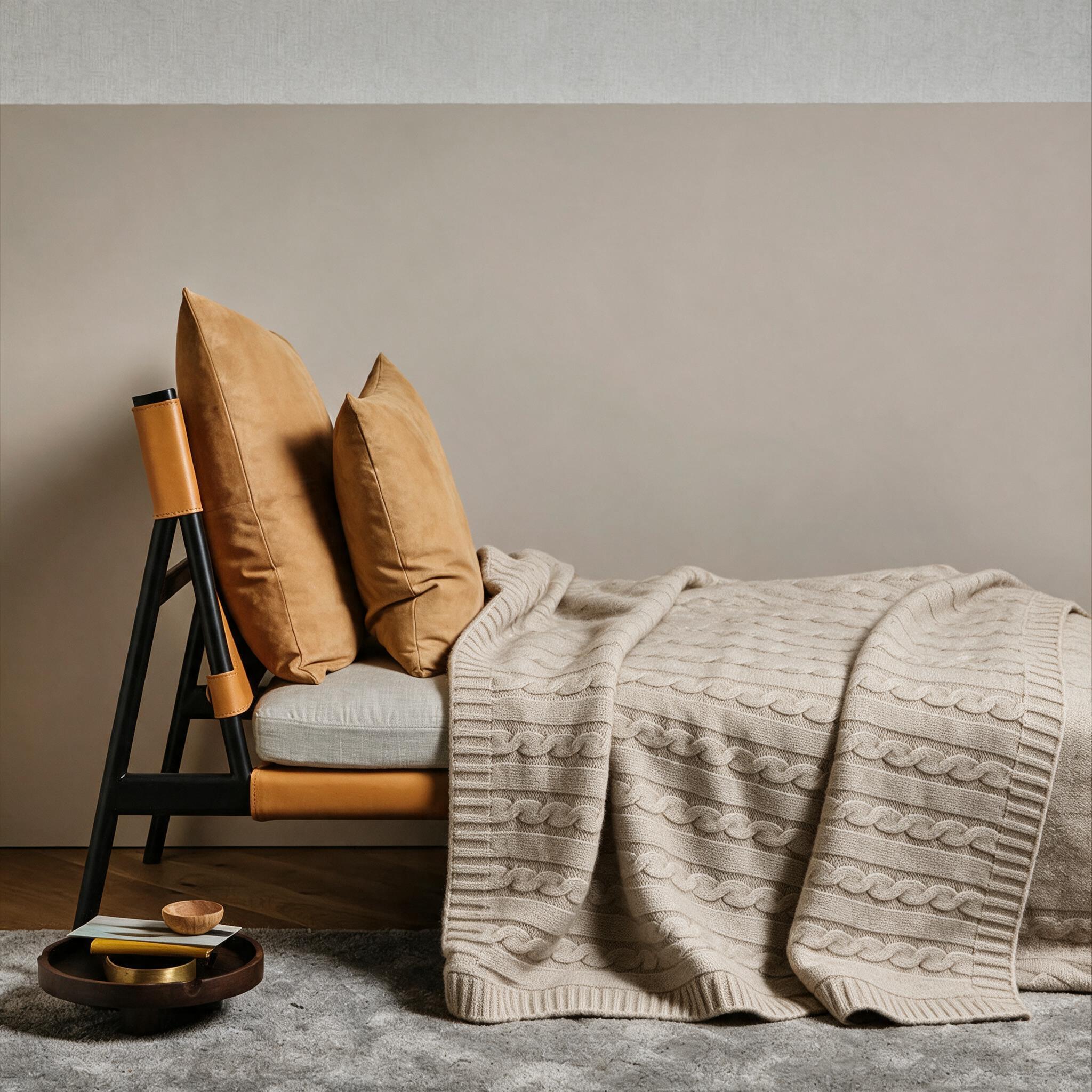
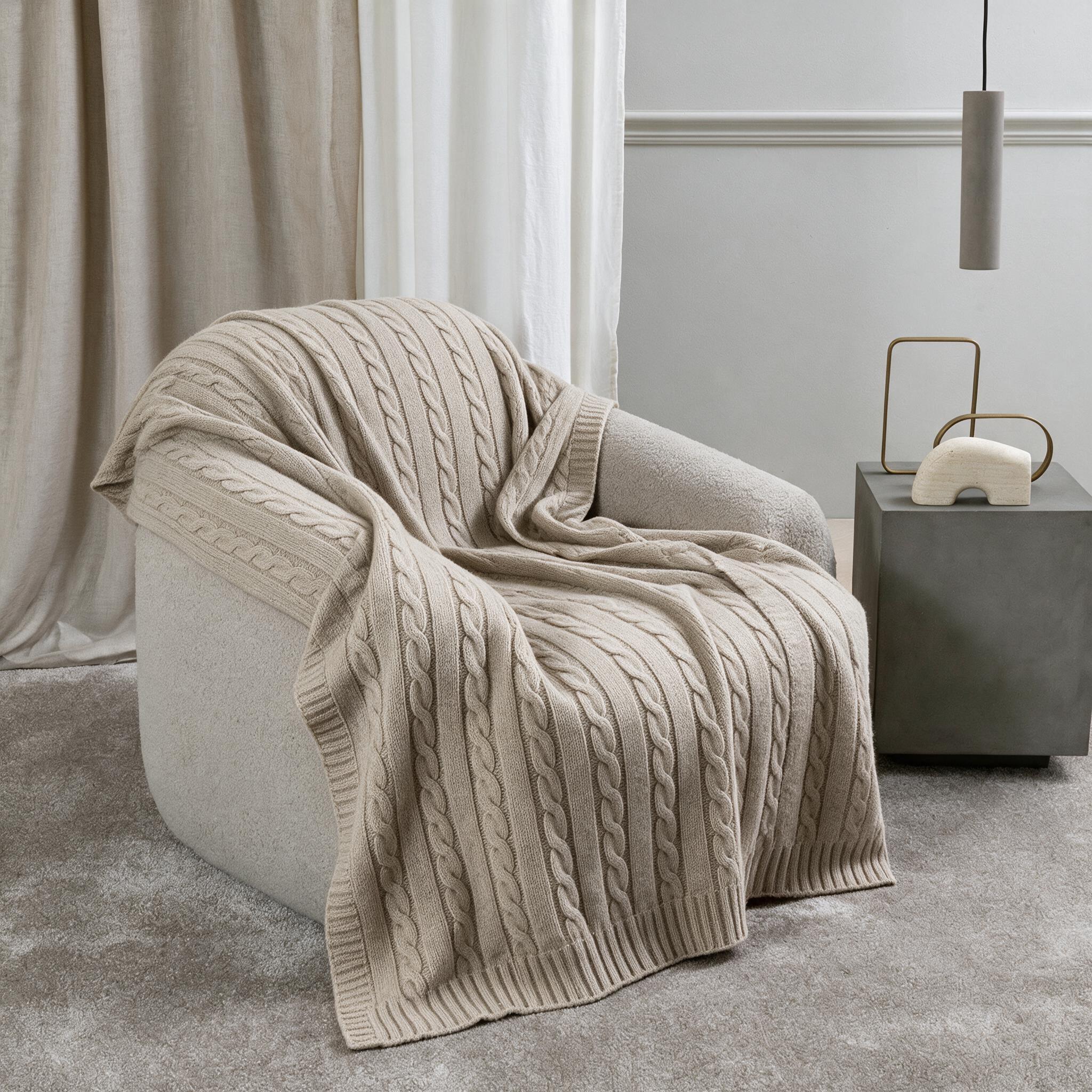
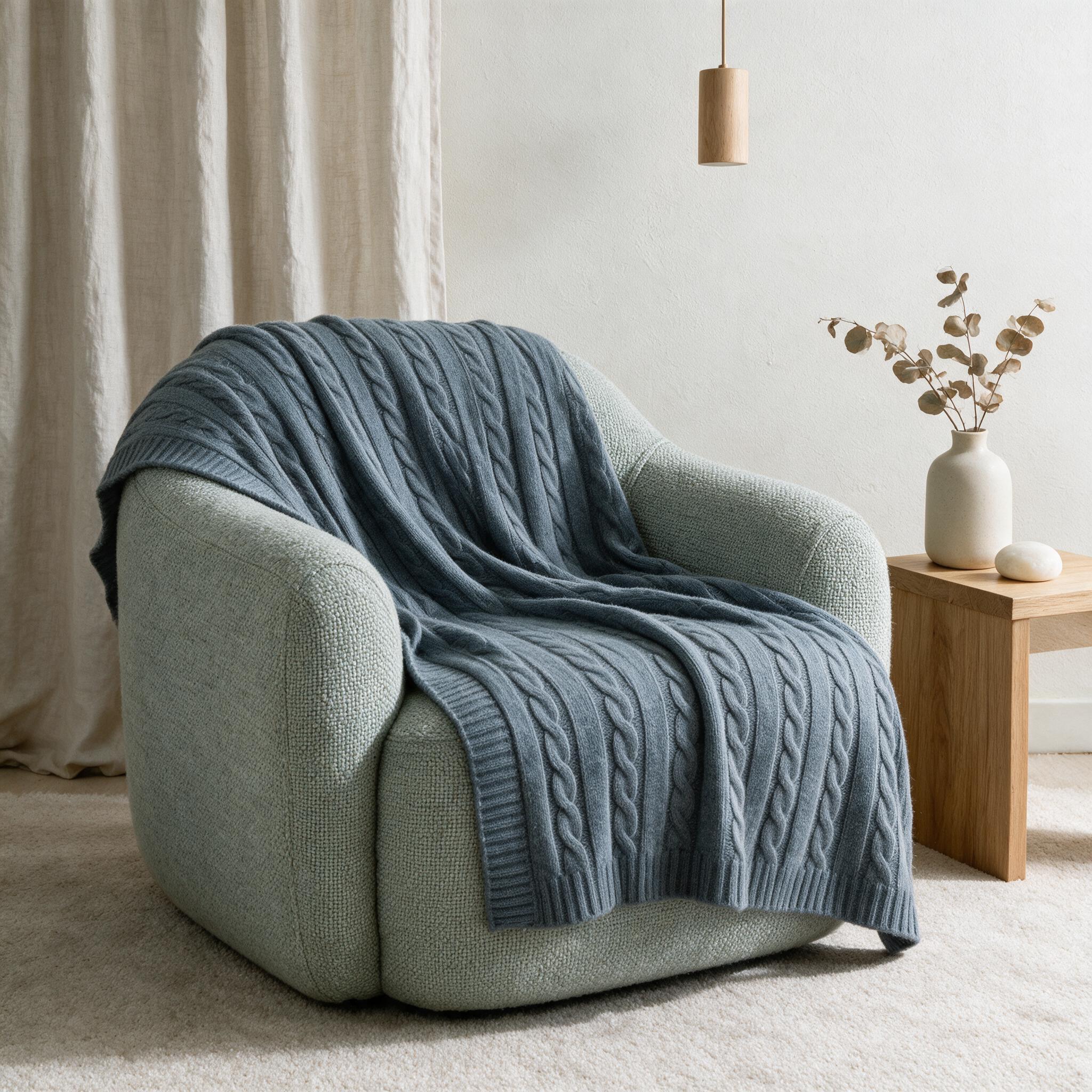
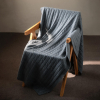
Een plaid gebreid van 100% kasjmier uit Binnen-Mongolië, van de witte Hanshan-kasjmiergeit uit Chifeng. Met 90 × 180 cm is hij bedoeld voor één persoon: om de schouders op de bank, gevouwen aan het voeteneind van het bed of meegenomen naar de leesstoel.

  • 100% kasjmier uit Binnen-Mongolië
  • Vierdraads kasjmiergaren
  • Kabelpatroon met geribde randen
  • 90 × 180 cm
  • Breisel van 720 tot 1500 g/m²
  • Havermout, Chocolade of Middengrijs
02Het breisel +−

Vier kasjmierdraden worden tot één garen getwijnd en daarna gebreid tot diepe kabels met reliëf. Het resultaat heeft body en een prettig gewicht, maar blijft licht genoeg om van kamer naar kamer mee te nemen.

Kasjmier is een heel fijne natuurlijke vezel, daarom voelt het oppervlak zacht en licht donzig aan op de huid. Het breisel is gebreid van 720 tot 1500 g/m² en heeft daardoor body; het exacte gewicht van elke plaid varieert daarnaast iets met de kleur, de partij en de luchtvochtigheid.

03Onderhoud +−

Met de hand wassen in koud water met een mild wolwasmiddel, of laten stomen. Niet wringen, niet bleken, niet in de droger. Het water in een handdoek uitdrukken en plat drogen, uit de buurt van directe warmte en zon.

Gevouwen bewaren, niet hangend. Lichte pluisvorming is normaal bij kasjmier in de eerste weken; verwijder de pluisjes voorzichtig met een kasjmierkam.

Doordachte details · Natuurlijke warmte

De kasjmier plaid

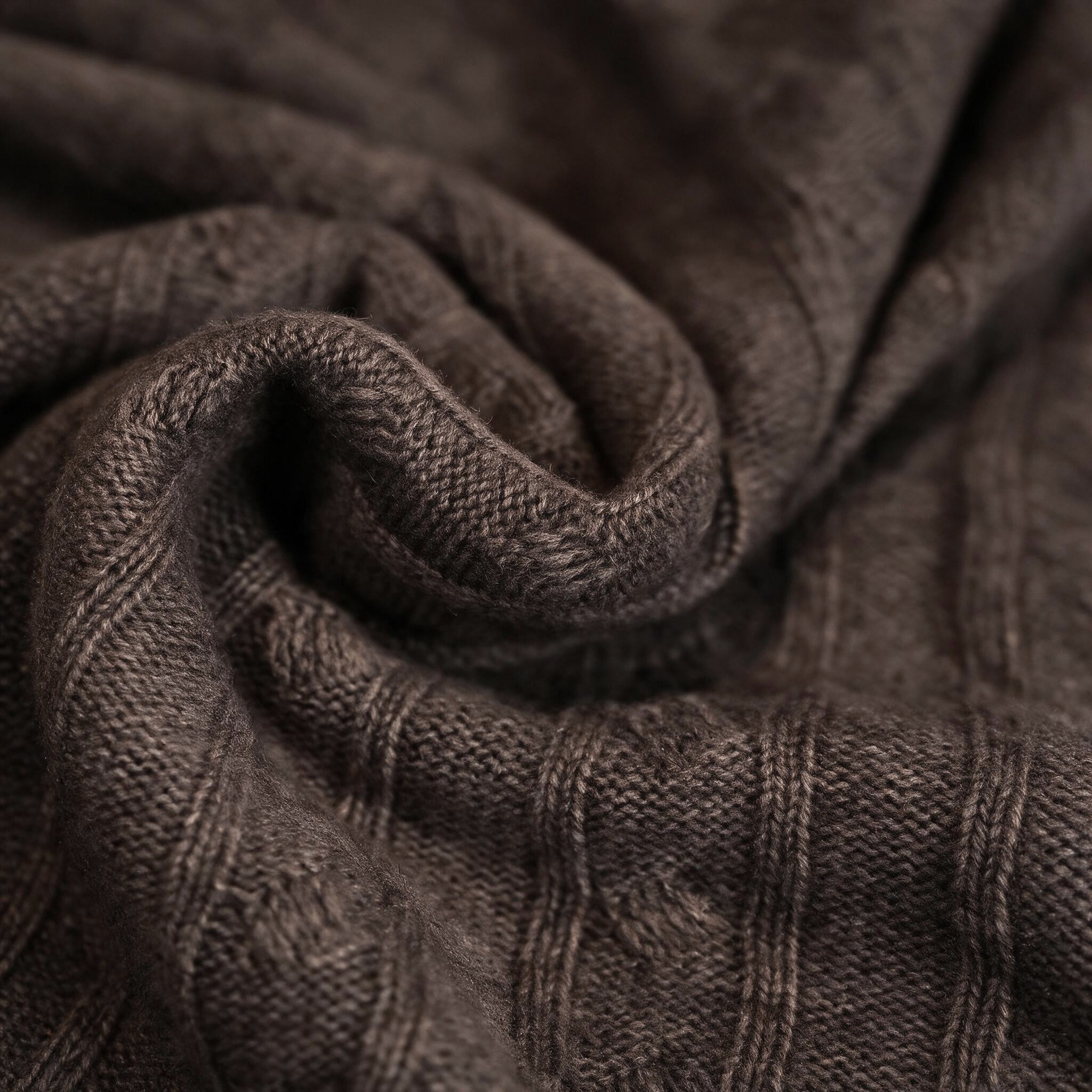
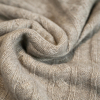
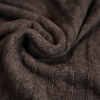
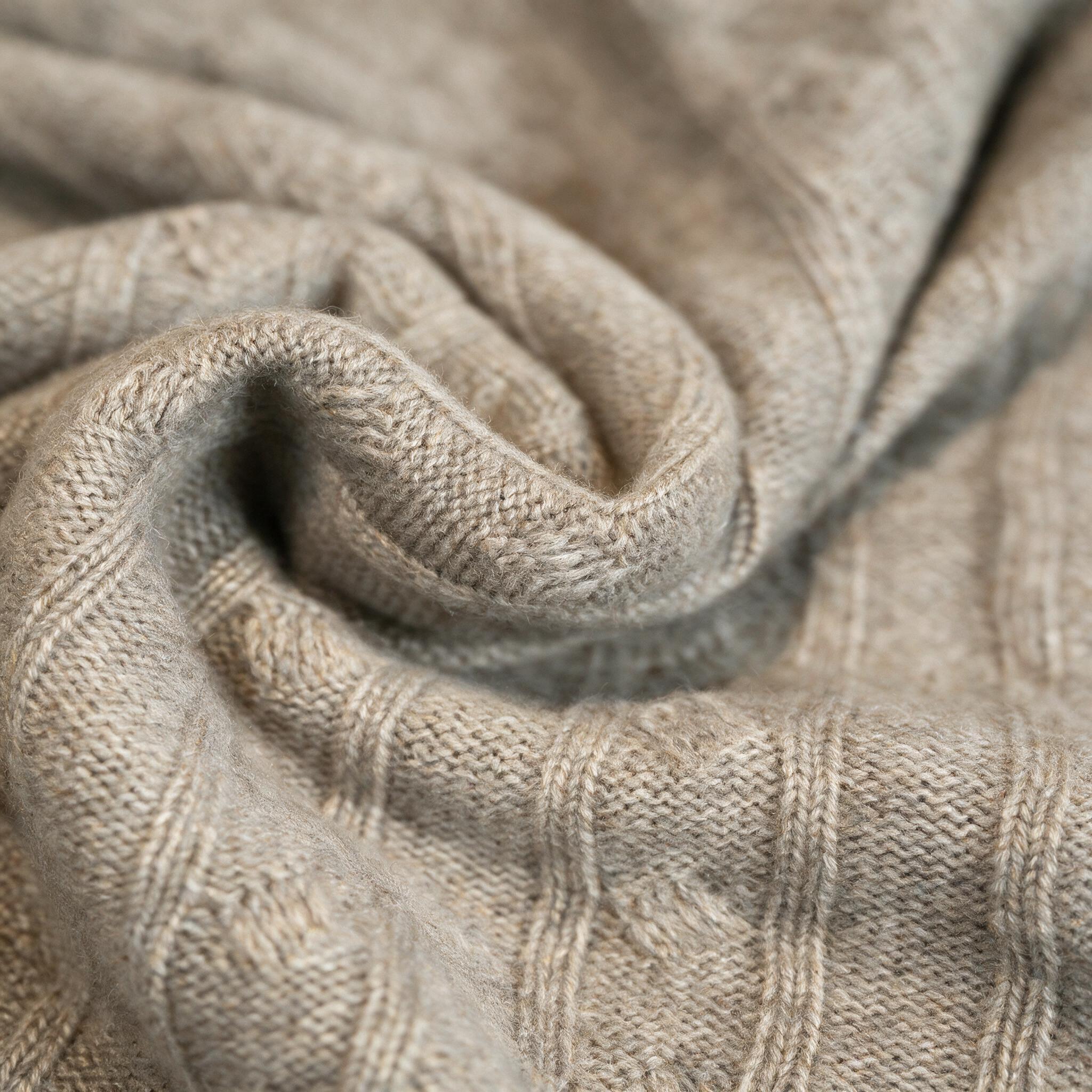
Zachte plooien van havermoutkleurig kasjmier tonen de fijne breistructuur

100% kasjmier uit Binnen-Mongolië

Van de witte Hanshan-geit

Onze kasjmier komt van de witte Hanshan-kasjmiergeit, gehouden op de graslanden rond Chifeng in Binnen-Mongolië. In de koude maanden groeit bij de geiten onder het dekhaar een fijne, dichte ondervacht, en die vezel gebruiken wij. Het is witte kasjmier, de meest gewaardeerde van de natuurlijke tinten, omdat hij elke kleur zuiver opneemt.

Omdat elke vezel zo fijn is en stilstaande lucht vasthoudt, geeft kasjmier bij hetzelfde gewicht ongeveer drie keer zoveel warmte als schapenwol, en voelt het licht en zacht aan op de huid. Er is niets bijgemengd: de plaid is 100% kasjmier.

100% kasjmier Binnen-Mongolië Drie keer zo warm als wol

Vierdraads kabelpatroon

Gebreid met diepte

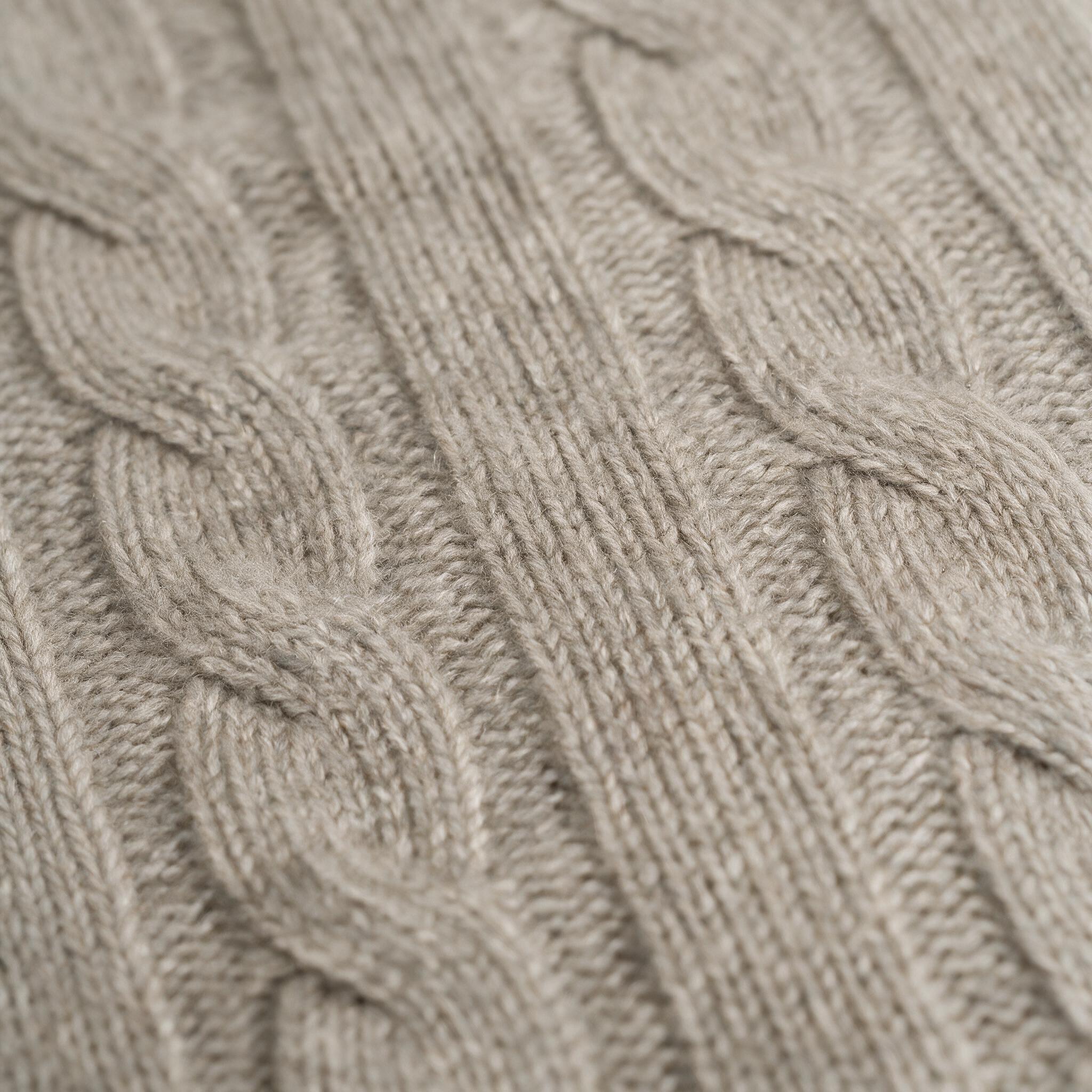
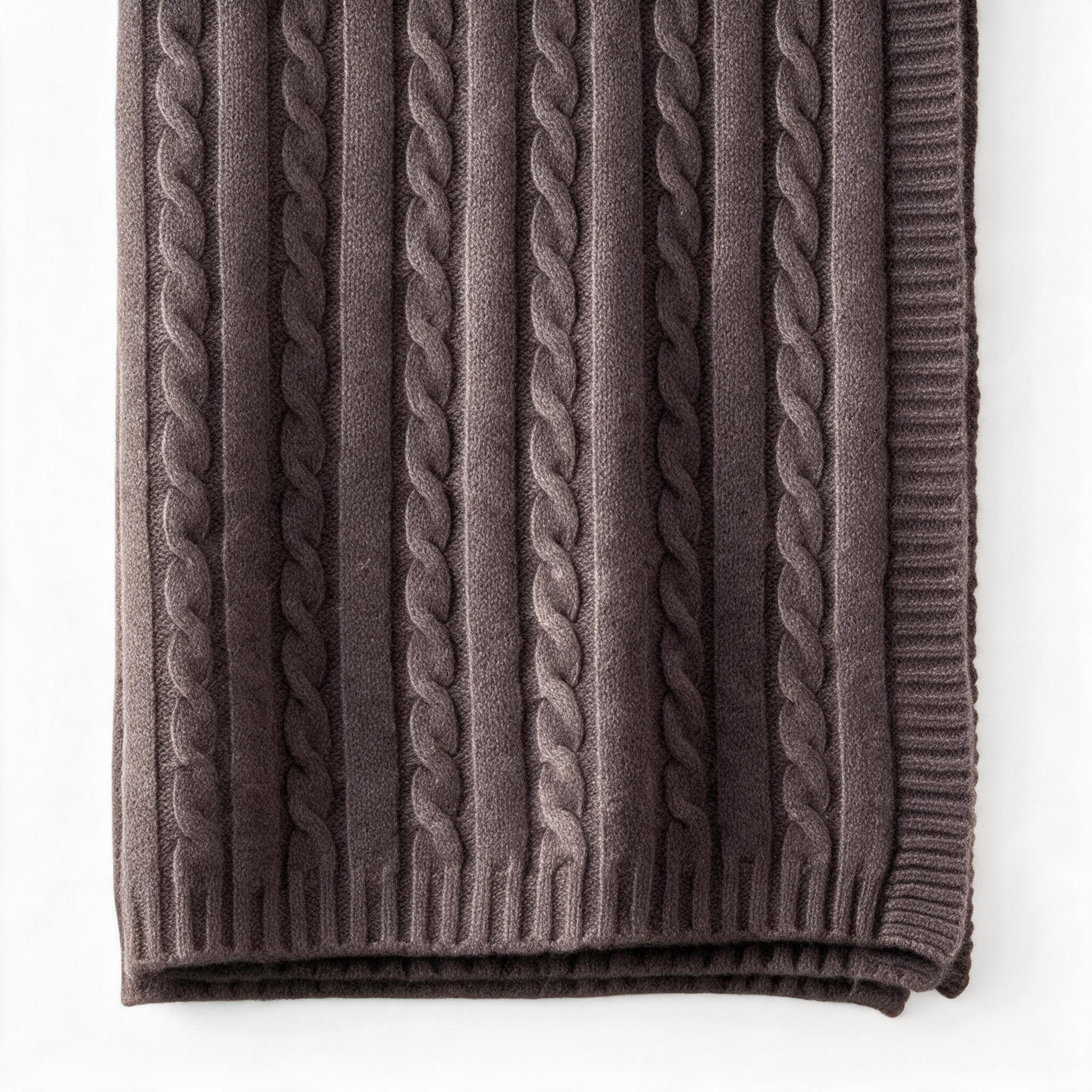
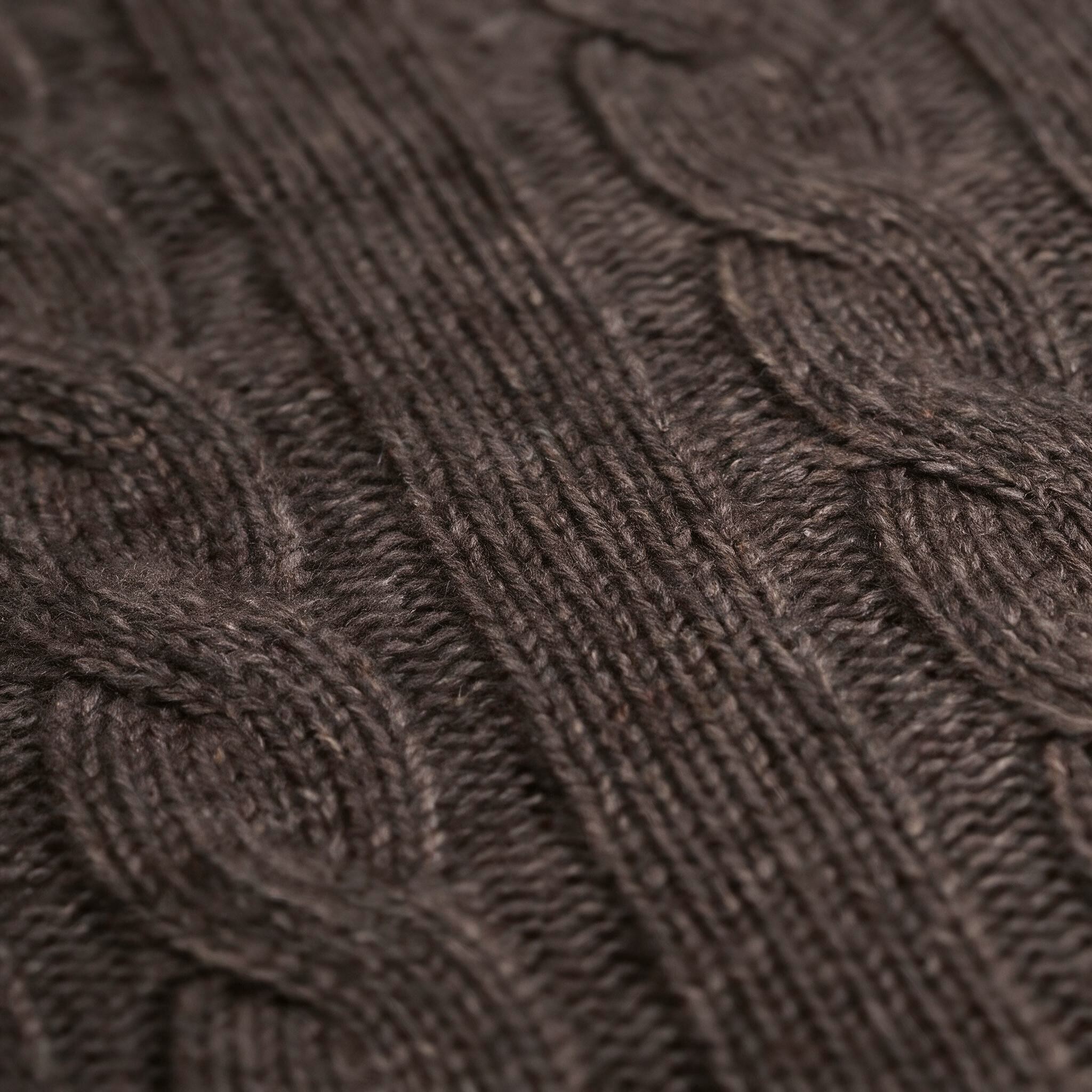
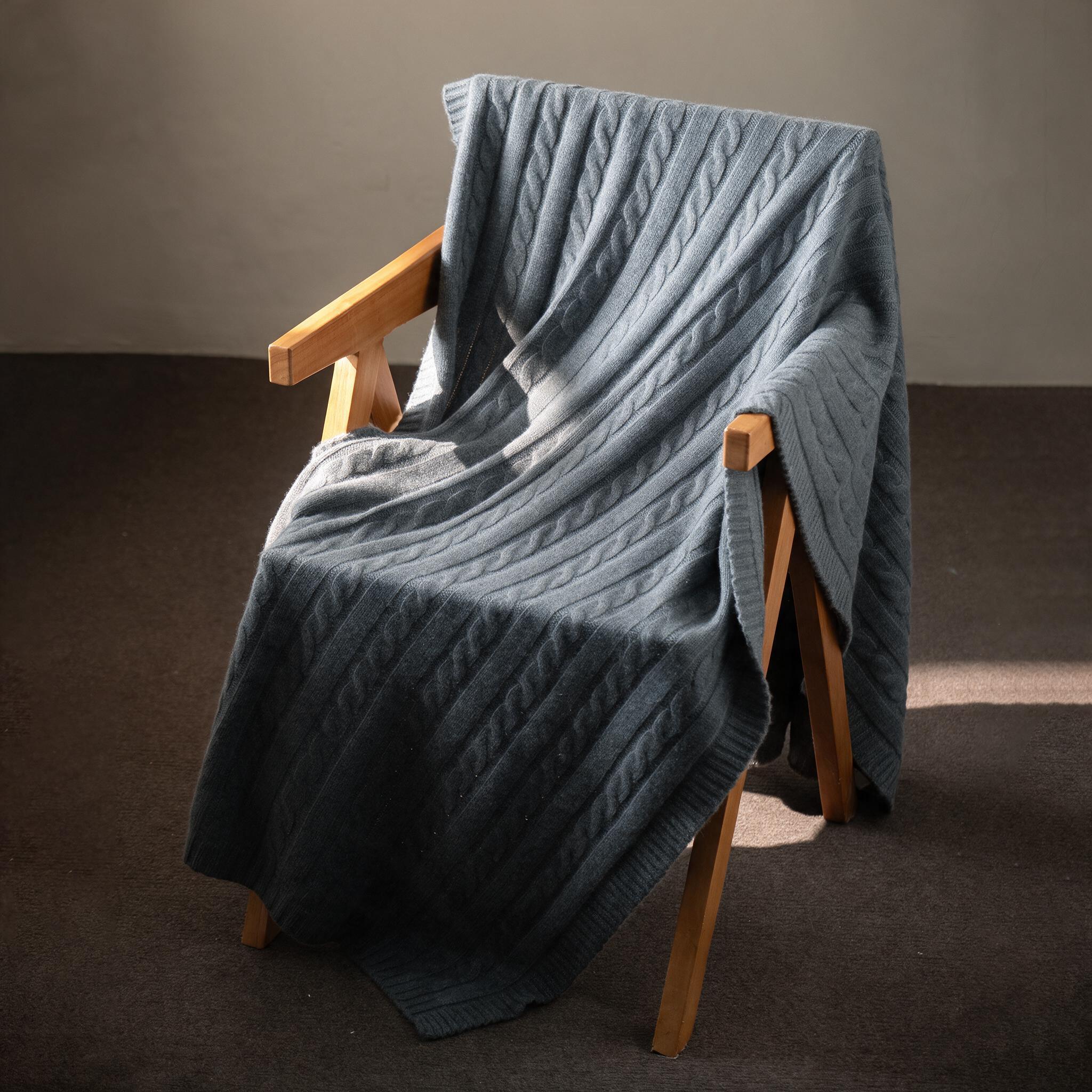
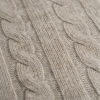
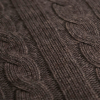
Vier kasjmierdraden worden tot één garen getwijnd en daarna gebreid tot diepe kabels met reliëf die over de volle lengte van de plaid lopen. Het vierdraads garen geeft het breisel een volle, dicht gebreide body die zijn vorm houdt in plaats van slap te worden.

Geribde randen omlijsten elke zijde, zodat de plaid netjes ligt als hij gevouwen is en zacht over de armleuning van een stoel valt.

Vierdraads garen Kabels met reliëf Geribde randen
Close-up van het kabelpatroon van een chocoladebruine kasjmier plaid
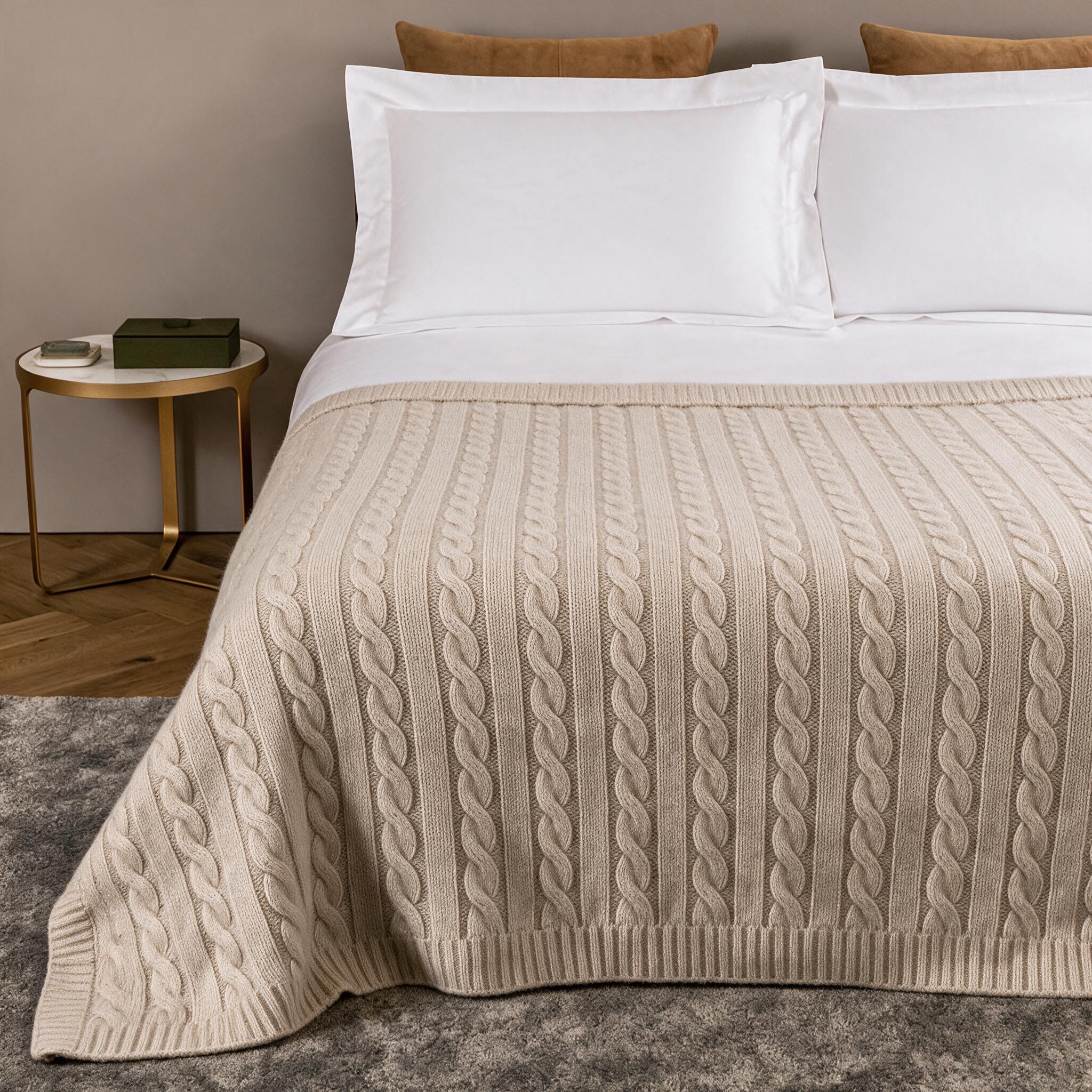
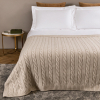
Havermoutkleurige kabelgebreide kasjmier plaid aan het voeteneind van een wit opgemaakt bed

90 × 180 cm · 720 tot 1500 g/m²

Bedoeld voor één persoon

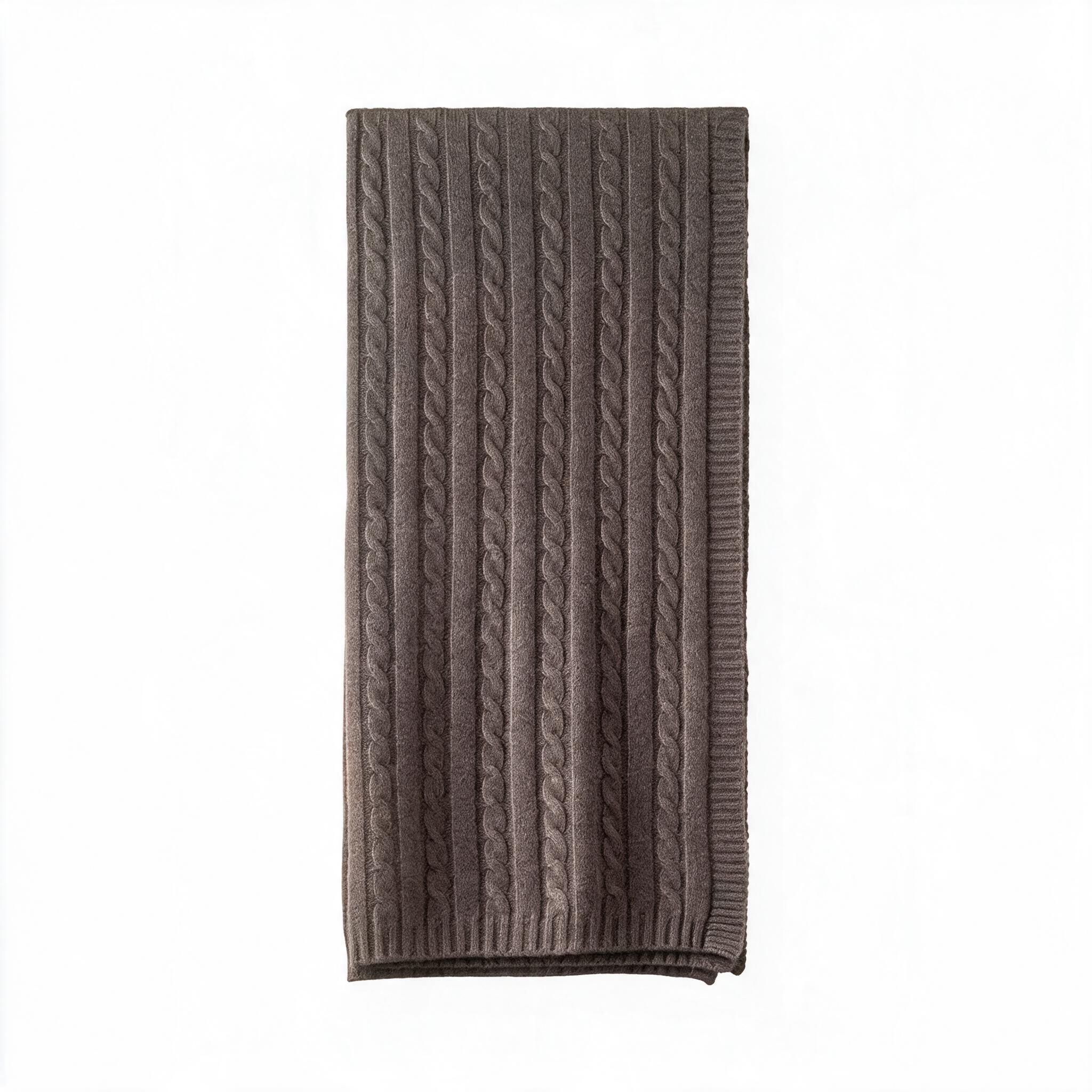
Met 90 × 180 cm is de plaid gemaakt om één persoon te omhullen: om de schouders op de bank, over de knieën in de leesstoel of gevouwen aan het voeteneind van het bed als laatste, rustige laag.

Kies Havermout voor een warme, natuurlijke tint, Chocolade voor diepte of Middengrijs om rustig naast linnen en wit beddengoed te liggen.

90 × 180 cm 720 tot 1500 g/m² Drie kleuren

In één oogopslag

Productdetails

Materiaal
100% kasjmier uit Binnen-Mongolië
Garen
Vierdraads kasjmier
Knit
Kabelpatroon met geribde randen
Maat
90 × 180 cm
Gewicht
720 tot 1500 g/m², een dicht breisel dat iets varieert per kleur en partij
Aanvoelen
Zacht, dik en ontspannen, met een natuurlijke val
Kleuren
Havermout, Chocolade, Middengrijs
Onderhoud
Koud met de hand wassen of stomen, plat drogen

Cashmere CareBuying Guide

Cashmere Questions, Answered

Is de plaid echt 100% kasjmier?

Yes. Every strand is cashmere from the Hanshan white goat, with no wool, nylon or polyester blended in. That matters, because a label can say 100% cashmere and still describe thin yarn spun for yield rather than quality. Ours is four strands of cashmere twisted into one yarn and knitted at 720 to 1500 grams per square metre, so the throw feels full and substantial in the hand.

How can you tell good cashmere from cheap cashmere?

Look at three things: the fineness of the fibre, the number of plies in the yarn, and how densely it is knitted. Fine cashmere measures around 14 to 16 microns. A yarn of two or more plies keeps its shape, while single-ply yarn tends to thin where it rubs. A dense knit also wears better than a loose one, which can feel soft at first and then slacken with use. Our throw is spun from 14 to 16 micron cashmere, four-ply, and knitted at 720 to 1500 gsm.

What does four-ply cashmere mean?

Four-ply means four fine strands of cashmere are twisted together to make each yarn. The finished yarn is fuller and rounder than a single strand, so the knit is denser, holds its cables crisply and is less likely to stretch or thin with use. It is also what gives the knit its substantial weight, from 720 to 1500 grams per square metre.

Where does Sensoire's cashmere come from?

Our cashmere comes from the Hanshan white cashmere goat, raised on the grasslands around Chifeng in Inner Mongolia. The goats grow a fine, downy undercoat through the cold winter, and in spring it is combed out by hand. That undercoat is the only fibre in the throw.

Why does a cashmere throw cost more than a wool one?

Because there is far less of it. One goat gives roughly 50 to 200 grams of cashmere a year, combed by hand in spring, while a sheep can give several kilograms of wool from a single shearing. Our throw holds more than a kilogram of four-ply cashmere, so each one carries the yearly undercoat of several goats.

Is cashmere warmer than wool?

Weight for weight, cashmere usually feels warmer than ordinary sheep's wool. Its fibres are much finer, so a light knit holds plenty of still air close to the body and feels warm without feeling heavy. Wool is sturdier and costs less, which suits a bed blanket or a throw for a busy family room. Cashmere is the one to wrap around yourself, next to bare skin.

Is cashmere itchy?

Fine cashmere feels soft rather than prickly against bare skin. The prickle people associate with wool comes from thicker, stiffer fibres pressing on the skin, and cashmere fibres are far finer than ordinary wool. A new throw can release a few loose surface fibres at first, which may tickle until they work free; this settles with use.

Will a cashmere throw make me too hot?

It is unlikely to feel stuffy. Cashmere is a natural animal fibre that breathes and lets moisture move away from the skin, so it keeps you warm without the clammy heat that polyester fleece can trap. That makes it comfortable through a long evening on the sofa, or as an extra layer at the foot of the bed in winter.

Can I use the throw on my bed?

Yes, as a finishing layer rather than a full blanket. At 90 × 180 cm it is sized for one person: laid across the foot of a double or king-size bed, its length runs across the width of the mattress, or you can pull it over the duvet on a cold night. It will not cover a whole mattress the way a bed blanket does.

Cashmere, alpaca or mohair: which should I choose for a throw?

All three are warm natural fibres, and the choice comes down to feel. Alpaca is dense and warm, and is often chosen by people who find sheep's wool itchy. Mohair, from the Angora goat, is lustrous, springy and hard-wearing. Cashmere is the finest of the three, so it is the lightest for the warmth it gives, with a soft, slightly brushed surface that sits gently against bare skin.

Hoe was ik een kasjmier plaid?

Hand wash it in cool water with a gentle wool detergent, or have it dry cleaned. Choose a detergent made for wool with no enzymes, because the protein-digesting enzymes in everyday detergents can weaken animal fibres. Squeeze the water through gently without rubbing or wringing, press it out between towels, and dry the throw flat away from direct heat and sunlight, since a wet knit stretches if it is hung.

Can I machine wash or tumble dry cashmere?

We advise against both. Heat and agitation make cashmere fibres lock together and felt, and a dense knit can shrink and lose the shape of its cables. Cashmere sold as machine washable has usually been given an anti-shrink finish that smooths the natural scales on each fibre. Our throw is made to be washed by hand instead, which is gentler and keeps it soft and true to size. Never tumble dry.

How often should I wash it?

Only when it is actually soiled. Cashmere tends to resist odours, so between washes it is usually enough to shake the throw out and air it for an afternoon by an open window or outdoors in the shade. Brush off any dust once it is dry and spot-clean small marks with cool water. Fewer washes keep the fibres soft for longer.

Gaat kasjmier pluizen?

A little, in the first weeks. Loose fibres on the surface roll into small pills where the throw rubs against a sofa or a sleeve, and this eases once they have worked free. Lift them gently with a cashmere comb rather than pulling them off by hand. A four-ply yarn in a dense knit pills less than thin, loosely knitted cashmere.

How do I store cashmere and keep moths away?

Store it clean, folded and somewhere dry. Clothes moths are drawn to natural fibres that carry traces of skin oils or food, so wash or air the throw before putting it away for the warmer months. Keep it in a breathable cotton bag rather than plastic, add cedar blocks or lavender sachets if you like, and take it out to air every few months.

Beoordelingen

Er zijn nog geen beoordelingen

Wees de eerste om “Kasjmier plaid met kabelpatroon · 90 × 180 cm” te beoordelen

Je e-mailadres wordt niet gepubliceerd. Vereiste velden zijn gemarkeerd met *

Winkelwagen

De Sensoire standaard

Natuurlijke materialen

Moerbeizijde Grade 6A, Frans vlaslinnen en bamboe-lyocell, gekozen op hoe ze in bed aanvoelen.

Eerlijke prijs

Fijne natuurlijke vezels voor een eerlijke prijs, direct verkocht.

Veilig betalen

Versleutelde betaling via een beveiligde checkout.

Levering en retouren

Gratis levering vanaf 89 euro. Retourneren binnen 14 dagen.

Creators & community

Sensoire bij mensen thuis

Ongeregisseerde ochtenden met Sensoire, gefilmd en gefotografeerd door de mensen die onze producten echt thuis gebruiken.

Wit Sensoire dekbed van moerbeizijde op het bed van Stéphanie Champagnekleurig zijden beddengoed van Sensoire op het bed van Tania Het bed van Tifanny opgemaakt met gewassen Frans linnen van Sensoire Wit gewassen linnen beddengoed van Sensoire op het bed van Marie
Bekijk de video’s
Scroll naar boven