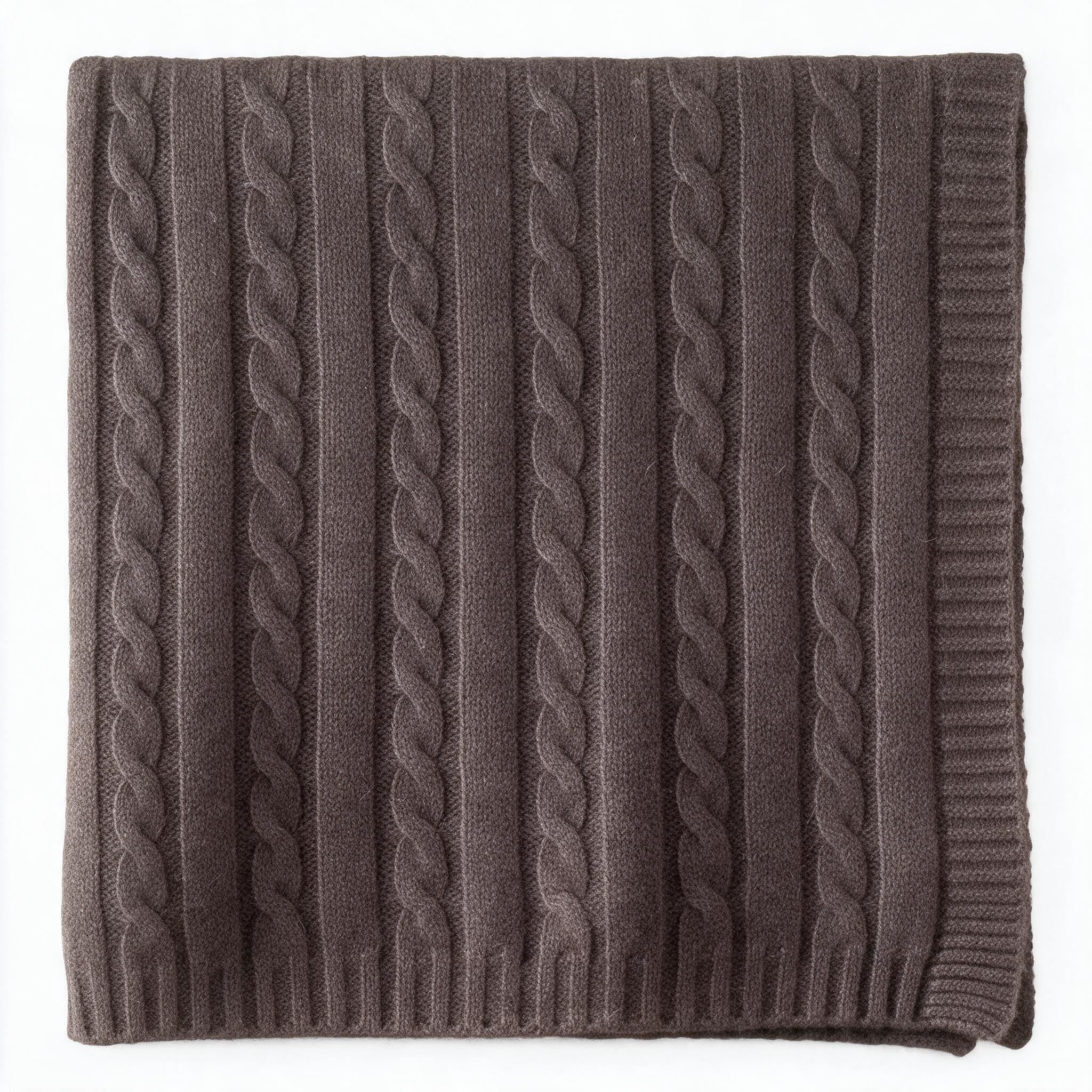

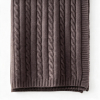
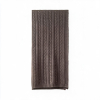

Kaschmirdecke mit Zopfmuster · 90 × 180 cm

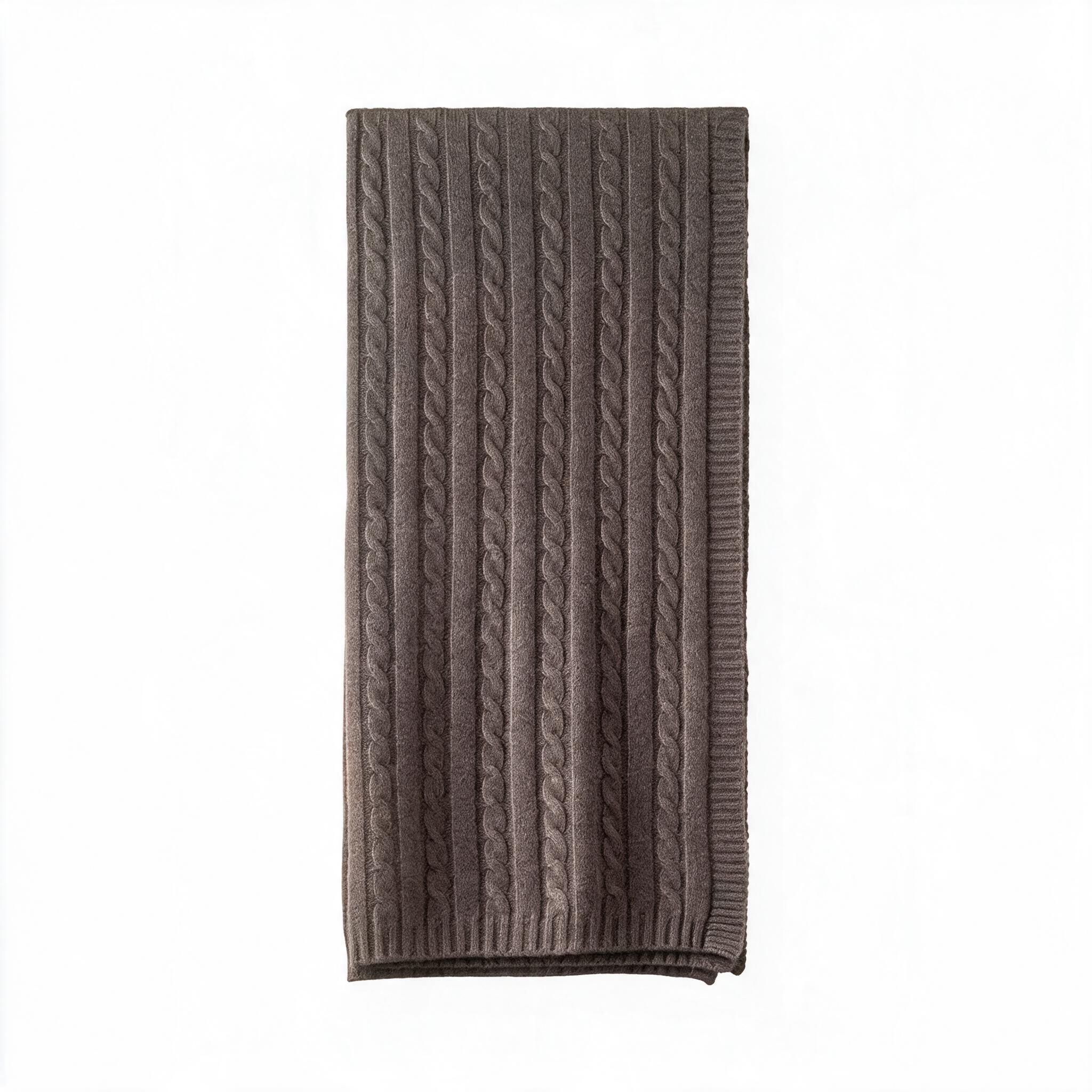
Eine Zopfstrickdecke aus 100 % Kaschmir aus der Inneren Mongolei, 90 × 180 cm. Vierfädiges Garn, zu tiefen, plastischen Zöpfen gestrickt: weich, leicht und auf leise Art warm. In Haferbeige, Schokolade oder Mittelgrau.

€ 399

- +
Sicherer Bezahlvorgang Apple Pay GPay PayPal Visa Mastercard American Express Klarna

Kostenloser Versand ab 89 € Bestellwert

  • Risikofreie Geld-zurück-Garantie
  • Einfache Rückgabe und Support
  • Sichere Zahlungen
01Details +−

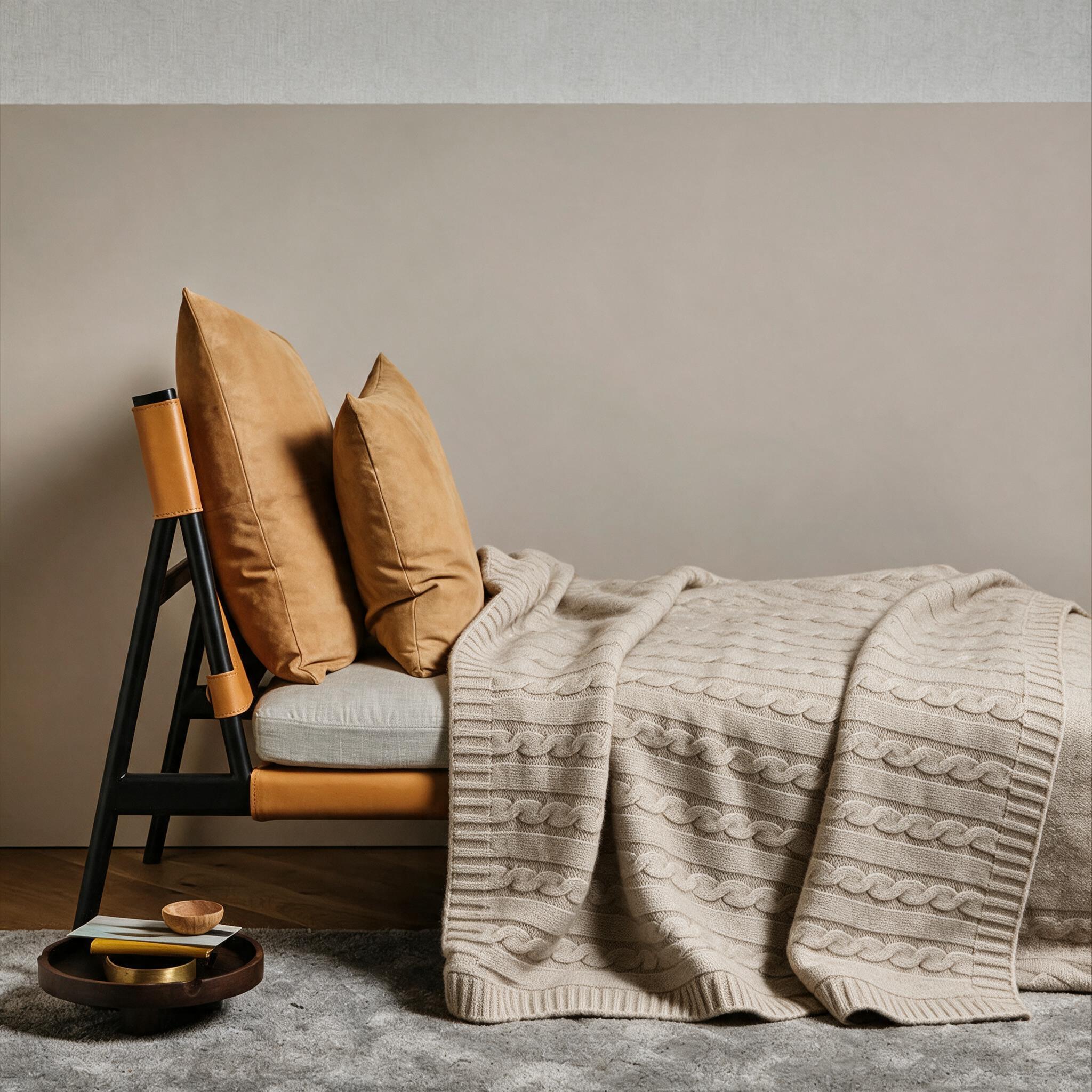
Eine Decke aus 100 % Kaschmir aus der Inneren Mongolei, von der weißen Hanshan-Kaschmirziege aus Chifeng. Mit 90 × 180 cm ist sie für eine Person gedacht: um die Schultern auf dem Sofa, gefaltet am Fußende des Betts oder mitgenommen in den Lesesessel.

  • 100 % Kaschmir aus der Inneren Mongolei
  • Vierfädiges Kaschmirgarn
  • Zopfmuster mit Rippkanten
  • 90 × 180 cm
  • Strick mit 720 g/m²
  • Haferbeige, Schokolade oder Mittelgrau
02Der Strick +−

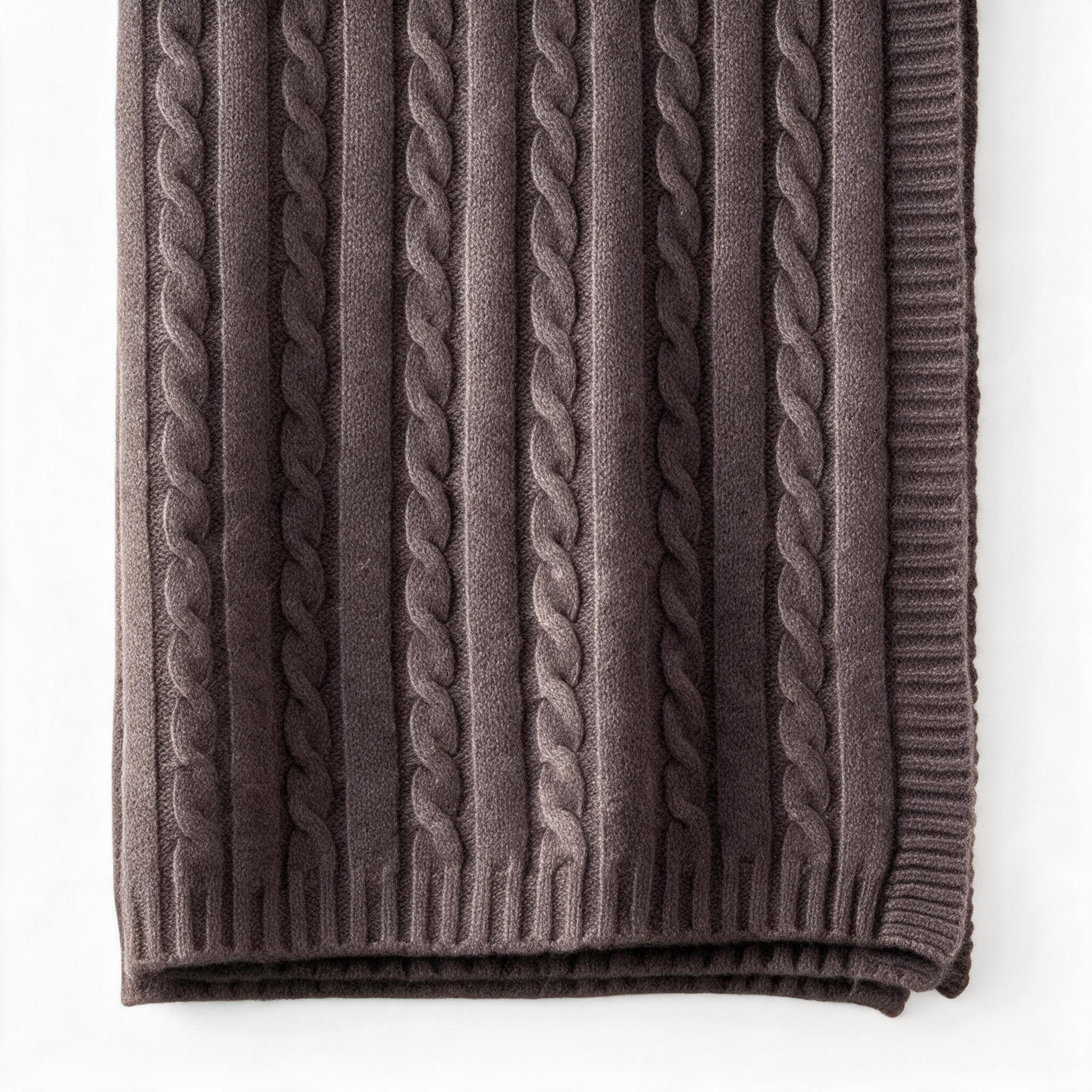
Vier Kaschmirfäden werden zu einem Garn verzwirnt und dann zu tiefen, plastischen Zöpfen gestrickt. Das Ergebnis hat Substanz und ein angenehmes Gewicht, bleibt aber leicht genug, um von Raum zu Raum zu wandern.

Kaschmir ist eine sehr feine Naturfaser, darum fühlt sich die Oberfläche weich und leicht flauschig auf der Haut an. Der Strick ist mit rund 720 g/m² gearbeitet und hat dadurch Substanz; das genaue Gewicht schwankt leicht mit Färbung, Charge und Luftfeuchtigkeit.

03Pflege +−

Von Hand in kaltem Wasser mit einem milden Wollwaschmittel waschen oder chemisch reinigen lassen. Nicht auswringen, nicht bleichen, nicht in den Trockner geben. Das Wasser in einem Handtuch ausdrücken und liegend trocknen, fern von direkter Hitze und Sonne.

Gefaltet aufbewahren, nicht hängend. Leichtes Pilling ist bei Kaschmir in den ersten Wochen normal; mit einem Kaschmirkamm vorsichtig abnehmen.

Durchdachte Details · Natürliche Wärme

Die Kaschmirdecke

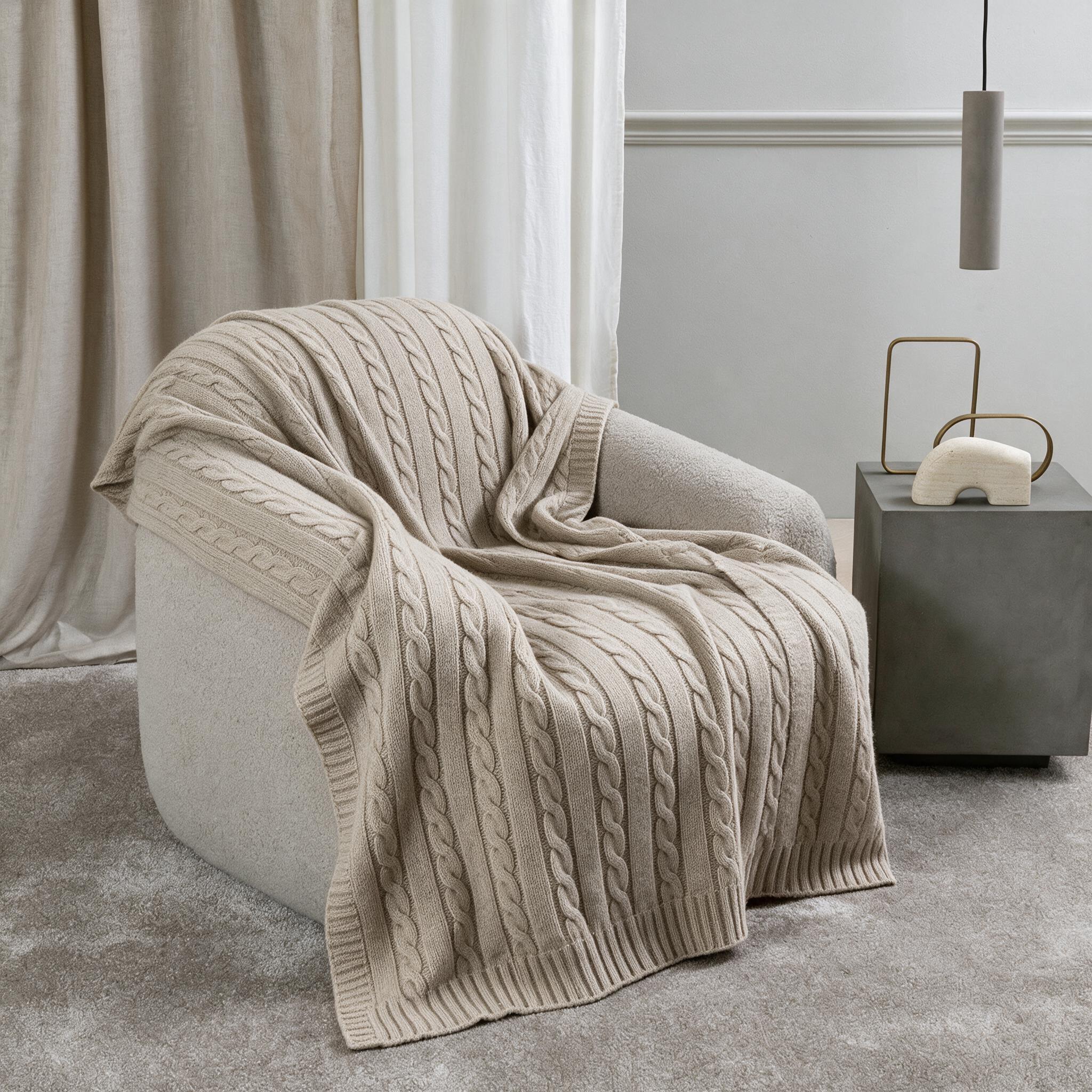
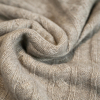
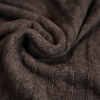
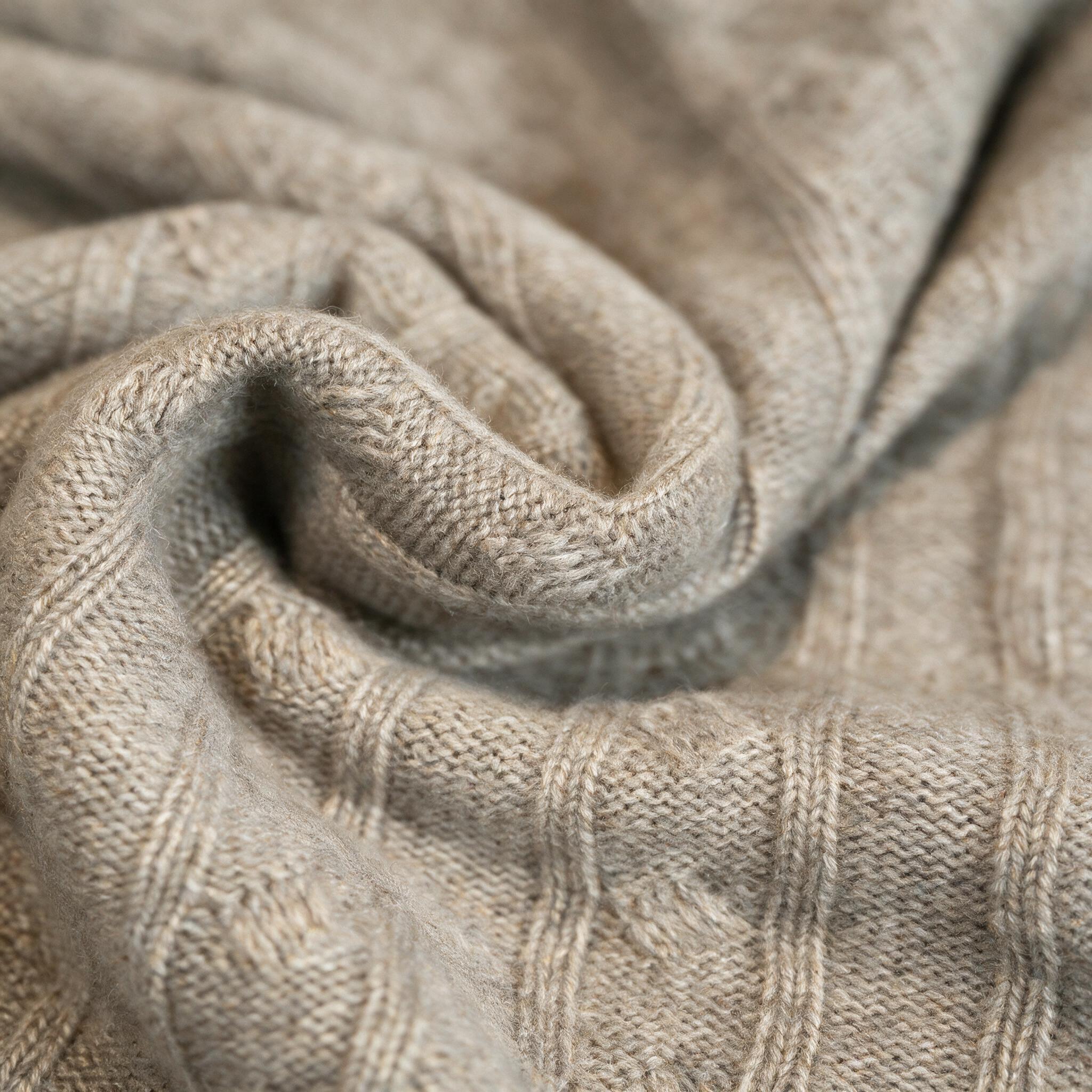
Weiche Falten in haferbeigem Kaschmir zeigen die feine Strickstruktur

100 % Kaschmir aus der Inneren Mongolei

Von der weißen Hanshan-Ziege

Unser Kaschmir stammt von der weißen Hanshan-Kaschmirziege, die auf dem Grasland rund um Chifeng in der Inneren Mongolei gehalten wird. In den kalten Monaten bilden die Ziegen unter dem Deckhaar ein feines, dichtes Unterhaar, und genau diese Faser verwenden wir. Es ist weißer Kaschmir, der begehrteste der natürlichen Farbtöne, weil er jede Farbe klar annimmt.

Weil jede Faser so fein ist und ruhende Luft einschließt, wärmt Kaschmir bei gleichem Gewicht etwa dreimal so gut wie Schafwolle und fühlt sich dabei leicht und weich auf der Haut an. Nichts ist beigemischt: Die Decke ist aus 100 % Kaschmir.

100 % Kaschmir Innere Mongolei Dreimal so warm wie Wolle

Vierfädiges Zopfmuster

Mit Tiefe gestrickt

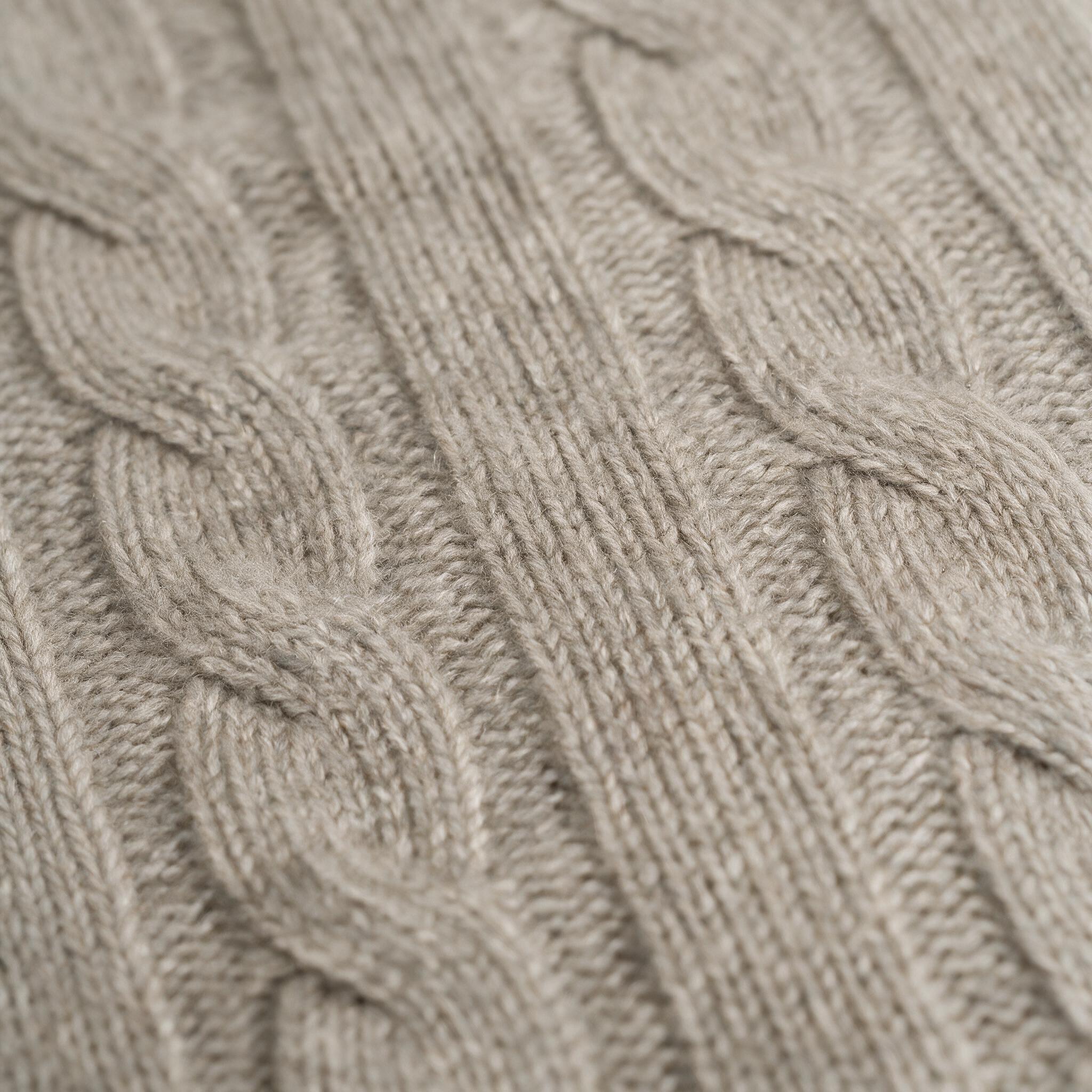
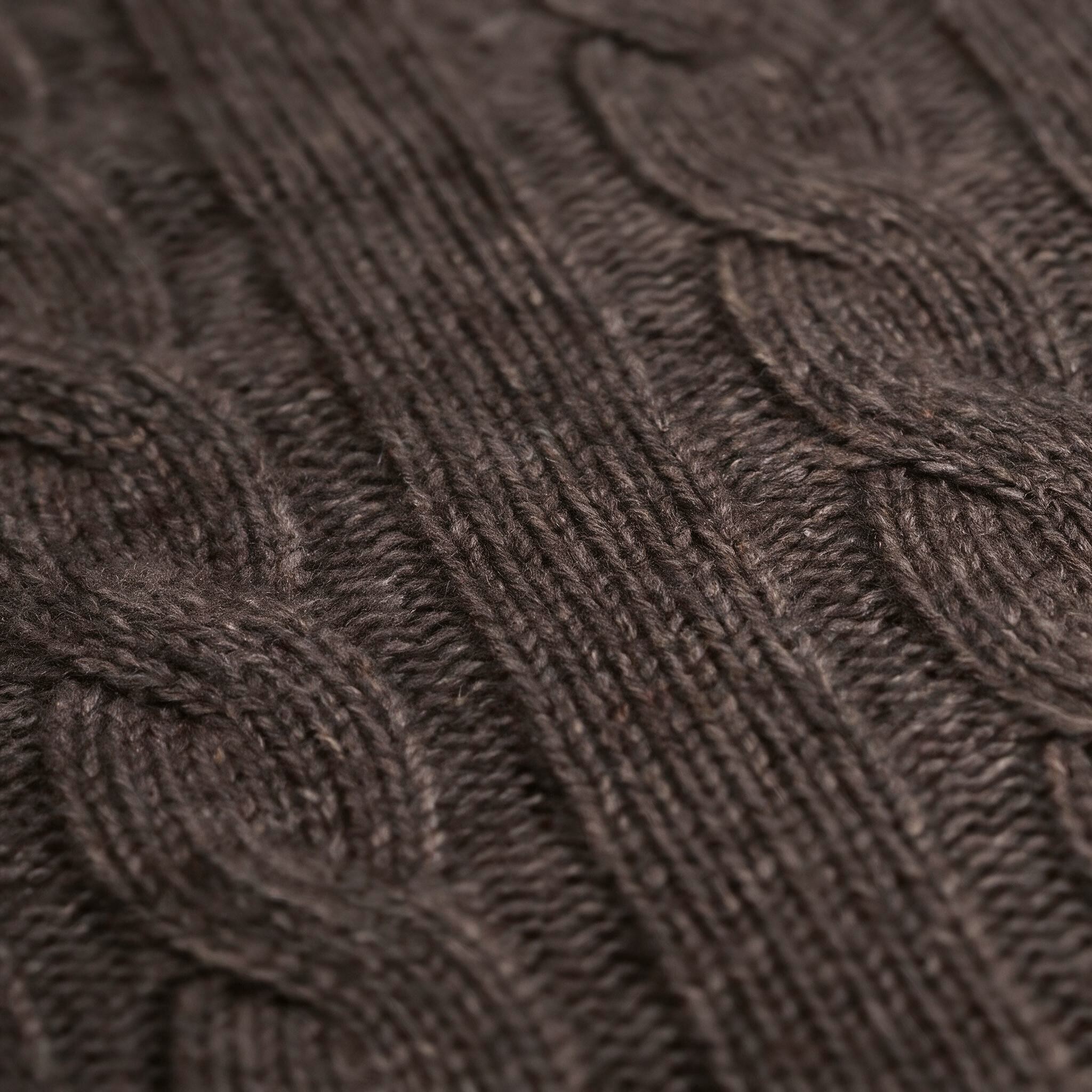
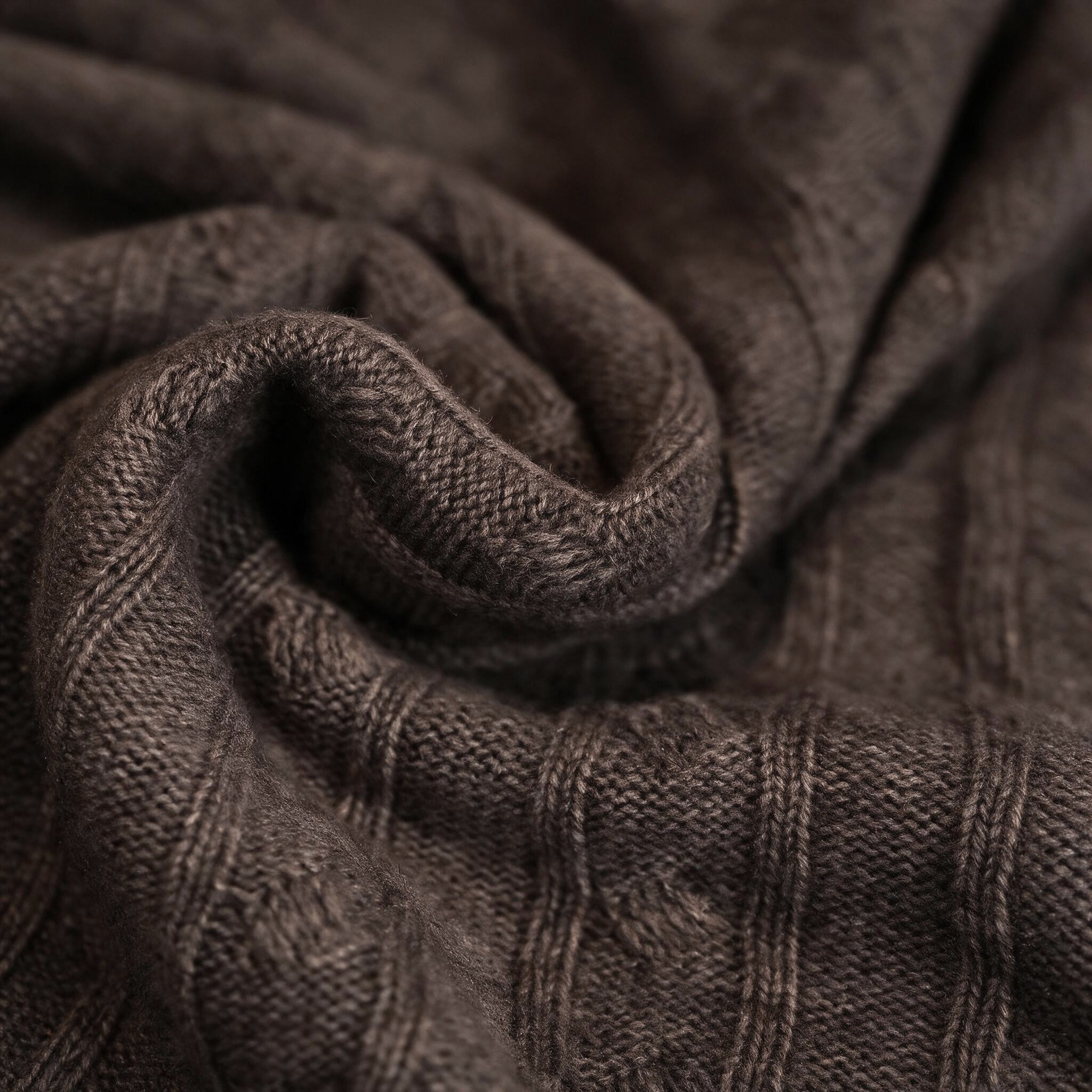
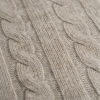
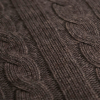
Vier Kaschmirfäden werden zu einem Garn verzwirnt und dann zu tiefen, plastischen Zöpfen gestrickt, die über die ganze Länge der Decke laufen. Das vierfädige Garn gibt dem Strick einen vollen, dicht gearbeiteten Körper, der seine Form behält, statt auszuleiern.

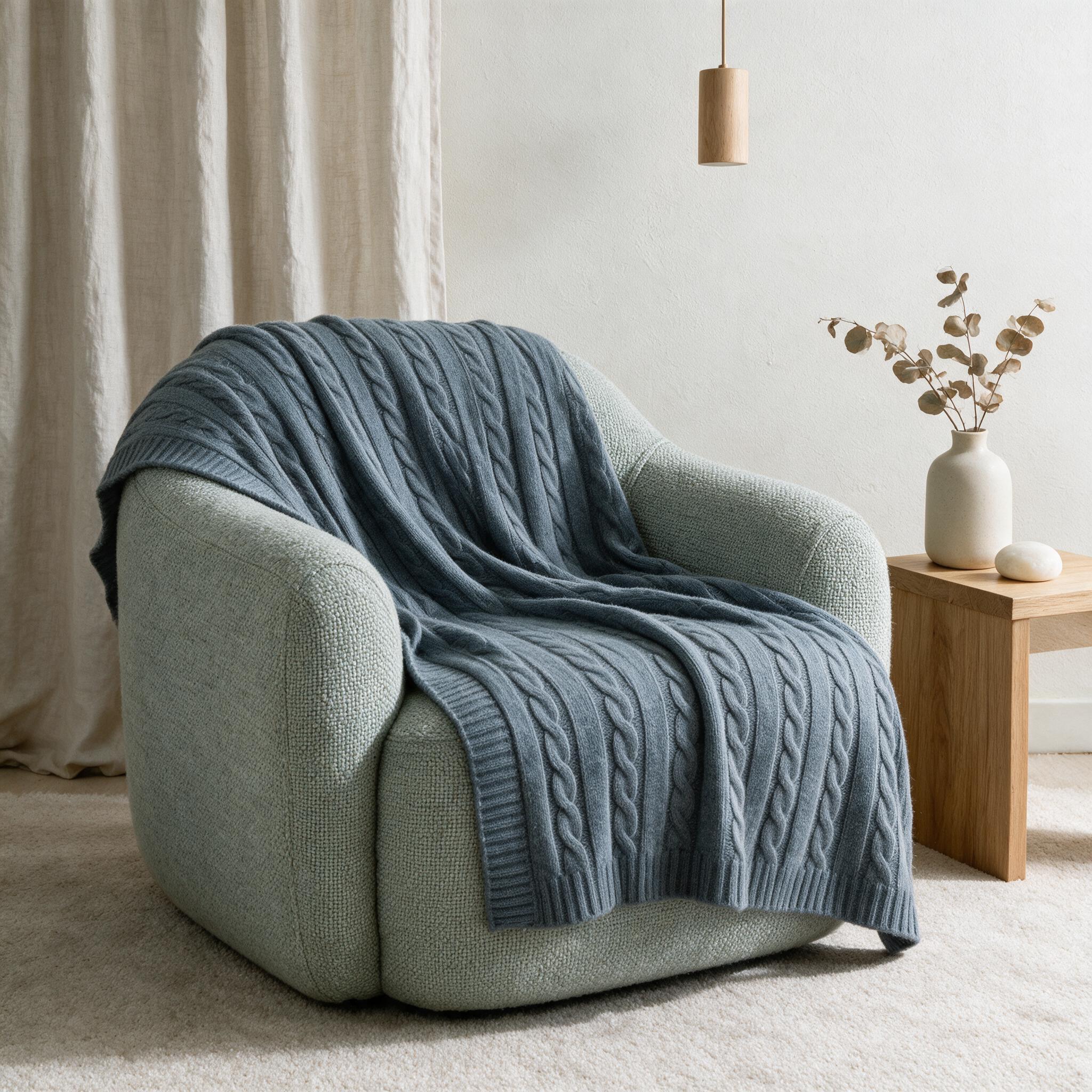
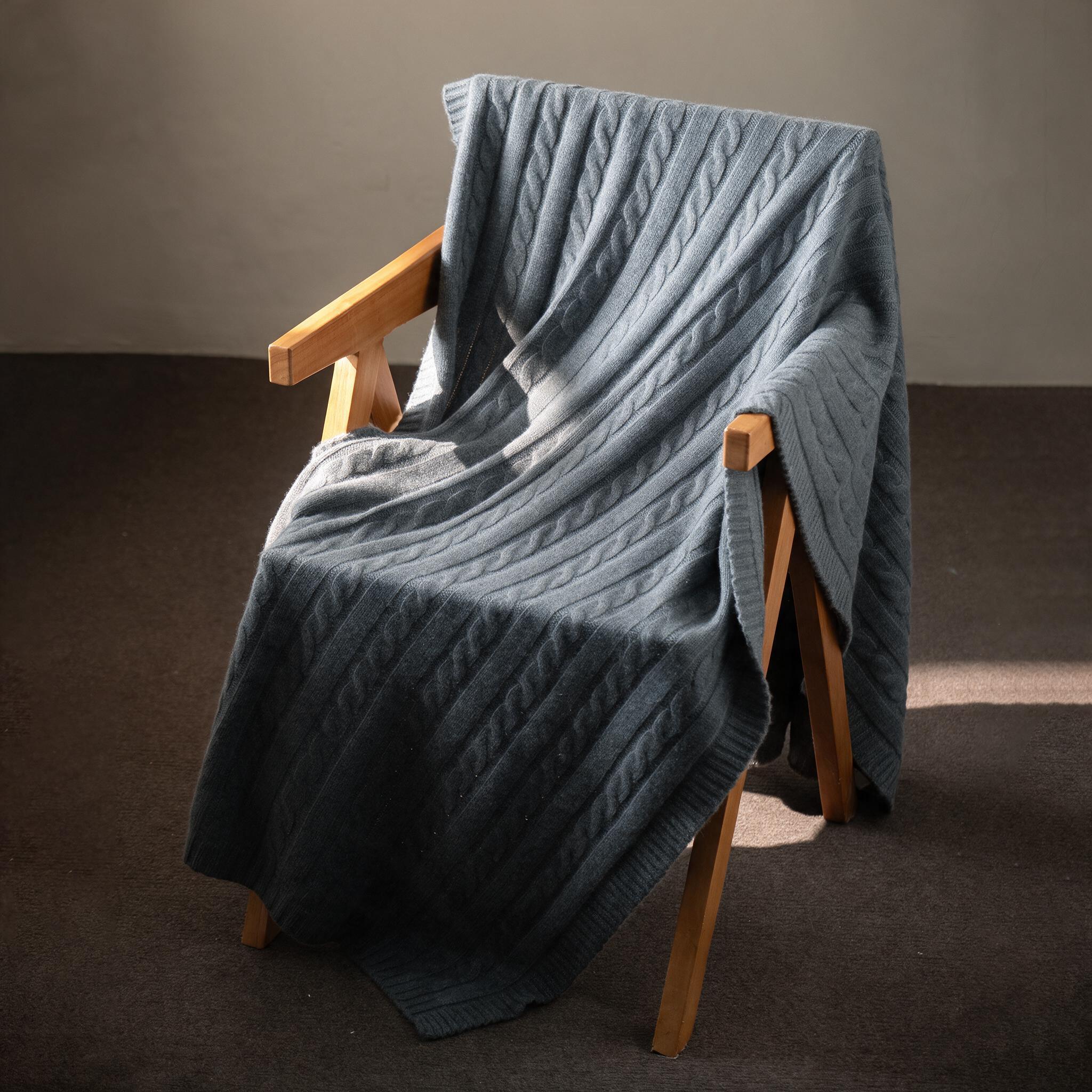
Rippkanten fassen jede Seite ein, so liegt die Decke gefaltet ordentlich und fällt weich über die Lehne eines Sessels.

Vierfädiges Garn Plastische Zöpfe Rippkanten
Nahaufnahme des Zopfmusters einer schokoladenbraunen Kaschmirdecke
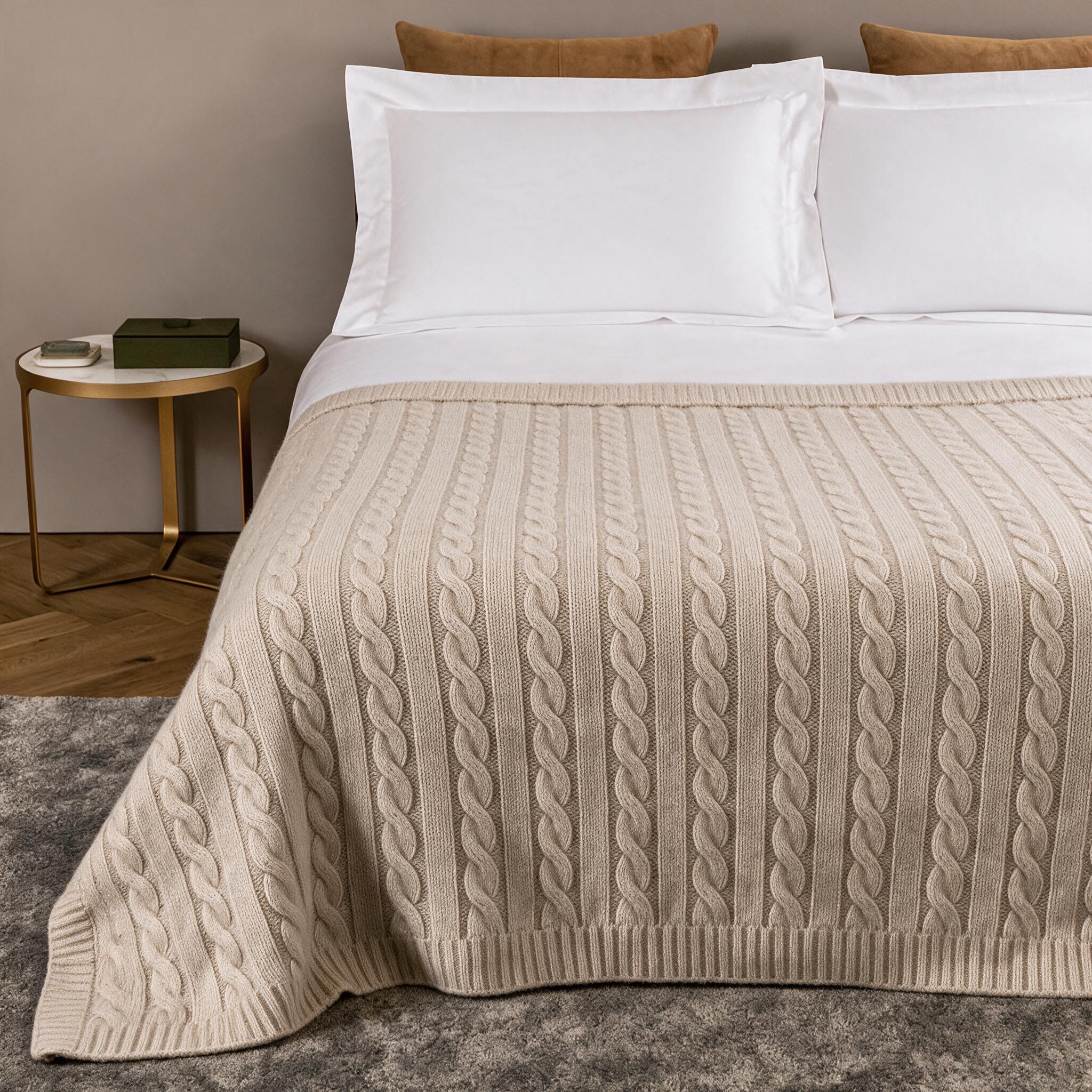
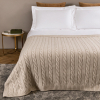
Haferbeige Kaschmirdecke mit Zopfmuster am Fußende eines weiß bezogenen Betts

90 × 180 cm · 720 g/m²

Für eine Person gedacht

Mit 90 × 180 cm ist die Decke gemacht, um eine Person einzuhüllen: um die Schultern auf dem Sofa, über den Knien im Lesesessel oder gefaltet am Fußende des Betts als letzte, ruhige Lage.

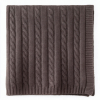
Wählen Sie Haferbeige für einen warmen, natürlichen Ton, Schokolade für Tiefe oder Mittelgrau, das ruhig neben Leinen und weißer Bettwäsche liegt.

90 × 180 cm 720 g/m² Drei Farben

Auf einen Blick

PRODUKTDETAILS

Material
100 % Kaschmir aus der Inneren Mongolei
Garn
Vierfädiger Kaschmir
Knit
Zopfmuster mit Rippkanten
Größe
90 × 180 cm
Gewicht
720 g/m², ein dichter Strick, der je nach Farbe und Charge leicht variiert
Haptik
Weich, dick und entspannt, mit natürlichem Fall
Farben
Haferbeige, Schokolade, Mittelgrau
Pflege
Kalte Handwäsche oder chemische Reinigung, liegend trocknen

Kaschmirpflege · Kaufberatung

Cashmere Questions, Answered

Ist die Decke wirklich aus 100 % Kaschmir?

Yes. Every strand is cashmere from the Hanshan white goat, with no wool, nylon or polyester blended in. That matters, because a label can say 100% cashmere and still describe thin yarn spun for yield rather than quality. Ours is four strands of cashmere twisted into one yarn and knitted at 720 grams per square metre, so the throw feels full and substantial in the hand.

How can you tell good cashmere from cheap cashmere?

Look at three things: the fineness of the fibre, the number of plies in the yarn, and how densely it is knitted. Fine cashmere measures around 14 to 16 microns. A yarn of two or more plies keeps its shape, while single-ply yarn tends to thin where it rubs. A dense knit also wears better than a loose one, which can feel soft at first and then slacken with use. Our throw is spun from 14 to 16 micron cashmere, four-ply, and knitted at 720 gsm.

What does four-ply cashmere mean?

Four-ply means four fine strands of cashmere are twisted together to make each yarn. The finished yarn is fuller and rounder than a single strand, so the knit is denser, holds its cables crisply and is less likely to stretch or thin with use. It is also what gives the throw its gentle weight of around 720 grams per square metre.

Where does Sensoire's cashmere come from?

Our cashmere comes from the Hanshan white cashmere goat, raised on the grasslands around Chifeng in Inner Mongolia. The goats grow a fine, downy undercoat through the cold winter, and in spring it is combed out by hand. That undercoat is the only fibre in the throw.

Why does a cashmere throw cost more than a wool one?

Because there is far less of it. One goat gives roughly 50 to 200 grams of cashmere a year, combed by hand in spring, while a sheep can give several kilograms of wool from a single shearing. Our throw holds more than a kilogram of four-ply cashmere, so each one carries the yearly undercoat of several goats.

Is cashmere warmer than wool?

Weight for weight, cashmere usually feels warmer than ordinary sheep's wool. Its fibres are much finer, so a light knit holds plenty of still air close to the body and feels warm without feeling heavy. Wool is sturdier and costs less, which suits a bed blanket or a throw for a busy family room. Cashmere is the one to wrap around yourself, next to bare skin.

Is cashmere itchy?

Fine cashmere feels soft rather than prickly against bare skin. The prickle people associate with wool comes from thicker, stiffer fibres pressing on the skin, and cashmere fibres are far finer than ordinary wool. A new throw can release a few loose surface fibres at first, which may tickle until they work free; this settles with use.

Will a cashmere throw make me too hot?

It is unlikely to feel stuffy. Cashmere is a natural animal fibre that breathes and lets moisture move away from the skin, so it keeps you warm without the clammy heat that polyester fleece can trap. That makes it comfortable through a long evening on the sofa, or as an extra layer at the foot of the bed in winter.

Can I use the throw on my bed?

Yes, as a finishing layer rather than a full blanket. At 90 × 180 cm it is sized for one person: laid across the foot of a double or king-size bed, its length runs across the width of the mattress, or you can pull it over the duvet on a cold night. It will not cover a whole mattress the way a bed blanket does.

Cashmere, alpaca or mohair: which should I choose for a throw?

All three are warm natural fibres, and the choice comes down to feel. Alpaca is dense and warm, and is often chosen by people who find sheep's wool itchy. Mohair, from the Angora goat, is lustrous, springy and hard-wearing. Cashmere is the finest of the three, so it is the lightest for the warmth it gives, with a soft, slightly brushed surface that sits gently against bare skin.

Wie wasche ich eine Kaschmirdecke?

Hand wash it in cool water with a gentle wool detergent, or have it dry cleaned. Choose a detergent made for wool with no enzymes, because the protein-digesting enzymes in everyday detergents can weaken animal fibres. Squeeze the water through gently without rubbing or wringing, press it out between towels, and dry the throw flat away from direct heat and sunlight, since a wet knit stretches if it is hung.

Can I machine wash or tumble dry cashmere?

We advise against both. Heat and agitation make cashmere fibres lock together and felt, and a dense knit can shrink and lose the shape of its cables. Cashmere sold as machine washable has usually been given an anti-shrink finish that smooths the natural scales on each fibre. Our throw is made to be washed by hand instead, which is gentler and keeps it soft and true to size. Never tumble dry.

How often should I wash it?

Only when it is actually soiled. Cashmere tends to resist odours, so between washes it is usually enough to shake the throw out and air it for an afternoon by an open window or outdoors in the shade. Brush off any dust once it is dry and spot-clean small marks with cool water. Fewer washes keep the fibres soft for longer.

Pillt Kaschmir?

A little, in the first weeks. Loose fibres on the surface roll into small pills where the throw rubs against a sofa or a sleeve, and this eases once they have worked free. Lift them gently with a cashmere comb rather than pulling them off by hand. A four-ply yarn in a dense knit pills less than thin, loosely knitted cashmere.

How do I store cashmere and keep moths away?

Store it clean, folded and somewhere dry. Clothes moths are drawn to natural fibres that carry traces of skin oils or food, so wash or air the throw before putting it away for the warmer months. Keep it in a breathable cotton bag rather than plastic, add cedar blocks or lavender sachets if you like, and take it out to air every few months.

Rezensionen

Noch keine Bewertungen vorhanden

Schreibe die erste Rezension für „Kaschmirdecke mit Zopfmuster · 90 × 180 cm“

Deine E-Mail-Adresse wird nicht veröffentlicht. Erforderliche Felder sind mit * markiert

Warenkorb

Der Sensoire Standard

Natürliche Materialien

Maulbeerseide Grade 6A, Leinen aus französischem Flachs und Bambus-Lyocell, ausgewählt nach dem Gefühl auf der Haut.

Faire Preise

Feine Naturfasern zu einem fairen Preis, direkt verkauft.

Sicherer Checkout

Verschlüsselte Zahlung über einen sicheren Checkout.

Versand und Rückgabe

Kostenloser Versand ab 89 €. Rückgabe innerhalb von 14 Tagen.

Creator & Community

Sensoire in echten Schlafzimmern

Ungestellte Morgen mit Sensoire, gefilmt und fotografiert von den Menschen, die unsere Produkte wirklich zu Hause nutzen.

Weiße Sensoire Bettdecke mit Maulbeerseide auf Stéphanies Bett Seidenbettwäsche von Sensoire in Champagner auf Tanias Bett Tifannys Bett mit gewaschenem französischem Leinen von Sensoire Weiße Bettwäsche aus gewaschenem Leinen von Sensoire auf Maries Bett
Videos ansehen
Nach oben scrollen