


Buyer's Guide
Is a Silk Pillowcase Worth It? An Honest Answer
Who actually benefits from a silk pillowcase, what it changes about a night's sleep, what it cannot do, and how to tell whether the one you are looking at deserves its price.
Short answer
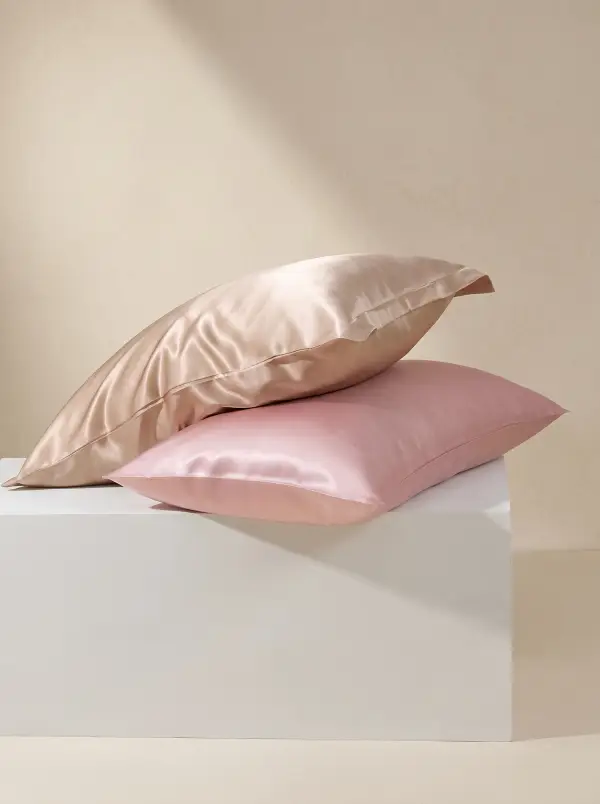
A silk pillowcase is worth it if your hair tangles or frizzes overnight, if you wake up warm, or if you want a smoother surface against your face than cotton gives. It does this through one mechanism, less friction and less moisture pulled from hair and skin, and it keeps doing it for years when the case is well made and washed cool. It is not worth it if you expect a skincare result, if you want to tumble dry your bedding, or if the listing cannot tell you the fibre and the momme weight.
Key takeaways
- The benefit is mechanical: a charmeuse silk surface gives hair and skin less to catch on and absorbs less moisture than cotton. That is the whole case for buying one.
- It pays off most for fine, long or curly hair, for hot sleepers and for dry or reactive skin. It does nothing for acne, lines or hair growth.
- The price buys fibre length, silk per square metre and construction. A 19 or 22 momme case with an envelope closure, used in rotation with a second one, lasts years, so the cost spreads over hundreds of nights.
- Satin is a weave, not a fibre. A polyester satin case feels slippery in the hand but behaves differently against heat and moisture, which is why it costs a fraction.
What does a silk pillowcase actually change?
A silk pillowcase changes the surface your hair and face spend seven or eight hours against, and nothing else. Mulberry silk is a long, smooth protein filament, woven for pillowcases in a charmeuse satin weave that leaves one face flat and lightly lustrous. Hair moving across that face meets less resistance than it does on cotton, and the fibre takes up less moisture from hair and skin overnight.
Three things follow from that. Hair that went to bed smooth has a better chance of looking that way in the morning. The pillow feels cool on first contact and does not turn clammy later in the night, because the fibre absorbs and releases moisture rather than holding it against you. And the cheek rests on a surface that drags less, which many people with dry or sensitive skin simply find more comfortable.
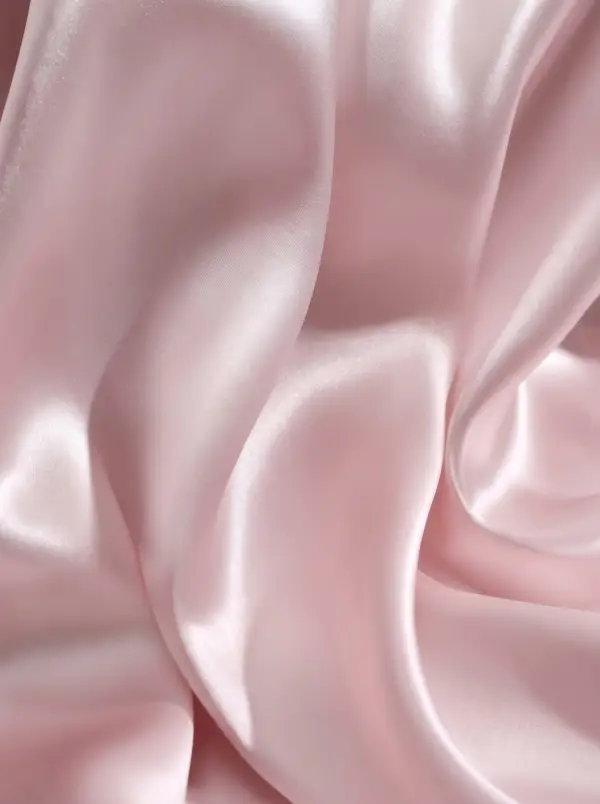
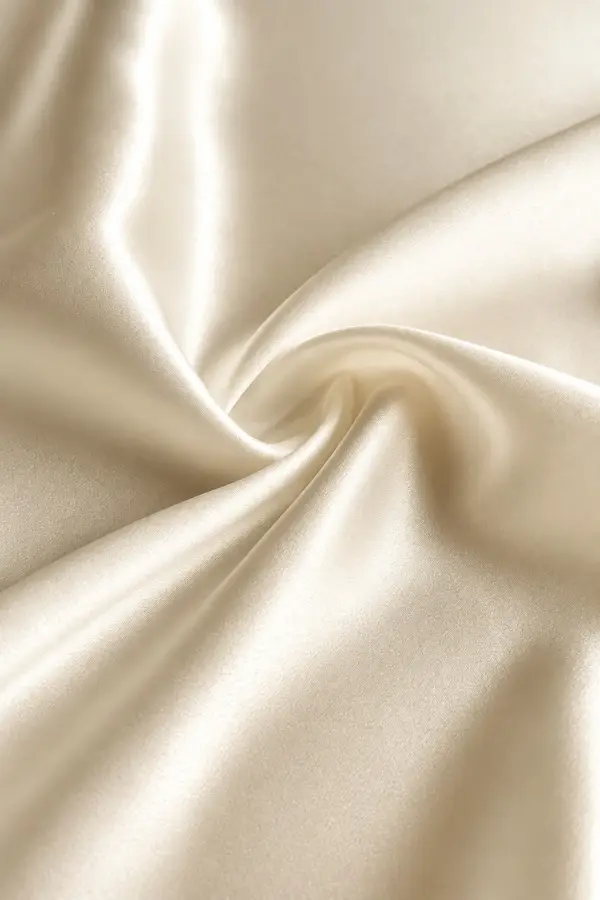
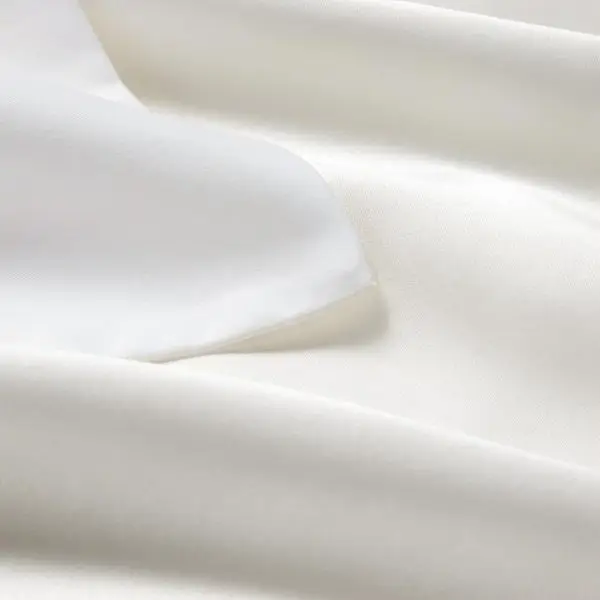
The charmeuse face, and the same mulberry silk in ivory: the surface is the whole argument.
What it does not do matters just as much. A silk pillowcase does not repair damaged hair, slow hair loss, clear breakouts or smooth lines. It is a fabric, not a treatment. Anyone selling it as one is asking you to pay for a promise the fibre cannot keep.
Who is a silk pillowcase worth it for?
Match the pillowcase to the problem you want it to solve. The four groups below get the clearest return; the fifth should save the money.
Fine, long or tangle-prone hair
Friction is the mechanism behind morning tangles and frizz. Hair rubbing against fabric through the night lifts the cuticle and knots the lengths, and fine or long hair shows it most. A smooth charmeuse face gives hair less to catch on. If your hair is long and heavy, choose 22 momme, which has enough body to keep the case sitting flat under the weight. Our guide to the silk pillowcase for hair sets out what it helps with and what it cannot do.
Curly hair and protective styles
A pillowcase alone will not hold a wash-and-go or a set of braids in place. Many people pair it with a silk bonnet, so the bonnet keeps the style contained and the pillowcase gives face and hair a smooth surface if the bonnet shifts in the night. Together they cover more of the night than either does alone.
Hot sleepers
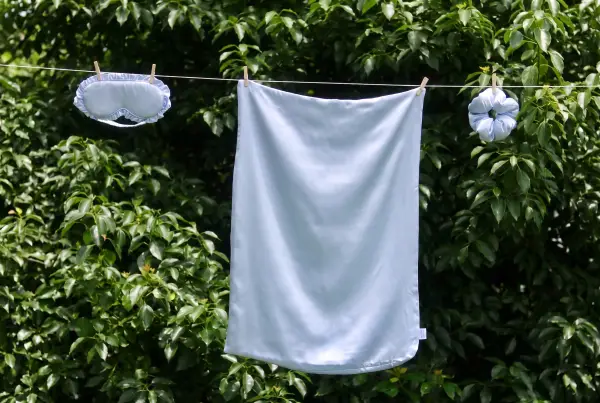
Silk sits close to the skin without trapping heat against it. It feels cool on first contact and stays neutral rather than icy in winter, which is the usual complaint about synthetics in both directions. Choose 19 momme for the lightest, airiest version of this, or 22 momme for the same coolness with more drape. A pillowcase cools the surface under your head, not the room; our guide to the silk pillowcase for hot sleepers is honest about that limit.
Dry or sensitive skin
A smooth face means less drag across the cheek and less rubbing at the jaw than cotton percale. That is a comfort gain, not a skincare one. Sensoire silk is tested for harmful substances under OEKO-TEX Standard 100, which is the relevant reassurance for reactive skin. Keep the case clean and it stays that way.
Who should skip it
Skip it if you want bedding that goes in a hot wash and a tumble dryer, because heat is the one thing that shortens a silk pillowcase's life. Skip it if you are buying for a skincare result; the fibre will not deliver one. And skip any listing that says silky, silk-feel or satin without naming the fibre, because you cannot judge what you are paying for.
Why does a silk pillowcase cost more than cotton?
The price buys three things: the fibre, the amount of it, and the way the case is made. Mulberry silk is reeled from cocoons as a continuous filament, and long, clean, even filaments earn the top commercial grade, 6A. Momme is the weight of silk per square metre: one momme is about 4.34 grams, so a 19 momme case carries roughly 82 grams of silk per square metre and a 22 momme case about 95. More silk means a denser, more opaque cloth with more body in the hand.
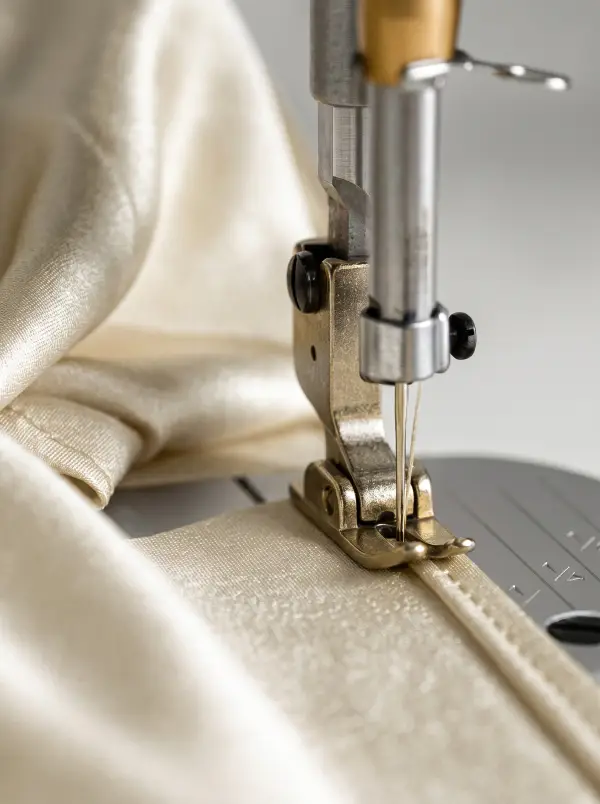
Enclosed seams and an envelope flap: nothing mechanical to give out.
Construction is the part nobody photographs. Silk is slippery to sew, so dense, even seams with the raw edges enclosed cost time. The closure matters more than it seems: a zip is a separate part stitched into light fabric along one line, and that line is where many silk pillowcases eventually give out. An envelope flap, an Oxford border with the flap behind it, or silk ribbon ties have nothing mechanical to fail. Sensoire does not use zips on any of its silk pillowcases.
Think of the price per night rather than per case. Two cases in rotation, washed cool and dried in the shade, keep their surface for years; what wears first is the closure and the seams, not the woven face your cheek rests on. Spread across that many nights, the gap between silk and cotton is small. The full order of wear is in how long a silk pillowcase lasts.
Silk, satin or cotton: what are you comparing?
Silk is a fibre. Satin is a weave, and it can be made from silk, polyester or nylon. Under shop lighting they all shine, so the comparison has to be made on how each behaves through a night, not on how it looks in a photograph.
| Mulberry silk charmeuse | Polyester satin | Cotton percale | |
|---|---|---|---|
| Surface | Mulberry silk charmeuseSmooth, lightly lustrous, warms to the hand in seconds | Polyester satinVery slippery, stays cool to the touch longer | Cotton percaleMatte, slightly textured |
| Friction on hair | Mulberry silk charmeuseLow | Polyester satinLow on first contact, but a different fibre against heat and moisture | Cotton percaleHigher; the usual cause of morning tangles |
| Moisture | Mulberry silk charmeuseAbsorbs and releases, feels dry against skin | Polyester satinHolds little, can feel clammy in a warm room | Cotton percaleAbsorbs readily, including from hair and skin |
| Temperature feel | Mulberry silk charmeuseCool on contact, neutral in winter | Polyester satinCool, then warm | Cotton percaleNeutral to warm |
| Care | Mulberry silk charmeuseHand wash below 30°C, dry flat in shade | Polyester satinMachine wash, usually tumble safe | Cotton percaleMachine wash hot, tumble dry |
| What wears first | Mulberry silk charmeuseClosure, then seams; the fabric lasts | Polyester satinPilling and static | Cotton percaleThinning where the head rests |
| Price | Mulberry silk charmeuseHighest | Polyester satinLowest | Cotton percaleLow to middle |
If a case is described only as satin, treat the fibre as unknown. Our comparison of silk and satin pillowcases goes through the differences in more detail.
19 or 22 momme: which is worth the money?
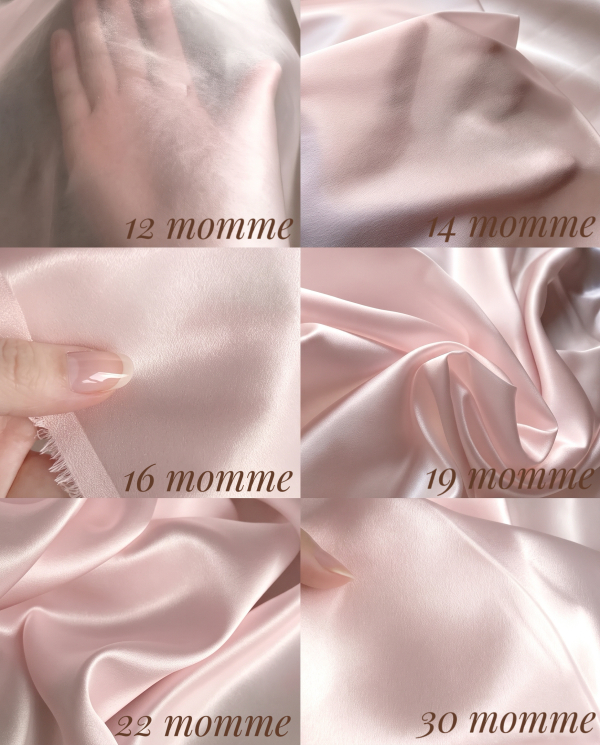
For an everyday pillowcase, 19 or 22 momme. Nineteen is lighter and cooler and suits warm rooms and summer. Twenty-two has more body, a deeper sheen and a fuller drape, and it is the more common choice for nightly use. Neither is the higher quality one; Sensoire weaves both from the same Grade 6A silk. Heavier weights such as 25 momme feel denser and cost more without being better silk. Our guide to momme and silk grades walks through the whole scale.
From the collection
The envelope closure pillowcase is woven in both weights, so the choice between 19 and 22 momme is yours on the product page.
What should you check before you pay?
Four lines on the label settle most of the decision. Everything else is colour.
- Fibre: 100% mulberry silk, or at minimum 100% silk, printed on the care label and repeated on the product page.
- Weight: a momme number stated plainly, 19 or 22 for everyday use.
- Grade: 6A on the raw silk, read together with the rest of the label rather than on its own, since no independent body certifies it on a finished case.
- Certification: OEKO-TEX Standard 100, which means the finished fabric has been tested for harmful substances.
Then turn the case inside out when it arrives and look at the corners. Dense, even stitching with the edges enclosed is what you want to see. Real silk warms to your hand within seconds and reflects light softly in several directions, a little like a pearl; polyester satin stays cool longer and has a flatter, brighter gloss. Leave the burn test to laboratories; our guide to how to tell if silk is real explains which checks work on a woven case.
From the collection
The Oxford flange pillowcase hides its envelope flap behind a tailored border, and the tie closure pillowcase closes with slim silk ribbons. All three come in nine sizes; which one fits your pillow is in the size guide.
Is the care worth the effort?
Yes, because the care is three to five minutes of actual handling. Hand wash in cool water below 30°C with a pH-neutral detergent made for silk, press the water out without wringing, and dry flat in the shade. No bleach, no enzyme detergents, no tumble dryer, no radiator. Wash a pillowcase every 7 to 10 days, sooner in hot weather or when face cream or hair oil transfers onto it.
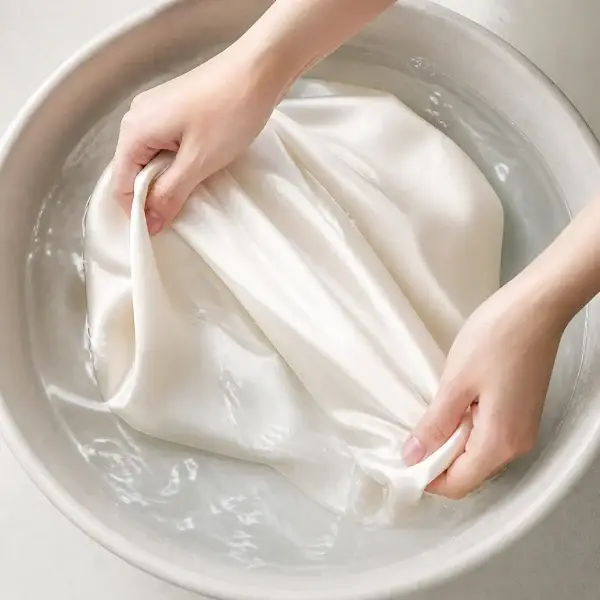
Keeping a second case in rotation halves how often each one is washed and gives the one just washed time to dry properly. It is the single habit that does the most for a silk pillowcase's life. The full method is in our guide to how to wash silk pillowcases and bedding.
The verdict
A silk pillowcase is worth it when the problem is friction, moisture or heat at the pillow: tangled or frizzy mornings, a pillow that turns warm, a cheek that prefers a smoother surface. Buy 22 momme for everyday use, or 19 if you run warm, in an envelope, Oxford or tie closure rather than a zip, and read the fibre and the momme off the label before anything else. It is not worth it for a skincare promise, for a hot-wash household, or from a listing that will not name its fibre.
Frequently asked questions
Is a silk pillowcase really worth it?
For anyone whose hair tangles or frizzes overnight, who sleeps warm, or who wants a smoother surface against the face, yes. The gain is less friction and less moisture pulled from hair and skin, and a well made case keeps delivering it for years. It is not worth it if you expect a skincare result or want tumble-dry bedding.
Does a silk pillowcase make a real difference to hair?
It reduces the friction between hair and fabric, which for many people means fewer morning tangles, less frizz and less flattening. It will not repair damaged hair or slow hair loss. Long or heavy hair does best on 22 momme, which keeps the case sitting flat.
Is a satin pillowcase as good as a silk one?
No. Satin is a weave that can be made from silk, polyester or nylon. A polyester satin case feels slippery but holds little moisture and can feel clammy in a warm room, and it is a different fibre against heat. If you want real silk, look for 100% silk or 100% mulberry silk on the label rather than the word satin.
Which momme is worth paying for?
Nineteen or 22 momme for a pillowcase. Nineteen is lighter and cooler; 22 has more body and a deeper sheen and is the usual everyday choice. Both can be Grade 6A silk. Twenty-five momme and above feels denser and costs more without being higher quality fibre.
How long does a silk pillowcase last?
For years, when it is washed cool, dried in the shade and rotated with a second case. The closure and the seams wear before the woven surface does, which is why an envelope, Oxford or tie closure outlasts a zip.
How often should you wash a silk pillowcase?
Every 7 to 10 days, and sooner in hot weather or when skincare or hair products transfer onto it. Hand wash below 30°C with a silk detergent, press out the water and dry flat in the shade.
Do you need two silk pillowcases?
Two is the practical number. One is in use while the other is washed and dried without being rushed, and neither takes the full load of every night. It is the habit that adds the most years to a silk pillowcase.
Friction, moisture, heat. If one of those is your problem at the pillow, the case earns its place. If none of them is, cotton is doing fine.
Sensoire silk pillowcases

19 or 22 Momme · Envelope
100% Pure Mulberry Silk Pillowcase
The everyday case, in either weight. A hidden envelope flap keeps the pillow tucked with no hardware near your face.
- 100% Grade 6A mulberry silk
- 19 or 22 momme, envelope closure
- OEKO-TEX Standard 100
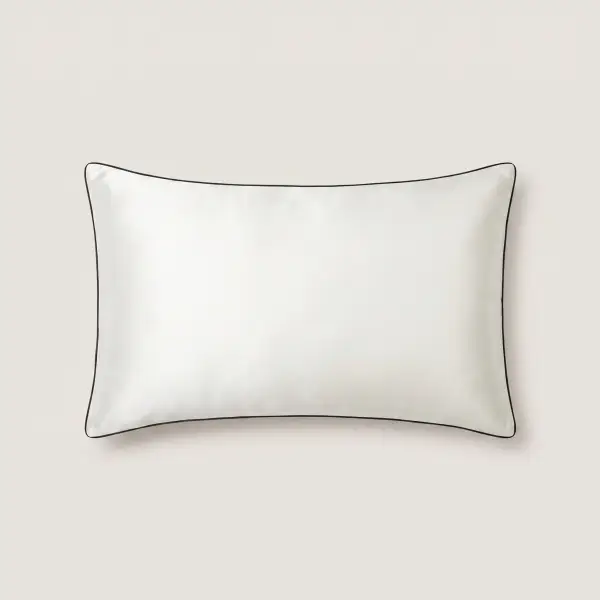
22 Momme · Piped
22 Momme Silk Pillowcase with Piping
The heavier weight with a piped edge, which gives the seam a defined finish and a charmeuse face on the sleeping side.
- 100% Grade 6A mulberry silk
- 22 momme, envelope closure
- Nine sizes, 40 x 40 to 80 x 80 cm

22 Momme · Oxford
Pure Silk Pillowcase with Oxford Flange
A flat contrast border around the case, with the envelope closure hidden behind it and nothing to catch.
- 100% Grade 6A mulberry silk
- 22 momme, contrast Oxford flange
- OEKO-TEX Standard 100
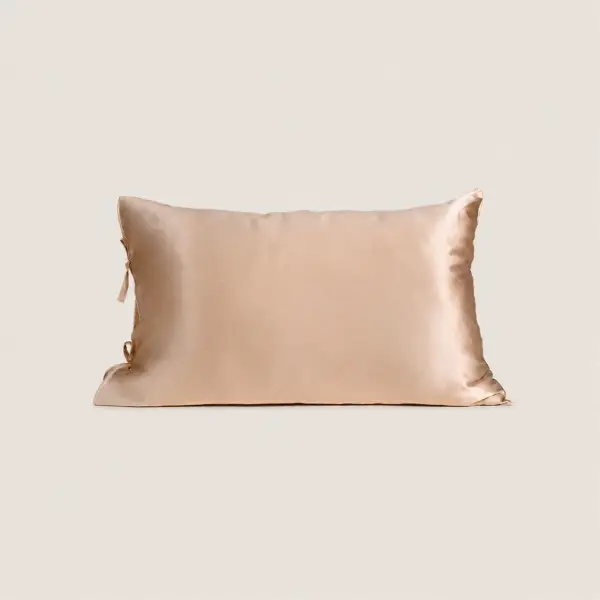
19 or 22 Momme · Ties
Silk Pillowcase with Tie Closure
Silk ribbon ties instead of a hidden flap, for when the closure should be part of how the bed looks.
- 100% Grade 6A mulberry silk
- 19 or 22 momme, no zip
- Nine sizes, 40 x 40 to 80 x 80 cm
Further reading