


Care Guide · Durability
How Long Do Silk Pillowcases Last, and What Wears Out First
What actually wears out on a silk pillowcase, in the order it tends to happen, and the three things that decide how long yours keeps going.

Three variables decide the answer
How long do silk pillowcases last? It depends on three things, and price is not one of them. It comes down to the weight of the silk, the quality of the seams, and the way the case closes. Get those three right and a silk pillowcase becomes an unremarkable part of the bed, replaced when you feel like a change rather than when it gives out. Get them wrong and the case fails early, almost always at the same place. Here is what actually wears out, in the order it tends to happen.
The Order of Wear
How Long Do Silk Pillowcases Last? What Actually Fails First
How long do silk pillowcases last depends on three things: the momme weight, the seams and the closure. The fibre itself is not the weak point. With two cases in rotation and gentle washing, a 19 or 22 momme mulberry silk pillowcase keeps its surface for years; it is the seams, the closure and heat that give out first.
Silk has a reputation for fragility that the fibre itself does not deserve. Mulberry silk is a protein filament, and in research published in Nature Protocols its ultimate tensile strength is reported at 740 MPa, with a toughness greater than the best synthetic fibres including Kevlar. What fails on a pillowcase is rarely the woven surface in the middle, the part your face touches every night. It is the edges, the joins, and anything mechanical.
- IThe ClosureA separate component, carrying the whole load along one line of stitching. This is where most silk pillowcases end.
- IIThe Seams and CornersSilk is slippery and demanding to sew. Weak stitching pulls apart at the corners long before the cloth wears thin.
- IIIThe Fabric ItselfThe part your cheek touches, and usually the last to go. It thins slowly, and it gives you plenty of warning.
I · First to Go
The Closure
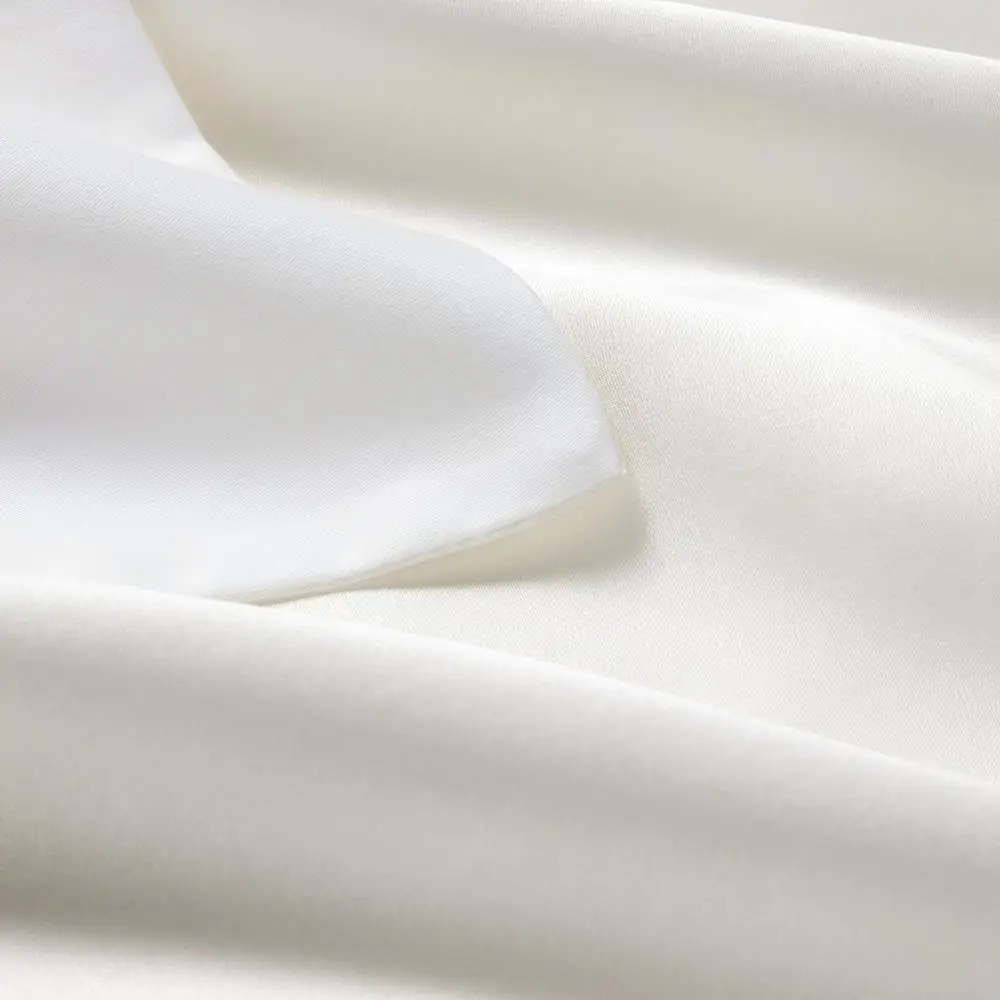
Fabric folded over fabric. No hardware, nothing to seize.
A zip is a separate component made of a different material, stitched into a lightweight woven fabric along a single line. Every time the case is pulled on, pulled off, or tumbled in a wash, the load concentrates on that line.
The zip does not have to break for the case to be finished. The stitching that holds it can loosen, or the teeth can catch the fabric beside them. Either way the silk is usually still perfectly good when the case goes in the bin.
Why an Envelope Closure Has Nothing to Break
An envelope closure is a folded flap of the same silk: no zip slider, no teeth and no seam under tension, so there is nothing mechanical to fail. A zip adds a separate metal or plastic part stitched into a lightweight fabric, and that join is where most closure failures begin.
It is worth being precise about what an envelope closure is and is not.
It is not a durability guarantee. A badly sewn envelope case will fail before a well made zipped one. What it does is remove one specific failure mode, the one that accounts for a large share of silk pillowcases thrown away while the silk is still perfectly good. There is nothing mechanical to fail, because the case closes by folding fabric over fabric: an inner flap folds back over the open end and holds the pillow in place. The load spreads across the width of that flap instead of concentrating along a line of hardware.
There are two smaller benefits that people notice sooner than durability. There is no hardware anywhere near your face, so nothing cold or textured to find in the night. And a deep flap holds the pillow in place, which matters more on silk than on cotton, because silk on silk has very little grip and a pillow will otherwise work its way out.
From the Collection
Sensoire silk pillowcases do not use zips at all. The 100% Pure Mulberry Silk Pillowcase closes with a hidden envelope flap in Grade 6A silk, certified to OEKO-TEX Standard 100.
A Note on Ties
A tie closure works on the same principle as an envelope, in that there is no hardware, but it makes a different trade. The opening is held by ribbon rather than by an overlapping flap, which means it is visible and decorative rather than hidden, and it asks something of you every time you change the bedding.
Choose ties if you want the closure to be part of how the bed looks. Choose an envelope flap if you would rather not think about the closure at all.
From the Collection
The Silk Pillowcase with Tie Closure uses silk ribbon ties in the same Grade 6A mulberry silk, in 19 or 22 momme, across nine sizes from 40 x 40 to 80 x 80 cm.
II · Next
The Seams and the Corners
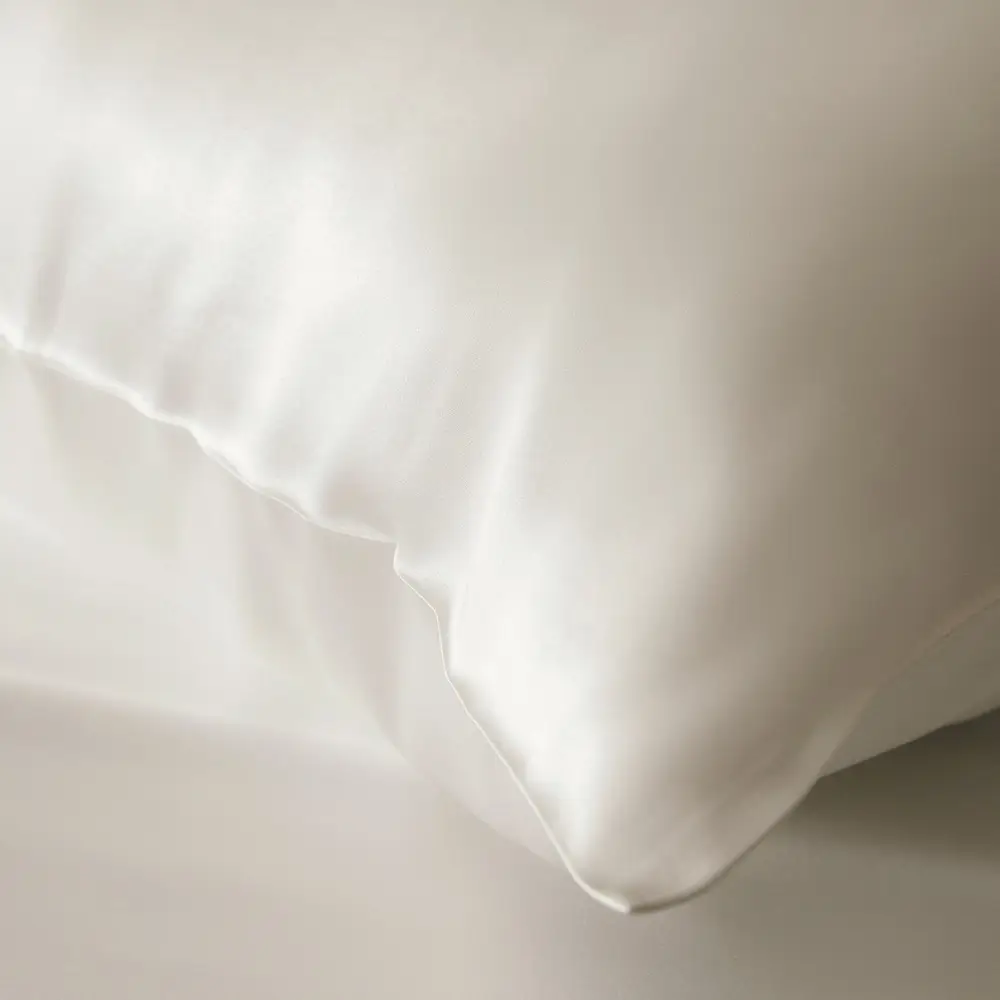
The corner is the honest place to look. Turn a new case inside out.
After the closure, the next thing to go is the stitching along the edges. Silk is slippery, which makes it demanding to sew well. A seam with too few stitches per centimetre, or one finished without enough allowance, will start to pull apart at the corners long before the fabric wears thin.
You cannot inspect this from a product photograph. What you can do is turn a new pillowcase inside out when it arrives and look at the corners. Neat, dense stitching with the raw edges enclosed is a good sign. Loose thread and visible fraying at the seam allowance is not.
III · Last
The Fabric Itself
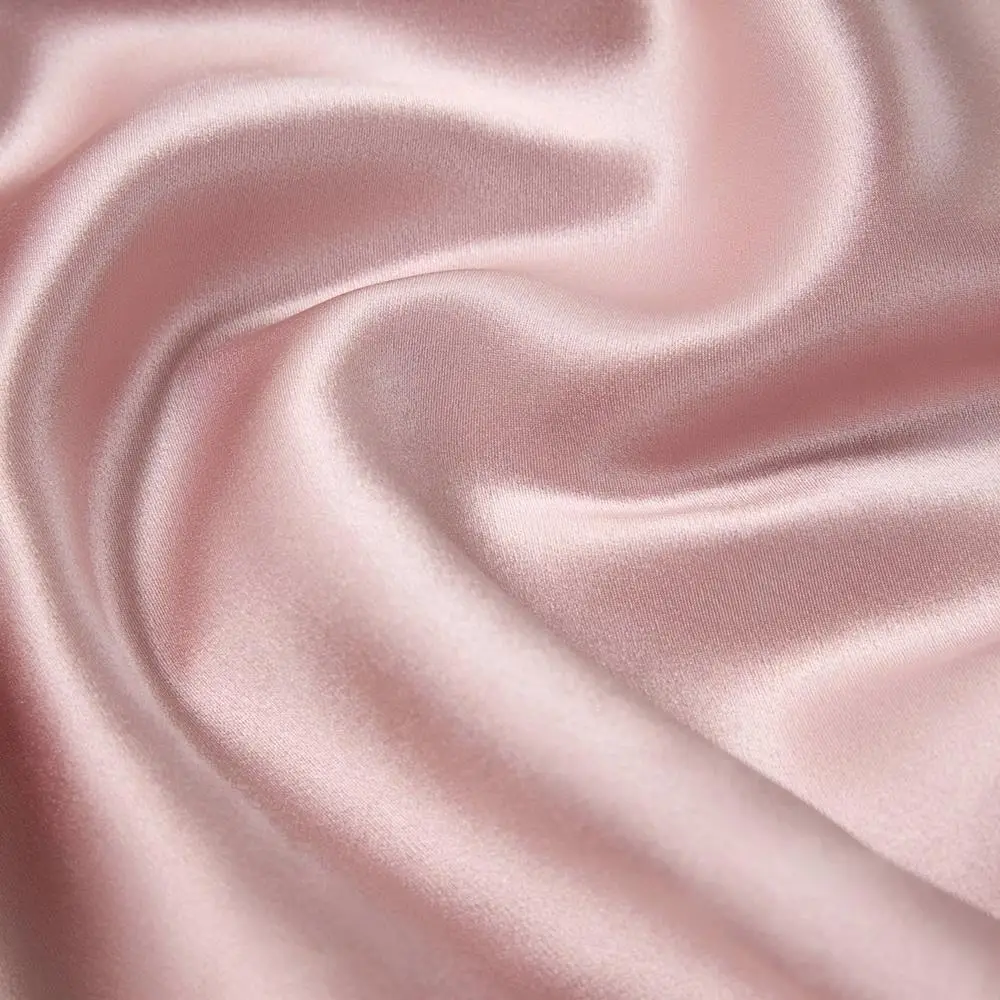
The woven face is the part that lasts, not the part that fails.
The woven surface usually outlasts both of the above. When it does begin to go, it shows up as thinning where your head rests, or as small pulls where something sharp has caught the weave. Neither is sudden.
A silk pillowcase gives you plenty of warning. If you are still deciding between weights, weaves and grades, our guide to choosing a silk pillowcase covers what to compare, and how to tell if silk is real covers what to check when it arrives.
The Number on the Label
Does Higher Momme Mean a Longer Life
Up to a point, yes. Higher momme means more silk per square metre, so a 22 momme pillowcase resists thinning and snagging for longer than a 19 momme one. Beyond that, the seams and the closure decide the lifespan more than the weight of the fabric does.
Momme is a weight measure. Higher momme means more silk per unit of fabric, which generally means more body, better drape, and a surface that resists snagging a little better. It does not mean a linear increase in lifespan, and it is not a quality grade.
This is worth saying plainly, because momme is the number most often used as a shortcut for quality, and it does not carry that much weight on its own. A 22 momme case with weak seams will not outlast a well sewn 19 momme one. Construction and washing habits do at least as much work as the number on the label.
Sensoire uses both weights, chosen by what the item has to do.
| Weight | Used for | Why |
|---|---|---|
| 19 momme | Sleep masks, bonnets, scrunchies, hair accessories | Lighter and more pliable, so it sits closer without pressure |
| 19 and 22 momme | Pillowcases | 22 gives more body and drape, 19 sleeps lighter and cooler for some people |
Heavier is not automatically better. A 19 momme mask that moulds to the face is doing its job better than a stiffer one would. If you want to go deeper on weights, read our guide to momme and silk grades.
From the Collection
The 22 Momme Mulberry Silk Pillowcase with Piping pairs the heavier weight with a piped edge, which gives the seam a defined finish rather than a raw one.
Avoidable Damage
What Shortens the Life of a Silk Pillowcase
Heat and light shorten the life of a silk pillowcase faster than sleeping on it does. Hot water and tumble drying weaken the protein fibre, and direct sunlight dries and fades it; rough handling of the closure and heavy detergent finish the job. Most of these are habits, so two identical cases can age at very different speeds.
Heat and Light
Heat is the single most damaging thing in ordinary use. Hot water, a hot machine cycle, a tumble dryer and a radiator all work against the protein structure of the fibre.
Light does the same thing more slowly. Research published in Biomolecules found that ultraviolet exposure drives photo-oxidation in silk fibroin and produces visible yellowing. That study looked at fibroin films rather than woven bedding, so treat it as the mechanism rather than as a measurement of your pillowcase, but the practical instruction is the same one every silk care label gives: dry in the shade, and do not store silk in direct light.
The Wrong Detergent
Biological detergents contain enzymes designed to break down protein. Silk is a protein. Those enzymes do not distinguish between the stain and the fabric: work published in Frontiers in Bioengineering and Biotechnology shows silk fibroin breaking down under protease exposure at rates that scale with enzyme type and concentration.
Use a pH neutral detergent labelled for silk or wool, and use the amount stated on the bottle rather than more. Sensoire recommends hand washing, which takes three to five minutes of actual handling. Our guide to washing silk bedding and accessories walks through it step by step.
Sharp Edges
Most damage that looks dramatic is mechanical, not chemical. Zips, hooks, denim rivets and jewellery will catch a woven silk surface. So will a wash load shared with towels.
Cats are the honest version of this problem. Silk is more vulnerable to claws than cotton is, and no finish or weight changes that. If your cat sleeps on the bed, a silk pillowcase is still workable, but treat it as a fabric that will show a snag where cotton would not. Keep claws trimmed, keep a second case in rotation so a damaged one is not the only one you own, and accept that this is a real trade off rather than one a product description can solve.
Five Habits
How to Make a Silk Pillowcase Last Longer
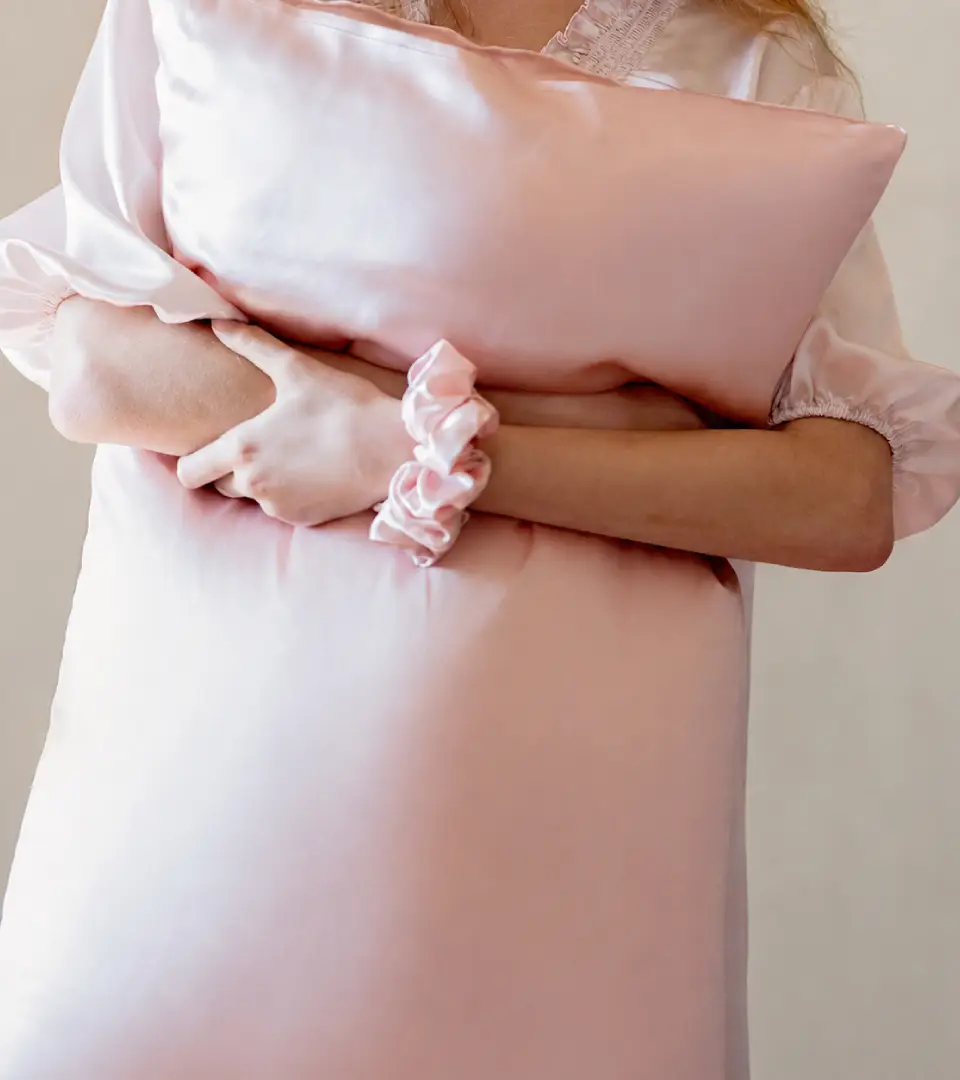
Two cases in rotation is the single change that does the most
- Keep a second case and rotate them. The one being washed then has time to dry properly in the shade instead of being rushed, and neither case takes the full load of every night.
- Wash cool, dry flat, dry in shade. If you machine wash despite the recommendation, use a mesh bag, a cold delicate or silk cycle, and a low or no final spin.
- Remove makeup before bed, especially on pale colours. Mascara and pigmented balms are far harder to lift out of silk than out of cotton.
- Wash it separately from anything with hardware. Zips, hooks, buttons and towels all catch a woven silk surface.
- Store it clean, dry and out of direct light. Silk stored damp or dirty deteriorates whether you use it or not.
Common Questions
Frequently Asked Questions
Do zip closures wear out faster than envelope closures?
A zip is a separate mechanical part stitched into lightweight fabric, so it has failure modes an envelope closure does not have: the slider, the teeth, and the line of stitching holding it in. An envelope closure has none of those parts. That is a structural difference rather than a promise about years. How the case is sewn and how it is washed still matter more than the closure type alone.
How long does a silk pillowcase last?
There is no single number, because it depends on the weight of the silk, the quality of the seams, how often it is washed, and how it is dried. A case that is washed cool, dried in the shade and rotated with a second one will last considerably longer than one washed hot and tumbled dry.
What wears out first on a silk pillowcase?
Usually the closure, then the seams along the edges. The woven surface in the middle, the part your face rests on, tends to outlast both.
Is a higher momme pillowcase more durable?
Higher momme means more silk per unit of fabric, which gives more body and slightly better resistance to snagging. It is not a quality grade and not a lifespan multiplier. Construction and washing habits do at least as much work.
Can you use a silk pillowcase if you have pets?
Yes, with realistic expectations. Silk shows claw snags more readily than cotton does. Trimmed claws and a second case in rotation help. No silk weight or finish makes a pillowcase claw proof.
Does washing shorten the life of a silk pillowcase?
Washing incorrectly does. Heat, enzyme detergents and tumble drying are what cause damage, not washing itself. Silk that is never washed accumulates oils and residue that are worse for the fibre than careful regular cleaning.
Three things, then. The weight, the seams, and the closure.
Made Without Zips
Silk Pillowcases from Sensoire

Grade 6A · Envelope
100% Pure Mulberry Silk Pillowcase
A hidden envelope flap keeps the pillow tucked and the sleep surface unbroken, with no hardware near your face.
- Grade 6A pure mulberry silk
- Envelope closure, no zip
- OEKO-TEX Standard 100

22 Momme · Piped
22 Momme Silk Pillowcase with Piping
The heavier weight with a piped edge, which gives the seam a defined finish rather than a raw one.
- 100% Grade 6A mulberry silk
- 22 momme, envelope closure
- Nine sizes, 40 x 40 to 80 x 80 cm

19 or 22 Momme · Ties
Silk Pillowcase with Tie Closure
Silk ribbon ties instead of a hidden flap, for when the closure should be part of how the bed looks.
- 100% Grade 6A mulberry silk
- 19 or 22 momme, no zip
- Nine sizes, 40 x 40 to 80 x 80 cm

22 Momme · Oxford
Pure Silk Pillowcase with Oxford Flange
A flat contrast border around the case, with the closure hidden behind it and nothing to catch.
- 100% Grade 6A mulberry silk
- 22 momme, contrast Oxford flange
- OEKO-TEX Standard 100
Editorial Sources
- Materials Fabrication from Bombyx mori Silk Fibroin. Rockwood DN, Preda RC, Yucel T, Wang X, Lovett ML, Kaplan DL. Nature Protocols, 2011.
- Effects of Ultraviolet Light Irradiation on Silk Fibroin Films Prepared under Different Conditions. Lee S, Kim SH, Jo YY, Ju WT, Kim HB, Kweon H. Biomolecules, 2021.
- Estimating Kinetic Rate Parameters for Enzymatic Degradation of Lyophilized Silk Fibroin Sponges. Jameson JF, Pacheco MO, Butler JE, Stoppel WL. Frontiers in Bioengineering and Biotechnology, 2021.
The ultraviolet and enzyme studies were carried out on silk fibroin films and sponges rather than on woven bedding. They are cited here for the mechanism they describe, not as a measurement of any pillowcase.