


Sleep Tips · Sleep Masks
Do Sleep Masks Work? Benefits, How to Wear One, and When a Weighted Silk Mask Helps
Do sleep masks really work? Yes, but what they do is quite specific: they block light rather than put you to sleep. A sleep mask reduces the light from street lamps, early morning sun and indoor lighting that reaches your eyes, making a bedroom that cannot be fully darkened better suited to rest. It cannot treat insomnia, and it cannot guarantee more deep sleep.
Quick AnswerA sleep mask blocks outside light and helps create a darker sleep environment. The paper Wearing an eye mask during overnight sleep improves episodic learning and alertness, published in the journal Sleep in 2023, found that under specific experimental conditions, wearing an eye mask at night was associated with better performance on some measures of memory and alertness the following day. For people who travel often, catch up on sleep during the day or are easily disturbed by light, a mask is a light-blocking tool worth trying.

What Does a Sleep Mask Actually Do?
The main job of a sleep mask is to block ambient light and reduce how much night-time lighting disturbs sleep. It covers the eyes so that less outside light reaches them, helping you get a darker place to rest when you cannot fully control the lighting in the room.
A mask does not make you sleepy, and it cannot replace the body's normal sleep regulation. What it changes is the sleep environment; it does not treat sleep problems directly.
1. Less Interference from Outside Light
Even with the main bedroom light switched off, other light sources may still be around you.
Street lamps outside the window, hallway lights, standby lights on electronic devices and early morning sun through the curtains can all find their way into the bedroom.
By covering both eyes, a sleep mask reduces how much of this light reaches them. For anyone who cannot fit blackout curtains, shares a room or often sleeps somewhere new, it is a portable way to block light.

2. Less Effect of Light on the Circadian Rhythm
The body's sleep and wake cycle is regulated by the circadian rhythm, and light is one of the most important influences on it.
Normally, a darker environment at night helps the body maintain its sleep-related physiological rhythms. Exposure to light at night, especially bright light, may interfere with normal melatonin signalling.
A sleep mask cannot raise melatonin levels directly, but by reducing the ambient light that reaches the eyes it can create better conditions for rest at night.
3. What Has Research Found?
A study published in the journal Sleep in 2023 looked at how wearing an eye mask at night affects cognitive performance the next day.
It found that, under the conditions studied, wearing an eye mask was associated with improvements in some measures of episodic memory and alertness.
This suggests that blocking light at night may have measurable effects beyond sleep itself, but the study did not show that everyone who wears a mask will sleep longer or get more deep sleep.
Study source: Wearing an eye mask during overnight sleep improves episodic learning and alertness
What Are the Real Benefits of a Sleep Mask?
The clearest benefit of a sleep mask is less interference from ambient light. For people with a bright bedroom, people who need to rest during the day and people who often sleep in unfamiliar places, it can help create a more consistent darkness. How much this actually improves sleep, however, varies from person to person.
1. Less Early Morning Sun
In summer the sun rises early, and some bedrooms grow light in the early morning even with curtains.
If early light tends to wake you too soon, a sleep mask that blocks light well can reduce the sunlight reaching your eyes.
A mask will not prevent every early waking, because the time you wake is also shaped by sleep habits, the circadian rhythm and other factors in your surroundings.
2. A Familiar Darkness When You Travel
Travellers usually have no control over the lighting in hotel rooms, on planes or on trains.
A sleep mask is simple and does not depend on what a room provides, which makes it easy to carry with you.
On a long-haul flight, for example, the cabin lights may come on for meal service or because other passengers are moving about. Wearing a mask reduces how much this light disturbs your rest.

3. Daytime Rest for Shift Workers
People who work nights often have to sleep during the day, but daylight does not match the body's usual sleeping hours.
A sleep mask reduces exposure to daylight and makes the resting environment darker.
Sleep problems in shift work can also come from the schedule itself, noise and a misaligned circadian rhythm, though. A mask only addresses the light.
4. Less Light from a Partner in a Shared Bedroom
When two people keep different hours, one of them may need to switch on a light to read, use a computer or get up early.
A sleep mask reduces how much of that light falls directly on the other person's eyes, without the whole room having to stay dark all the time.
It cannot block sound, though, and it does not remove other disturbances caused by screens or movement.
Do Sleep Masks Work for Everyone?
Sleep masks are not for everyone. They are of real use to people disturbed by ambient light, while someone who already sleeps comfortably in a completely dark bedroom may notice little difference from wearing one.
Who Is It Worth Trying For?
-
People who are easily disturbed by light.
If street lamps, hallway lights or early morning sun often affect your rest, a mask can add an extra layer of darkness.
-
People who travel often.
Lighting in hotels, on planes and in other temporary places to rest is hard to control, so a portable mask is especially practical.
-
People who need to catch up on sleep during the day.
Shift workers, or anyone who sometimes needs to rest in the daytime, can use a mask to keep daylight from reaching their eyes.
-
People who share a bedroom.
When two people keep different hours, a mask can reduce some of the light disturbance.
Who May Not Like a Sleep Mask?
Some people are sensitive to having their face covered and may feel uneasy even with a very soft mask.
An elastic strap that is too tight, edges that are too thick or fabric pressing directly on the eyelids can also make a mask less comfortable to wear.
If a mask needs constant adjusting, feels like it is pressing, or leaves noticeable discomfort when you wake, it may not be the right one for you.
The value of a sleep mask is not that everyone must wear one, but whether it solves a specific light problem.
How to Wear a Sleep Mask Properly
Wearing a sleep mask properly comes down to three things: covering both eyes completely, keeping a steady fit and avoiding too much pressure on the eyes and head. The mask should stay in place as you turn over, but you do not need to overtighten the strap to block the light.
-
Step 1: Position the Mask
Rest the mask gently over both eyes so that its upper and lower edges sit naturally against your face.
The sides of the nose bridge are a common place for light to leak in. If you can still see noticeable light once you lie down, try moving the mask and check whether it suits the shape of your nose bridge and face.
Do not press the mask down hard to block the light near the nose bridge.
-
Step 2: Adjust the Strap
The strap should hold the mask in place without leaving marks or putting pressure on your head.
If the mask slips off easily, the strap may be too loose, or the size or shape of the mask may not suit you.
If you feel a headache, pressure around the eyes or discomfort behind the ears after a few minutes, loosen the strap or try a different style.

-
Step 3: Check the Fit for Your Sleeping Position
When you sleep on your side, the pillow can press against the edge of the mask. Side sleepers may want to check whether the edges are too thick and whether an adjuster buckle sticks out at the side.
On your back, the mask is usually not squeezed from the side in the same way, but it is still worth checking for light at the nose bridge and pressure on the eyes.
For people who do not like fabric touching their eyelids, a 3D mask with a recessed space around the eyes may be more comfortable.
-
Step 4: Test It Before Sleep
With the mask on, lie down in your usual sleeping position and turn your head gently.
If the mask slides noticeably, the edges press on your face or the strap pulls your hair, adjust it again.
A sleep mask that fits well should not keep reminding you it is there all night.

Do Sleep Masks Dry Your Eyes?
A sleep mask worn normally will not necessarily dry your eyes. There is currently no solid evidence that an ordinary sleep mask is itself a common cause of dry eye. But a mask that is too tight, presses directly on the eyeballs or irritates the skin around the eyes may cause discomfort.
Why Do Some People Wake Up with Dry Eyes?
According to the University of Cambridge study Spotlight on Sjögren's: a patient perspective on burden of illness and unmet needs - results from a real-world survey, dry eye caused by Sjögren's syndrome (keratoconjunctivitis sicca, KCS) is recognised as the main cause of dry eyes.
Sjögren's syndrome is a chronic systemic autoimmune disease characterised by dysregulation of innate and adaptive immunity, but its exact cause is unknown.
Dry eyes may be related to an unstable tear film, too little tear production, exposure of the eye surface or other eye problems.
For example, some people's eyelids do not close completely during sleep, which can leave the eyes dry or irritated in the morning.
These problems are not necessarily caused by a mask, so dry eyes in the morning are not enough on their own to conclude that the mask is to blame.
Which Mask Design Details Need Attention?
-
Direct pressure on the eyeballs.
A mask should not put noticeable pressure on the eyeballs when worn, especially styles with added weight.
-
Fabric rubbing around the eyes.
If a mask slides around often, its seams or edges may rub the skin around the eyes.
-
Not cleaning it enough.
A mask is in constant contact with sebum, sweat and skincare, and if it is not washed in good time it may raise the risk of skin irritation.
How Can You Reduce Discomfort?
Choose a mask that fits well and feels soft, and avoid adjusting the strap too tight.
If you do not like fabric touching your eyelids, consider a 3D contoured mask that leaves space around the eyes.
If you have persistent dryness, marked redness, pain or changes in vision, see an eye care professional rather than relying on a mask to solve an eye problem.
Silk vs Other Sleep Mask Fabrics: What Is the Difference?
The main differences between a silk sleep mask and a cotton or polyester one lie in the feel of the fabric surface, how it handles moisture and how it needs to be cared for. Silk usually has a smoother surface and suits people who care about how a mask feels around the eyes, but there is no solid evidence that a silk mask will always improve sleep more than other materials.
Why Do Some People Prefer a Silk Sleep Mask?
Silk is a natural protein fibre produced by silkworms, and silk fabric usually has a fairly smooth surface.
A sleep mask spends hours against the skin around the eyes. For people who dislike rough fabrics or noticeable friction, soft silk may feel more comfortable.
Actual comfort also depends on the weave, the filling, the stitching and the overall construction, though, not just on the name of the fibre.

Silk, Cotton and Polyester Compared
| Material | Main features | Points to note |
|---|---|---|
| Mulberry silk | Main featuresSmooth surface, soft to the touch, relatively light | Points to noteUsually needs gentle washing and care |
| Cotton | Main featuresAbsorbs moisture well, wide choice of fabrics | Points to noteFeel depends heavily on the weave |
| Polyester | Main featuresDurable, easy to make into different constructions | Points to noteBreathability and feel vary by product |
Does a Silk Sleep Mask Block Light Better?
Not necessarily.
How well a mask blocks light depends not only on the fabric but also on the thickness of the fabric, the lining, the filling layer and the shape of the mask.
A well-designed polyester mask may block light better than a very thin silk mask that lets light in at the nose bridge.
So the more sensible reason to choose a silk mask is a preference for its soft, smooth feel, not a belief that silk itself must block light better.
What Are the Benefits of a Weighted Sleep Mask?
A weighted sleep mask adds weight to an ordinary mask so that it rests with a gentle sense of pressure when worn. Some people may like this enveloping feel, but research on weighted sleep masks is still limited and cannot show that they improve sleep quality more than ordinary masks.
How Is a Weighted Mask Different from an Ordinary One?
An ordinary mask blocks light mainly through its fabric and construction.
Besides blocking light, a weighted mask adds weight through an inner filling or another structure, so the wearer feels extra contact pressure.
Some people may find this pressure comfortable, but that does not mean heavier is better.

Who Might a Weighted Mask Suit?
A weighted mask may suit people who like a certain enveloping feel and are comfortable with the extra weight.
Some people, for example, dislike very light masks that move easily and may prefer a design with some weight to it.
Whether it is comfortable can only be judged by wearing it; the effect cannot be inferred from the product name or the weight alone.

Can a Weighted Mask Ease Anxiety or Treat Insomnia?
The main causes of insomnia include psychological stress, anxiety, irregular routines, a disrupted body clock, a poor sleep environment and physical illness.
Light at night, using electronic devices before bed and too much caffeine can also disturb normal sleep, making it harder to fall asleep, causing frequent waking in the night or lowering sleep quality.
There is currently not enough evidence to support using a weighted sleep mask as a treatment for anxiety or insomnia.
Some research on deep pressure stimulation involves weighted blankets or other devices, and those results cannot be applied directly to weighted masks.
The main role of a weighted mask is still to block light and give a particular feel when worn, not to provide medical treatment.
What to Keep in Mind When Using a Weighted Mask
The weight of the mask should not rest on the eyeballs.
People with eye conditions, recent eye surgery or anyone who should avoid pressure around the eyes should consult a professional before use.
If you get a headache, pressure in the eyes or any other discomfort while wearing it, stop using it straight away.
3D vs Flat Sleep Masks: What Is the Difference?
The biggest difference between a 3D contoured mask and a flat mask is the space around the eyes. A 3D mask usually has recessed areas in front of the eyes to reduce direct contact between the fabric and the eyelids and lashes; a flat mask usually sits closer to the face and is thinner overall.

Who Is a 3D Mask For?
A 3D mask suits people who do not like anything touching their eyelids, people wearing eyelash extensions and anyone who wants more space around the eyes.
Its contoured shape can reduce direct contact between the fabric and the lashes, but that does not mean every 3D mask blocks light equally well.
If it does not fit well at the nose bridge, a contoured mask can let light in too.
Who Is a Flat Mask For?
A flat mask is usually lighter and thinner, and suits people who like a simple design and do not want a noticeably bulky feel on the face.
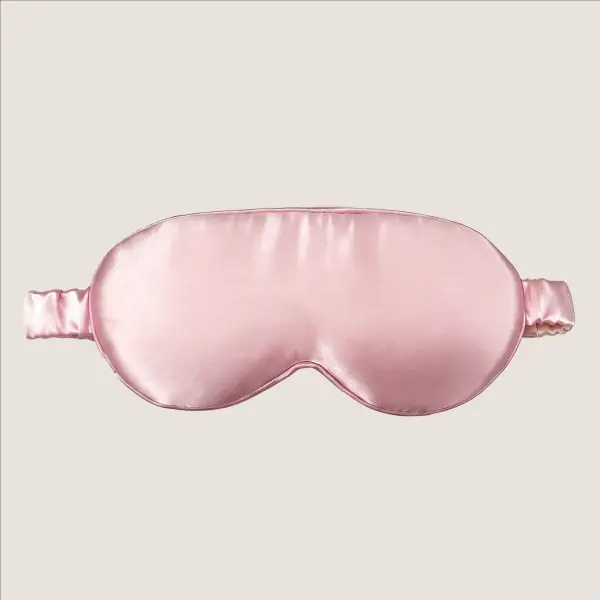
A soft flat silk mask offers a fairly smooth surface against the skin.
A flat design may touch the eyelids directly, though, so people sensitive to pressure around the eyes should pay particular attention to the fit.
3D and Flat Masks Compared
| Feature | 3D contoured mask | Flat mask |
|---|---|---|
| Space around the eyes | 3D contoured maskUsually more | Flat maskUsually less |
| Eyelid contact | 3D contoured maskRelatively little | Flat maskMay touch directly |
| Overall construction | 3D contoured maskMore contoured | Flat maskLighter and thinner |
| Side sleeping | 3D contoured maskDepends on how thick the sides are | Flat maskSome styles sit closer to the pillow |
| Best for | 3D contoured maskLess contact with lashes and eyelids | Flat maskA preference for a soft, light feel |
Whichever style you choose, how well it blocks light, how comfortable the strap is and how well it fits at the nose bridge matter more than the name of the construction.
For the specific differences between the two styles, read Sensoire's existing Comparison Guide to 3D and Flat Silk Sleep Masks.
How to Wash a Sleep Mask
A sleep mask should be cleaned regularly according to its care label, because it sits directly against the skin around the eyes and can build up sebum, sweat and skincare residue. Masks made of different materials and constructions cannot all be washed in exactly the same way.
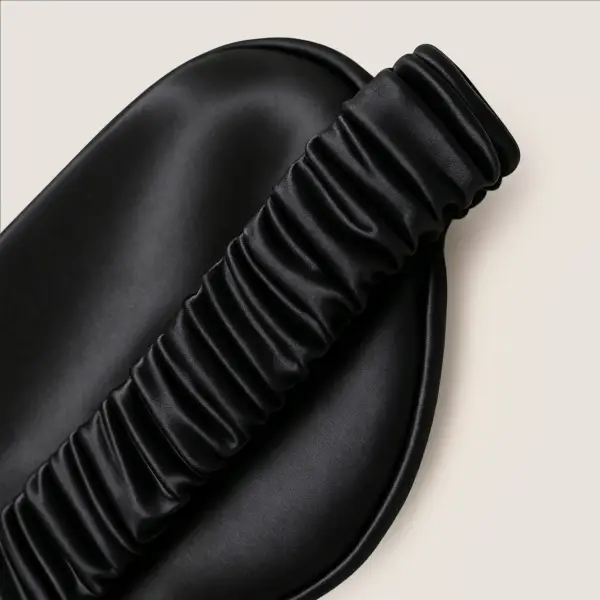
How Do You Wash a Silk Sleep Mask?
First check the product label to confirm whether it can be washed in water.
For a silk mask that can be hand washed, use a gentle detergent suited to silk and keep to the water temperature on the label.
Avoid rubbing hard, wringing or using bleach. After washing, gently blot away excess water with a clean towel, then dry it as the care instructions say.
Can You Put a Weighted Mask Straight in Water?
Not necessarily.
A weighted mask may contain special fillings or an inner weighting structure, and some cannot be fully submerged.
If the mask has a removable design, check the cleaning instructions for the outer cover and the inner weighted part separately.
Do not put a whole weighted mask in the washing machine without checking the label.
How Often Should You Wash a Sleep Mask?
How often depends on how you use it.
If you wear it every day, or apply a lot of skincare before bed, check and clean the mask more often.
When a mask shows visible marks, odours or oily residue, wash it according to the label straight away instead of carrying on using it.
Sleep Mask FAQs
Can you wear a sleep mask every night?
In general, a sleep mask that is comfortable, clean and puts no noticeable pressure on the eyeballs can be used every day. If you notice skin irritation or eye discomfort, stop using it for a while and look for the cause.
Can a sleep mask help you fall asleep faster?
If light is the main thing keeping you from falling asleep, a sleep mask may help reduce the disturbance. But a mask cannot make you sleepy, and it cannot guarantee that everyone will fall asleep faster.
Do sleep masks increase deep sleep?
There is currently no solid evidence that an ordinary sleep mask reliably increases deep sleep for everyone. It works mainly by blocking light to improve the sleep environment, and the actual effect varies from person to person.
Is a silk sleep mask suitable for sensitive skin?
Some people with sensitive skin may prefer the smooth feel of a silk mask, but silk cannot guarantee that there will be no irritation at all. Fabric dyes, stitching, detergents and your own skin also affect comfort.
Is a weighted sleep mask better than an ordinary one?
Not necessarily. A weighted mask adds a sense of pressure, but there is currently no solid evidence that it is generally better than an ordinary mask. Choose between them on how well they block light and how comfortable they feel to you.
What sleep mask should side sleepers choose?
Side sleepers can focus first on whether the edges of the mask are too thick, whether there are protruding fasteners, and whether the pillow presses on it when they turn over. Soft, low-profile styles that stay in place are usually the ones worth trying.
Conclusion: Is a Sleep Mask Worth Buying?
If light often disturbs your rest, a sleep mask is a simple tool worth trying.
It cannot treat insomnia, and it cannot guarantee deeper sleep for everyone. But in hotels, on planes, in a shared bedroom or when you need to rest during the day, a well-chosen mask can reduce the ambient light reaching your eyes.
When choosing a mask, think first about how well it blocks light and how comfortable it is to wear, then choose the material and construction to suit your preferences.
If you like a soft, smooth feel, consider a silk sleep mask. If you would rather fabric did not touch your eyelids, try a 3D contoured mask. If you prefer a certain enveloping feel, you can also look at a weighted mask, provided your eyes are not put under pressure.
The sleep mask that truly suits you is not necessarily the one with the most features or the highest price, but the one that blocks light comfortably without getting in the way of your normal rest.
From the Collection

19 Momme · Weighted
Weighted Sleep Mask in Mulberry Silk
A silk floss filling with free-moving beads, for a gentle sense of weight.
100% Grade 6A mulberry silk · OEKO-TEX Standard 100 · Hook and loop strap · Black, Navy Blue
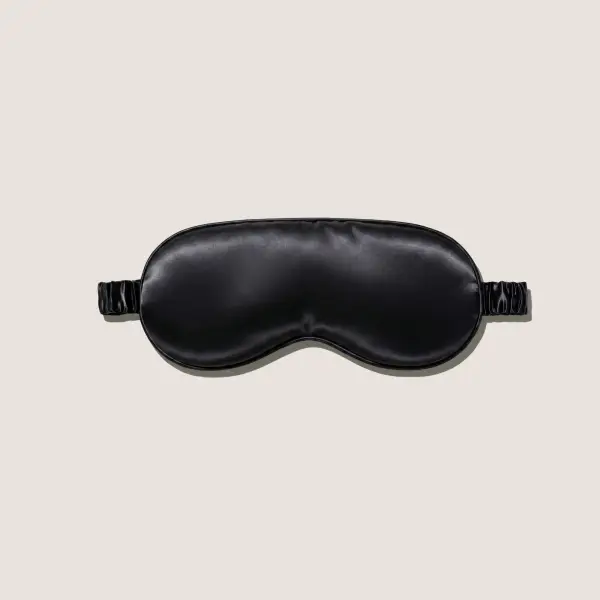
19 Momme · Classic Flat
Classic Flat Silk Sleeping Eye Mask
Featherlight and packable, the simplest silk mask in the range.
100% Grade 6A mulberry silk · OEKO-TEX Standard 100 · Elastic strap · Black, Navy Blue, Pink

19 Momme · 3D Contour
Ultimate Comfort 3D Mulberry Silk Eye Mask
Moulded cups on a standard cut, the lighter of the two 3D masks.
100% Grade 6A mulberry silk · OEKO-TEX Standard 100 · Elastic strap · Black, Navy Blue, Pink
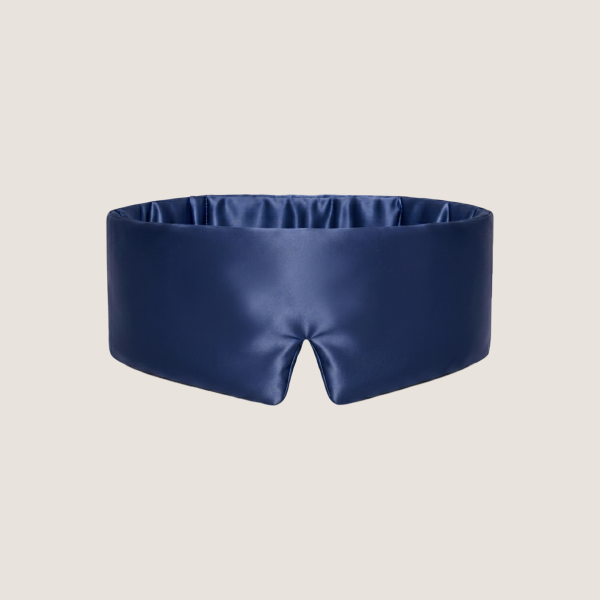
19 Momme · 3D Contour
Full Coverage 3D Mulberry Silk Sleep Mask
Cups, a U-shaped nose bridge, a wide wrap and padded ear coverage.
100% Grade 6A mulberry silk · OEKO-TEX Standard 100 · Hook and loop strap · Black, Navy Blue